Quick answer: Kenya has two zebra species. The plains zebra is the one you will see in the Maasai Mara, Amboseli, Nairobi National Park, Lake Nakuru and Tsavo. The larger, narrow-striped Grevy’s zebra is endangered and lives mainly in the dry north, in Samburu, Buffalo Springs, Lewa and Laikipia. This guide explains how to tell them apart, where to see zebras in Kenya, how the stripes work, when zebras migrate and how to photograph them.
Zebras in Kenya at a glance
| Plains zebra | Grevy’s zebra | |
|---|---|---|
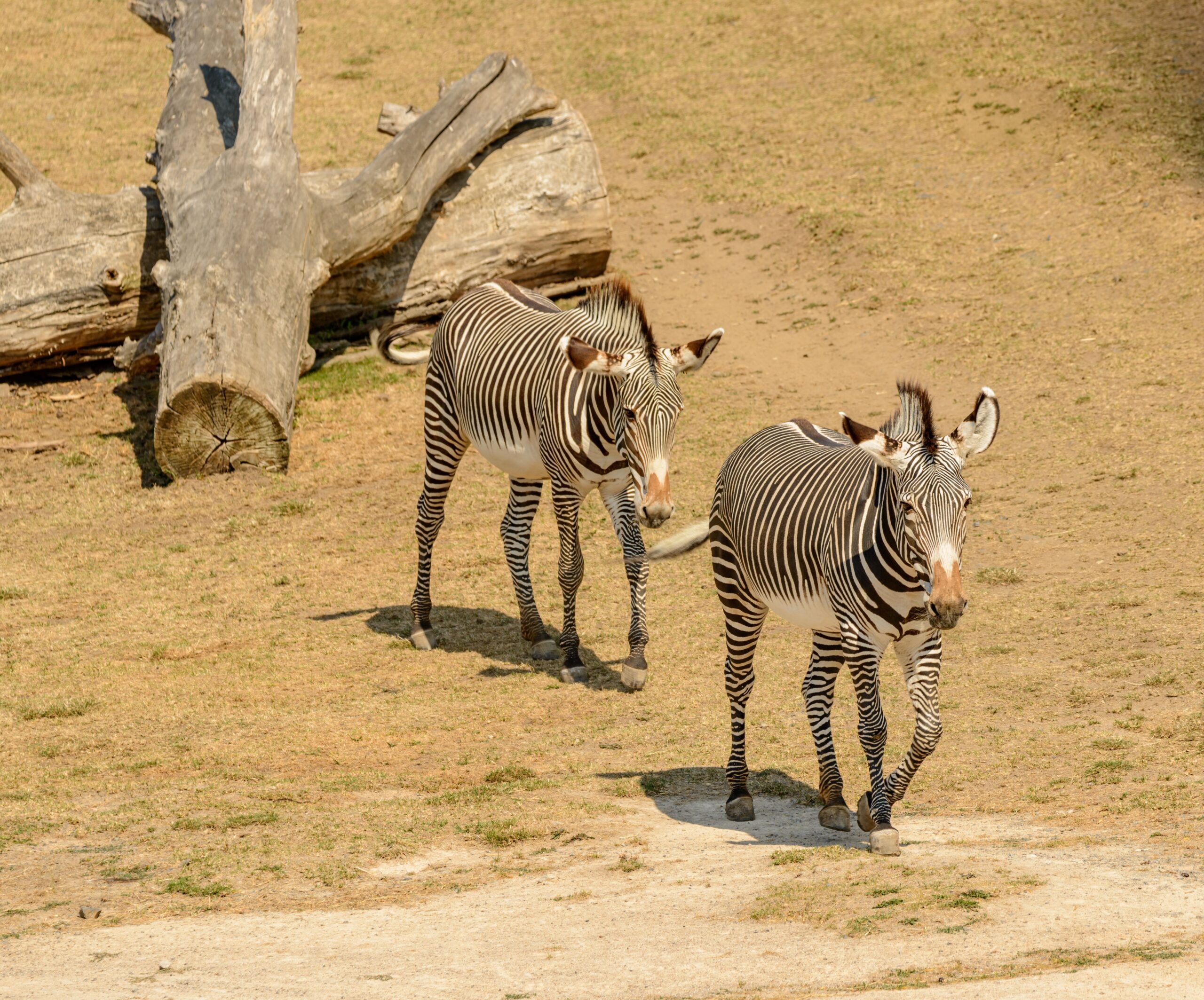
| Stripes | Broad, bold stripes | Narrow, dense stripes with a white belly |
| Ears | Medium, pointed | Large and rounded, like a mule’s |
| Build | Compact and stocky | Taller and heavier, the largest wild equid |
| Social life | Stable harems of one stallion, several mares and foals | Loose groups, and stallions hold territories |
| Where in Kenya | Mara, Amboseli, Nairobi, Nakuru, Tsavo and more | Samburu, Buffalo Springs, Lewa, Laikipia |
| Conservation status | Near Threatened (IUCN 2016) | Endangered |
| Chance of seeing one | Very high | Good in the north, none elsewhere |
Plains zebra in Kenya
The plains zebra fills the foreground of most safari photos. It lives in stable family groups called harems, made up of one stallion, several mares and their recent foals. Young males form bachelor groups until they are old enough to challenge for mares of their own. Several harems often gather into herds of hundreds, especially during migration. A plains zebra weighs roughly 175 to 320 kg depending on sex, stands around 127 to 140 cm at the shoulder and can live about 25 years in the wild.
The global population is thought to be around 500,000, and the plains zebra is listed as Near Threatened because numbers have fallen in many countries from hunting, farming, fencing and conflict. Kenya remains a stronghold, and healthy herds in the Mara, Amboseli and the conservancies show what well-managed land can still hold.
Zebra and wildebeest in the Great Migration
In the Maasai Mara, zebras travel with wildebeest during the Great Migration, usually between July and October, and the two species complement each other. Zebras have sharp eyesight while wildebeest have a keen sense of smell, so a mixed herd tends to spot danger sooner. Zebras also eat the tall, coarse grass first, which opens the way for the wildebeest behind them. At river crossings, you can see the zebras pressing close to the wildebeest, using the numbers for safety.
Resident herds
Not every herd migrates. In Amboseli, the zebras graze beneath Kilimanjaro all year, and in Nairobi National Park they stand against the city skyline. Lake Nakuru, Tsavo and the Laikipia conservancies also have resident groups, so a visit outside migration season still gives plenty of sightings.
Grevy’s zebra: the rare one
Grevy’s zebra was once found across the Horn of Africa and is now restricted almost entirely to northern Kenya, with a few small pockets in southern Ethiopia. It is easy to recognise: large rounded ears, very fine stripes that stop short of the belly, and a bigger, more horse-like build than the plains zebra. Stallions defend territories near water, and mares with foals move between them.
A 2008 aerial census of the Laikipia and Samburu region, which holds over 95% of Kenya’s Grevy’s zebras, counted about 2,600 animals, up from an earlier estimate of 2,300. Conservation groups say the numbers are still low, and the species is listed as endangered. Competition with livestock for grazing and water, habitat loss and past hunting have all taken a toll. Community conservancies in northern Kenya now play a major role in protecting the remaining herds.
Where to see zebras in Kenya
| Place | Zebra species | What to expect |
|---|---|---|
| Maasai Mara | Plains | Huge herds, especially July to October. See Mara weather and timing. |
| Amboseli | Plains | Herds in the open plains beneath Kilimanjaro. See our Amboseli guide. |
| Nairobi National Park | Plains | Easy sightings close to the city. See the Nairobi park guide. |
| Lake Nakuru | Plains | Resident herds around the grassland. See Lake Nakuru. |
| Tsavo East and West | Plains | Dusty red herds. See Tsavo. |
| Samburu and Buffalo Springs | Grevy’s and plains | Both species in the same reserves. See Samburu. |
| Lewa Wildlife Conservancy | Grevy’s and plains | Strong monitoring programme. See Lewa. |
| Laikipia plateau | Grevy’s and plains | Private conservancies with a strong Grevy’s population. See Laikipia. |
Why do zebras have stripes?
Scientists have debated this for more than a century. The strongest evidence points to biting flies, which find it harder to land on striped coats, and several studies support this idea. Other explanations include temperature control and confusing predators when a herd moves together. No stripe pattern repeats, so every zebra is individual, and researchers use the patterns to recognise animals in the field. Guides will often tell you it is simply nature’s fingerprint, and that is not far from the truth.
Best time to see zebras in Kenya
You can see plains zebras in Kenya in every month. For the biggest herds, visit the Mara between July and October. The dry months from June to October also make animals easier to see, because the grass is short and herds gather near water. For Grevy’s zebras, plan for the drier months when animals concentrate around the few reliable water sources. Our best time to visit Kenya guide shows how seasons line up with each park, and our rainy season guide explains what changes in the green months.
How to photograph zebras
- Shoot early or late. Low sun makes the stripes stand out.
- Look for foals, whose coats start brown and fade to black and white.
- Watch for dust-rolling, which gives good action shots.
- Use burst mode when herds cross a track. They move quickly in groups.
- Fill the frame with stripes and shoot head-on portraits at eye level for strong images.
- Pick a single zebra and avoid the bright patches that confuse autofocus in a crowd.
More tips are in our Kenya safari photography guide.
Predators and prey
Zebras are prey for lions, spotted hyenas, cheetahs (mostly foals) and crocodiles at river crossings. A zebra’s kick can break a lion’s jaw, so predators usually target the weak, old or young. A zebra herd on alert, with heads up and ears forward, is often your clue that a predator is nearby. See the full cast in our Kenya wildlife guide and the Big Five in Kenya.
Planning a safari around zebras
If zebras are high on your list, the Maasai Mara in migration season gives the biggest herds, and Samburu or Lewa give you the Grevy’s zebra in a single trip. A well-planned itinerary can combine both, for example a Mara safari followed by a flight north. Ask us for a custom route and we will build it around the species you most want to see.
Frequently asked questions
How many zebra species live in Kenya?
Two: the plains zebra, found across most Kenyan parks, and the endangered Grevy’s zebra, which is limited to the north.
Where is the best place to see Grevy’s zebra in Kenya?
Samburu National Reserve, Buffalo Springs, Lewa Wildlife Conservancy and the wider Laikipia plateau.
Where can I see zebras in the Maasai Mara?
Almost anywhere on the open plains. Herds are largest during the Great Migration, from about July to October.
Are zebra stripes all different?
Yes. Each zebra has its own pattern, a bit like a fingerprint.
Why do zebras have stripes?
Scientists still debate it. Leading ideas include confusing biting flies, regulating heat and confusing predators when a herd moves together.
Are zebras dangerous?
They are wild animals with a powerful kick and bite, but they pose no risk to guests in a safari vehicle.
How long do zebras live?
About 25 years in the wild for plains zebras.
Are zebras black with white stripes or white with black stripes?
Their skin is dark, so they are generally described as black with white stripes.
Sources: African Wildlife Foundation for Grevy’s zebra census data, and Wikipedia for plains zebra status and size. Counts change between surveys, so treat the numbers as a guide.