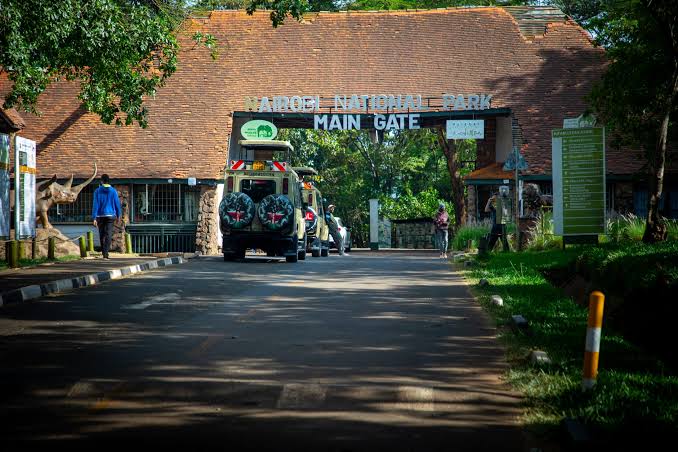
Quick answer: Nairobi National Park is Kenya’s first national park, about 7 km from the city centre, and covers 117 sq km of open plains, forest and rocky valleys. It is one of the few places on Earth where you can watch lions and black rhinos with skyscrapers on the horizon. A non-resident adult pays USD 80 for 24 hours (2026 KWS rate), and gates are open 6am to 6pm.
Most visitors treat Nairobi National Park as a bonus, a half day squeezed in before a flight or after a long arrival. It deserves more respect than that. The park holds lion, leopard, cheetah, buffalo, giraffe, hippo, zebra, wildebeest, a strong black rhino population and some 500 bird species, all within a short drive of the city. This guide covers everything: history, wildlife, the best time to go, fees, gates, what else is inside the park and how to plan it.
Nairobi National Park at a glance
| Fact | Detail |
|---|---|
| Established | 1946, Kenya’s first national park |
| Managed by | Kenya Wildlife Service (KWS) |
| Size | About 117 sq km |
| Distance from city centre | About 7 km south of central Nairobi |
| Altitude | Roughly 1,533 to 1,760 m above sea level |
| Southern boundary | Mbagathi River, unfenced and open to the Kitengela and Athi-Kapiti plains |
| Other boundaries | Electric fence on the north, east and west |
| Birds | Up to about 500 species recorded |
| Open | 6am to 6pm daily |
| Best known for | Black rhino, lion, giraffe, city skyline views |
A short history of Kenya’s first national park
Before Nairobi existed, the Athi plains were a seasonal rangeland. Maasai pastoralists grazed cattle alongside huge herds of plains game, while Kikuyu farmers worked the forested highlands above. When the railway arrived in the late 1890s the town grew fast, and by 1910 it had around 14,000 residents. Wildlife was pushed onto the plains to the south and west, which were set aside as a game reserve.
Conservationist Mervyn Cowie, born in Nairobi, had noticed game numbers on the Athi plains falling in the early 1930s and campaigned for a national park system. His work led to the opening of Nairobi National Park in 1946, with Cowie as its first director until 1966. It is worth knowing, too, that creating the park meant removing Maasai herders from the land, a part of the story that still shapes relations around the park today.
The park also holds a powerful modern chapter. In 1989 President Daniel arap Moi burned twelve tons of confiscated ivory here, a moment that changed how the world saw Kenya’s stand on poaching. Another far larger burn followed in 2016, and the Ivory Burning Site Monument remains one of the park’s most visited stops.
Wildlife you can see
Nairobi National Park punches far above its size. Open grassland with scattered acacia dominates, with a permanent river and riverine forest in the south, highland dry forest in the west and rocky gorges with candelabra euphorbia. That mix supports an unusual range of animals.
| Animal | What to know |
|---|---|
| Black rhino | The headline act. The park is one of Kenya’s most successful rhino sanctuaries and one of the few places you can reliably see wild black rhino, which is why it is nicknamed the Kifaru Ark. |
| Lion | The area has been recognised as a Lion Conservation Unit since 2005. Sightings are never guaranteed, but early morning drives give the best odds. |
| Leopard and cheetah | Leopards stay in forested valleys and are rare to spot. Cheetahs prefer the open plains. |
| Giraffe | Easy to find, often grazing against the city skyline. |
| Buffalo, hippo, zebra, wildebeest | Common. Hippos and crocodiles live in the Mbagathi River and the dams. |
| Eland, hartebeest, impala, gazelles, waterbuck | Spread across the grasslands and woodland edges. |
| Birds | Up to about 500 species including ostrich, secretary bird, crowned crane, kori bustard and many migrants. |
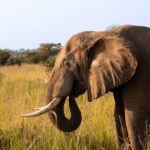
Elephants are listed among the park’s mammals, but they are rarely seen, while orphaned calves are raised nearby (see below). For a deeper look at the big cats, read our guide to where to see lions in Kenya.
The best time to visit
- Dry season, June to October and January to February: animals gather around water, so sightings are strongest. The park is the northern limit of the dry-season movement, and wildebeest and zebra from the Kitengela corridor and Athi-Kapiti plains concentrate here, most noticeably in July and August.
- Long rains, March to May: the park turns green and the birding is excellent, but roads can be slippery and animals spread out.
- Short rains, November and December: lush scenery and fewer vehicles.
- Time of day: the first two hours after the 6am opening are best for cats and rhino. Late afternoon is a good second window, with softer light for photographs.
Entry fees (2026)
Fees follow the KWS tariff that took effect on 1 October 2025. KWS has asked visitors to keep paying the published rates while the tariff is under court review, so always confirm the current figure before you travel. Payment is cashless through KWSpay or eCitizen, so keep a screenshot of your receipt because signal is weak at some gates.
| Visitor category | Adult | Child (5 to 17) |
|---|---|---|
| Non-resident | USD 80 | USD 40 |
| African citizen (outside East Africa) | USD 40 | USD 20 |
| Kenya resident | KES 1,350 | KES 675 |
| East African citizen | KES 1,000 | KES 500 |
Children under five enter free. A vehicle fee applies on top: KES 600 for a private car with fewer than six seats, KES 1,500 for a 6 to 12 seater and more for larger vehicles. Entry covers one visit within 24 hours, so ask the warden for a re-entry permit if you plan to leave and return. Compare with other parks in our Kenya national park fees guide.
Gates and how to get there
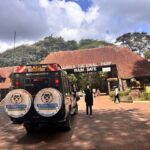
- Main Gate (Lang’ata Road): the usual entry for visitors staying in Nairobi, Karen or Lang’ata. About 20 to 40 minutes from the centre depending on traffic.
- East Gate: more convenient from JKIA, Syokimau and Mlolongo. If you land early, this is the quickest route in.
- Other gates: Cheetah Gate and the Workshop Gate on Mbagathi Road are also used. The Workshop Gate is a separate entrance used for the Sheldrick Trust visit.
A normal saloon car can cover the main roads in dry weather, but a 4×4 or safari vehicle with a pop-up roof and a guide who knows the tracks gives a far better experience. After heavy rain, black-cotton soil can bog down ordinary cars. For airport logistics, see our JKIA and Wilson Airport guide.
More than a game drive: what else is inside
Nairobi Safari Walk
A raised boardwalk through forest and savannah habitats where you can see lion, cheetah, leopard, rhino, hippo and other animals in enclosures. It also explains how Kenya’s landscapes and wildlife are linked, which is useful for families and for anyone with limited time.
Nairobi Animal Orphanage
Run by KWS beside the main gate, it cares for orphaned and injured animals. The animals were moved to larger, more natural enclosures after earlier criticism. The Wildlife Conservation Education Centre here also welcomes thousands of Kenyan school children every week.
Ivory Burning Site Monument
Standing where the ivory pyres were lit, this is a sobering stop and a good photo spot with views over the plains.
Hippo pools and picnic sites
A short walk along the river lets you watch hippos and crocodiles from safe viewing points. Closed shoes are strongly recommended. Picnic sites such as Mokoyiet and Kingfisher are good for a packed lunch.
David Sheldrick Wildlife Trust orphans’ nursery
Next to the park, the Sheldrick Trust hand-rears orphaned elephant and rhino calves before returning them to secure sanctuaries in Tsavo. Read our Sheldrick orphanage visit guide. Public viewing is limited to a short daily window and booking ahead is wise, so check the trust’s own site. Pair it with the Giraffe Centre for a full Nairobi wildlife day.
Night game drives
These can be arranged in advance with KWS (about 7pm to 9pm). They offer a chance of seeing nocturnal animals such as bush babies and hyenas, but a licensed guide is essential.
Threats the park faces
A national park on the edge of a fast-growing capital is under constant pressure. Nairobi grew from about 189,000 people in 1948 to several million today. The electric fences keep animals away from people, but the unfenced southern edge is Nairobi’s critical link to the Athi-Kapiti ecosystem, and settlement, fencing and land demand in Kitengela are squeezing the migration corridor. Pollution from industrial areas on the northern boundary, human-wildlife conflict, poaching and infrastructure such as the elevated railway line crossing the area add to the strain. Maasai landowners in Kitengela work with KWS through the Kitengela Landowners Association, and part of the park’s revenue funds community projects. Your entry fee helps sustain this.
Sample half-day plan
| Time | Activity |
|---|---|
| 5:45am | Pick-up from your hotel in Nairobi |
| 6:00am | Enter through the Main Gate or East Gate |
| 6:00 to 9:30am | Game drive: plains, dams and the Mbagathi river forest |
| 9:30 to 10:15am | Breakfast stop or picnic site |
| 10:15 to 11:00am | Ivory Burning Site Monument and hippo pools |
| 11:00am to 12:00pm | Sheldrick orphans or Animal Orphanage and Safari Walk |
| 12:30pm | Back at your hotel or on to the airport |
Practical tips
- Go with a guide. Spotting a rhino lying low in the croton is much easier with trained eyes.
- Bring binoculars, water, sun protection and a light jacket for the early start.
- Keep to marked tracks, stay in the vehicle outside designated areas and never feed animals.
- The park is a great first or last day of a safari. Many travellers use it to see rhino before heading to the Masai Mara, where rhino are harder to find.
- Plan about three to five hours for a proper drive, longer if you add the Safari Walk and orphanage.
Frequently asked questions
How far is Nairobi National Park from the city centre?
About 7 km, which is 20 to 40 minutes by road depending on traffic.
How much does Nairobi National Park cost in 2026?
A non-resident adult pays USD 80 per 24 hours, a child USD 40. Kenya residents pay KES 1,350 and East African citizens KES 1,000. A vehicle fee is charged on top. Confirm before travel as the tariff is under review.
Can you see rhinos in Nairobi National Park?
Yes. It is one of the best places in Kenya to see wild black rhino, although sightings are never guaranteed.
Are there lions in Nairobi National Park?
Yes. It is a recognised Lion Conservation Unit. Early morning drives give the best chance.
How long should I spend in Nairobi National Park?
Three to five hours for a proper game drive. Add another one to two hours for the Safari Walk, orphanage or Sheldrick visit.
What time does Nairobi National Park open?
The gates open at 6am and close at 6pm. Night drives can be arranged in advance.
Is Nairobi National Park worth visiting?
Yes, especially if you have a layover or a spare morning. It is also an easy way to see rhino and giraffe against a city skyline.
Fees and opening hours are correct at the time of writing and can change. Confirm with the Kenya Wildlife Service before you travel.