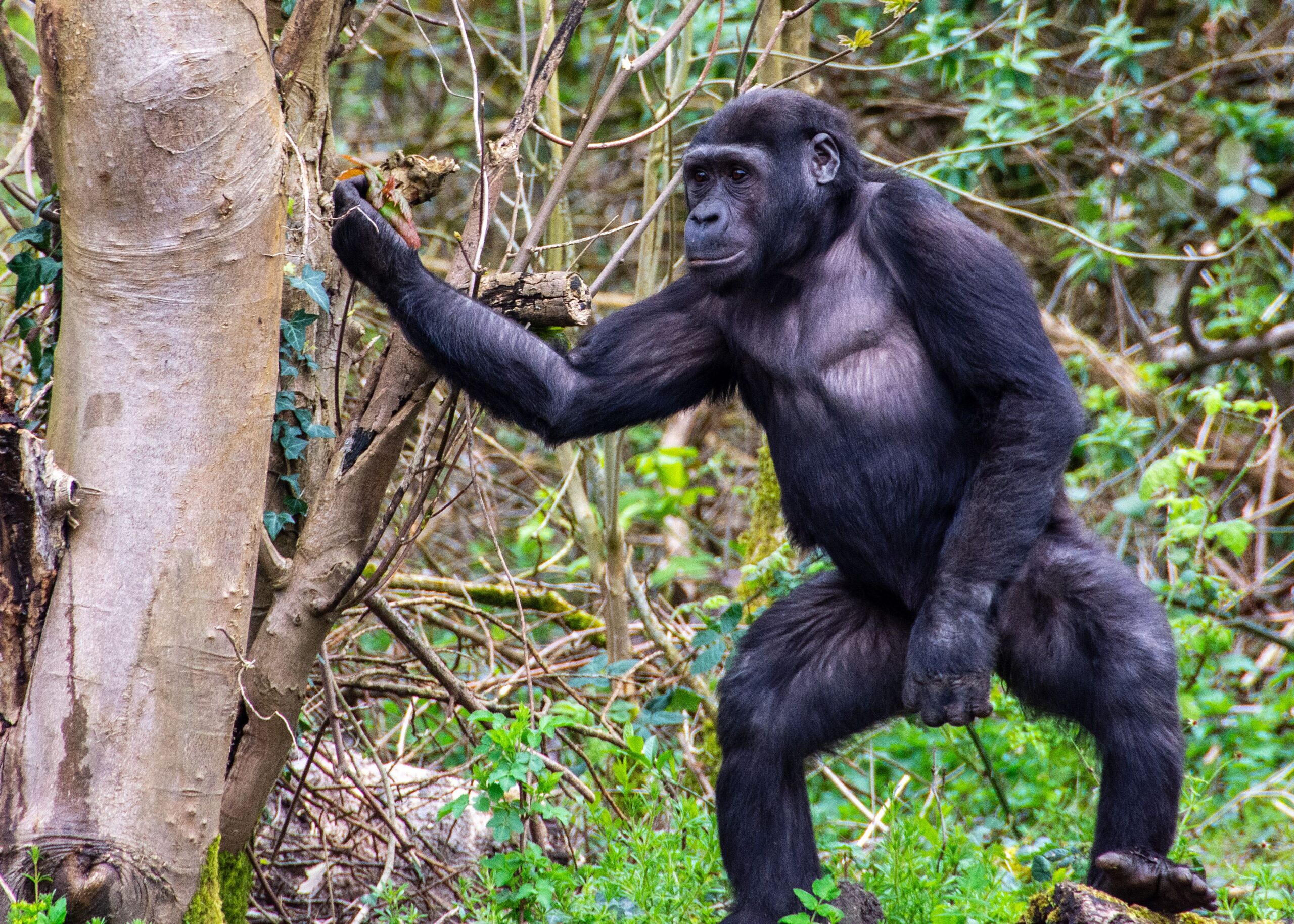
Quick answer: gorilla trekking in Uganda means a ranger briefing at dawn, a guided hike of anything from one hour to most of a day through Bwindi Impenetrable National Park, and then one hour with a habituated mountain gorilla family. Groups are limited to eight visitors, the minimum age is 15, and you must stay a few metres back. This guide walks through the whole day, the four Bwindi sectors, how fit you need to be, what to wear, the rules, and how to plan around the weather.
Gorilla trekking in Uganda at a glance
| Question | Answer |
|---|---|
| Where | Bwindi Impenetrable National Park (and Mgahinga Gorilla National Park) |
| Time with gorillas | 1 hour from first sight |
| Maximum group size | 8 visitors per gorilla family per day |
| Minimum age | 15 years |
| Trek length | From about 1 hour to most of a day |
| Altitude | Roughly 1,190 to 2,607 m in Bwindi |
| Rain | About 1,400 to 1,900 mm a year; wettest March to April and September to November |
| Best for | Travelers who can walk uphill for several hours, or who arrange a porter or sedan chair |
Bwindi holds about half of the world’s mountain gorillas, and a 2018 census counted around 459 of them in the park. That makes it the most important place on earth to see them, and the reason a well-run trek matters so much to the animals themselves.
The day, hour by hour
No two treks run the same, because the gorillas move and the rangers adjust. This is the usual rhythm for a gorilla trekking day in Bwindi.
| When | What happens |
|---|---|
| Early morning | Breakfast at your lodge, then a short drive to the trailhead of your sector. |
| Around 7:30 am | Briefing at the park office. Rangers explain the rules, check how everyone feels and assign you a gorilla family. |
| Mid-morning | The hike. Trackers who went in earlier radio the family’s position so the guides know where to head. |
| Contact | You leave extra bags with the porters and walk the last stretch with cameras only. |
| One hour | Time with the family, counted from first sight. |
| Afternoon | Walk back, certificate at the trailhead if offered, a long lunch and a very early night. |
The briefing: why it matters
Families are assigned on the morning itself, not when you book. Rangers look at the group’s fitness, ask who wants a gentler trek and match people to families that sit closer or farther away. Be honest here. Telling them you have a bad knee costs you nothing, while hiding it can turn a good day into a hard one.
It is also where you are screened. Anyone with a cold, flu or stomach bug can be refused, because mountain gorillas catch human respiratory illness easily. Keep a spare day in your schedule if you can, and be careful in the week before you trek.
The four Bwindi sectors
Bwindi is divided into four trekking sectors, each with its own gorilla families, trailheads and lodges. Where you stay decides where you trek, so choose the sector first and the lodge second.
| Sector | What it is known for |
|---|---|
| Buhoma | The original trekking sector in the north. Well established, with a good choice of lodges and a wide mix of terrain. |
| Ruhija | Higher up in the east, cooler and misty, and popular with birders as well as gorilla trekkers. |
| Rushaga | In the south, with the largest number of habituated families, which gives more flexibility on permit dates. |
| Nkuringo | Also in the south. Steep hills and dramatic views across the valleys, and a tougher walk for many groups. |
Mgahinga Gorilla National Park, in the Virunga volcanoes near the Rwanda border, is the other place in Uganda to trek, and it also offers golden monkey tracking. Our Uganda vs Rwanda gorilla trekking comparison helps you decide between countries.
How hard is gorilla trekking? Fitness and preparation
Bwindi sits between roughly 1,190 and 2,607 metres, and you will walk uphill through dense, damp forest, sometimes on a narrow path and sometimes with no path at all. A trek can take under an hour or most of the day, and nobody can tell you in advance which one you will get. People who call it easy have usually been lucky with their family.
- Train for hills and stairs for four to six weeks before you fly. Altitude and mud tire people far more than distance.
- Hire a porter. A rough guide is around USD 20. It gives a local family income, takes your pack and gives you a hand on slippery slopes.
- Ask about a sedan chair if mobility is a concern. Arrange it in advance through your operator.
- Break in your boots on a few long walks before the trip.
- Tell the rangers about knees, heart conditions or asthma at the briefing so they can match you to the right family.
The hour with the gorillas
The hour starts the moment you see the family, so the sooner you find them, the more relaxed it feels. Expect a silverback sitting like a boulder, mothers with babies, and youngsters who ignore every rule you were told. Guides cut a path with machetes and keep the group together while you watch. Most visitors say the hour passes far faster than they expect.
| Rule | Why it exists |
|---|---|
| Stay at least 7 metres away (some guides ask for 10) | Protects the gorillas from our germs and keeps everyone calm. If they approach you, stay still and let them pass. |
| No flash photography | Bright light startles them. |
| Keep your voice low | Whispers are fine. Loud laughter is not. |
| No eating or drinking near the family | Food smells draw attention and spread bacteria. |
| Wear a mask if asked | Rangers will tell you at the briefing. |
| Do not stare into a silverback’s eyes | It reads as a challenge. Look down and move on calmly. |
| Never go if you are ill | Gorillas share about 98% of our DNA and catch our illnesses. |
Photography tips for gorilla trekking
The forest is dim, so a fast lens or a phone with a strong night mode helps. Turn flash off before you leave the trailhead, keep your elbows tucked in to steady the shot and shoot in short bursts rather than zooming wildly. A small cloth for lens condensation is worth carrying. Our general guide to safari photography in Kenya covers the same fundamentals.
What to wear and what to pack for gorilla trekking
- Long, lightweight trousers tucked into socks, plus a long-sleeved top. Nettles and biting ants are real.
- Sturdy waterproof hiking boots with good grip.
- Gardening gloves for hauling yourself up on vines and branches.
- A light rain jacket, even in the dry season.
- A hat, insect repellent and sunscreen.
- Water, snacks and a small daypack.
- A mask, because rangers may ask you to wear one.
Our full Kenya safari packing list covers the rest, and the vaccination and health checklist and malaria advice are worth reading before any East Africa trip.
When to go: weather and best time for gorilla trekking
You can trek in any month. June to August and December to February are the drier windows, when trails are firmer and the views clearer. March to April and September to November are the wettest. Rain makes the hike slower and the mud deeper, but fewer visitors travel then, and the gorillas are just as easy to find. Pack waterproofs whenever you go.
Permits and booking
You need a permit for a specific date and sector, and the most popular dates sell out well ahead. Our guide to Uganda gorilla trekking permits explains how the system works, and your operator will handle availability. Because the sectors, lodges and permit dates have to line up, book the permit before you book flights.
Gorilla habituation experience
If one hour is not enough, Bwindi also offers a habituation experience, where you join researchers and trackers with a semi-habituated group for up to four hours. It costs more and is physically harder, and it is aimed at keen wildlife lovers and photographers.
Combining gorillas with a Kenya safari
Many travelers do a Maasai Mara or Amboseli safari first and then fly to Entebbe for Bwindi. Our guide to a Kenya and Uganda safari combination explains the logistics. If you only want gorillas, our 3 day gorilla trekking safari in Bwindi covers the trek in a long weekend.
Tipping and giving back
Rangers, trackers and porters rely on tips, and US dollars in small notes are easiest. Our safari tipping guide sets out the general approach, and your operator can suggest amounts for Bwindi. Your permit fee and tips help protect the forest and the communities around it.
Gorilla trekking in Uganda: common questions before you go
Travellers often ask whether gorilla trekking in Uganda is safe, and the answer is yes when you follow the rules. Rangers and trackers accompany every group, and the gorilla families are habituated to human presence. You must keep your distance, stay quiet, avoid direct eye contact with the silverback, and never trek if you have a cold or flu, because gorillas are vulnerable to human illness. Rangers may ask you to wear a mask near the animals. Check current rules with the Uganda Wildlife Authority before booking, because conditions and requirements change.
Another frequent question is how to prepare physically. Walk regularly on uneven ground for several weeks, wear broken-in boots and bring gloves for gripping vegetation. Hire a porter if you want help with your bag, which also supports local families. The trek can be one hour or most of a day depending on where the gorillas slept, so carry water and a packed lunch. Finally, remember that gorilla trekking in Uganda is a quiet wildlife encounter rather than a show: patience is part of the experience.
Making the most of gorilla trekking in Uganda
For the best experience, keep your daypack light, protect your camera from rain and listen to your guide in the briefing. Plan at least a night before and after the trek in a nearby lodge so you are not rushing. If you are weighing Uganda against its neighbour, read our Uganda vs Rwanda comparison. To add Kenya’s savannah to the trip, talk to our team about combining the two.
Frequently asked questions
How long do you spend with the gorillas in Uganda?
One hour, counted from the moment you first see the family. The walk to find them does not count. The separate gorilla habituation experience in Bwindi allows up to four hours.
How fit do you need to be for gorilla trekking in Bwindi?
You need to be able to walk for several hours on steep, muddy, uneven ground at altitude. Treks range from about an hour to most of a day. Porters and sedan chairs are available for anyone who needs help.
How many people can visit a gorilla family?
A maximum of eight visitors per habituated gorilla family per day.
What is the minimum age for gorilla trekking in Uganda?
15 years, measured on the day of the trek.
Can I go gorilla trekking with a cold?
No. Mountain gorillas catch human respiratory infections easily, and rangers can refuse entry to anyone who looks unwell.
What is the best time for gorilla trekking in Uganda?
June to August and December to February are the drier months and give easier trails. Trekking runs all year, and the gorillas are there whatever the weather.
Which sector of Bwindi is best?
Buhoma, Ruhija, Rushaga and Nkuringo each suit different travelers. Rushaga has the most gorilla families, Buhoma is the longest established, and Nkuringo is steep with big views.
Do I need a yellow fever certificate for Uganda?
Uganda asks most arriving visitors for proof of yellow fever vaccination. Rules change, so confirm with your doctor and your operator before you fly.
Sources: Uganda Wildlife Authority guidelines as relayed by operators such as Duma Explorer, and park facts from Wikipedia. Rules and fees change, so confirm with your operator before you travel.