Quick answer: Lewa Wildlife Conservancy is a private, UNESCO-listed conservancy on the Laikipia plateau, north of Mount Kenya. Go for rhinos, the world’s largest single population of Grevy’s zebra, and quiet game drives and walks with very few other vehicles. Plan two to three nights, fly in from Nairobi’s Wilson Airport (about an hour), and pair it with Samburu or the Maasai Mara. It is not a budget stop: most stays are in a small number of high-end lodges.
Details checked in October 2026. Rhino and zebra numbers change as Lewa publishes new counts, and lodge availability and conservancy fees change, so confirm current figures before you book.
Most first-time visitors to Kenya build a safari around the Maasai Mara and Amboseli, and rightly so. But if you have a few extra days and an interest in conservation, Lewa is the stop that tends to be remembered longest. It is where you can sit at a respectful distance from a black rhino browsing in the bush, drive past Grevy’s zebra with their narrow, finely striped coats, and hear from the people whose daily work keeps those animals alive.
This guide explains what Lewa is, what you can realistically expect to see, how it differs from the other parks, and how to fit it into an itinerary without overspending.
Lewa Wildlife Conservancy at a glance
| What to know | |
|---|---|
| Where | Laikipia plateau, north of Mount Kenya, in Meru County |
| Size | About 62,000 acres (roughly 250 square kilometres), according to Lewa |
| Status | Private, non-profit conservancy; part of the Mount Kenya World Heritage Site since the 2013 extension |
| Headline wildlife | Black and white rhino, Grevy’s zebra, elephant, lion, leopard, buffalo, giraffe, cheetah, over 400 bird species |
| Getting there | About an hour by light aircraft from Wilson Airport, or a long drive of five to six hours from Nairobi |
| Best for | Rhino sightings, conservation-minded travellers, walking, couples and photographers who dislike crowds |
| Typical stay | Two to three nights |
A short history: from cattle ranch to World Heritage
Lewa began life as a cattle ranch. The land was granted to the Craig family in the 1920s, and in 1983 the family and conservationist Anna Merz established the Ngare Sergoi Rhino Sanctuary on part of it, at a time when poaching had devastated Kenya’s rhinos. The rest of the ranch was brought into the effort over the following years, and the conservancy as it exists today took shape in the mid 1990s.
Two later milestones matter for visitors. In 2013 UNESCO extended the Mount Kenya World Heritage Site to include Lewa and the neighbouring Ngare Ndare Forest, linked to the mountain by an elephant corridor of about 9.8 kilometres. UNESCO’s own listing singles out Lewa as home to the largest resident population of Grevy’s zebra in the world. Lewa has also featured on the IUCN Green List of well-managed protected areas, which was announced again in 2018.
What you can expect to see
Rhinos. This is Lewa’s reason for existing. Lewa states that it protects around 14 percent of Kenya’s rhino population, including both black and white rhino. The two species are easy to tell apart once you know how: white rhinos graze and carry a wide, square mouth, while black rhinos browse and have a pointed, hooked upper lip. Black rhinos are far shyer and critically endangered, so a sighting is never guaranteed, but guides here track individual animals and know where they have been feeding. If rhinos are the main goal, read our guide to rhinos in Kenya to compare Lewa with Ol Pejeta and Nakuru.
Grevy’s zebra. The Grevy’s is bigger than the plains zebra you will see in the Mara, with large rounded ears and stripes so fine they seem to shimmer at a distance. It is endangered, found in only a few places in Kenya and Ethiopia, and Lewa holds the largest single population in the world. It is also easy to see here, which is not true of most places.
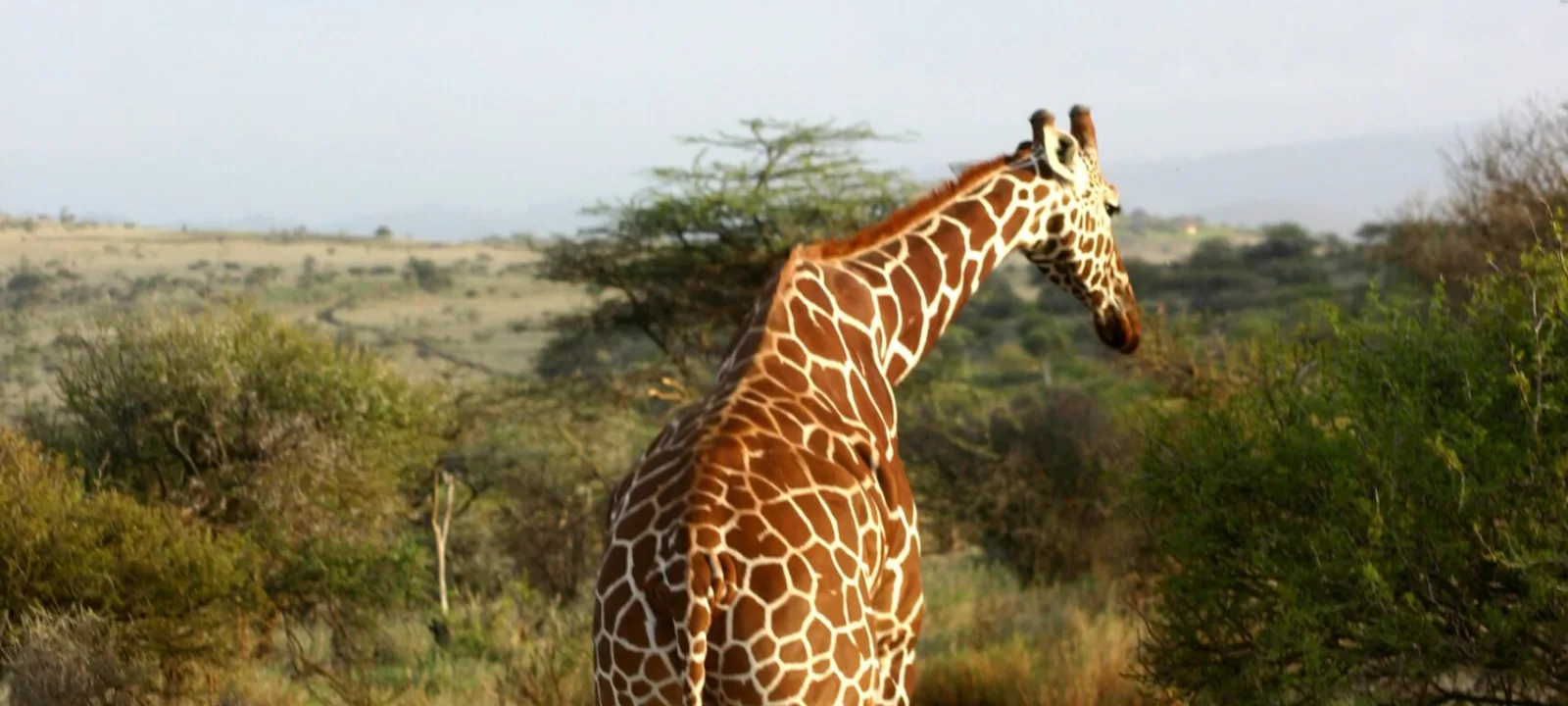
Elephants, big cats and plains game. Lewa has lion, leopard, elephant and buffalo as well as rhino, so it is sometimes described as having the Big Five, along with giraffe including the reticulated giraffe of northern Kenya, eland, cheetah and many antelope. Wild dogs are rare and only occasionally seen. Do not expect the dense predator action of the Mara; the habitat is thicker and the animals are more dispersed.
Birds. More than 400 species have been recorded. Even a casual birder will notice species that do not occur in southern Kenya parks. If birding is a priority, our Laikipia conservancies guide explains how the region compares.
What you can do
Because Lewa is private, activities are more flexible than in a national park. Typical options, which vary by lodge, include:
- Morning and afternoon game drives, often with far fewer vehicles than the Mara.
- Guided bush walks with an armed ranger, which are a highlight for many visitors.
- Bush breakfasts, picnic lunches and sundowners.
- Horse riding among the plains game, where offered.
- Visits to rhino monitoring and community projects, arranged by your lodge.
- Day trips next door to Ngare Ndare Forest, known for its forest walks and canopy walkway.
Ask your lodge whether night drives are permitted on your dates; many Laikipia properties offer them, but rules differ.
Where to stay
Accommodation on Lewa is small in scale and mostly at the upper end of the market. Safarilink’s Lewa page lists properties such as Lewa Wilderness, Sirikoi, Kifaru, Lewa House and Lewa Safari Camp among the options, but availability and standards change, so we confirm current choices when we plan your dates. A conservation fee is normally charged per person per night, and many lodges include it in their rates; always ask for it to be shown on your quote.
Getting there
The easiest way is by air. Scheduled and charter flights run from Wilson Airport in Nairobi to the Lewa Downs airstrip in about an hour, and the same aircraft often continue to Samburu or the Maasai Mara, which is why Lewa fits so neatly into a flying safari. Our guide to bush flights in Kenya explains baggage limits and what the flights cost. The road journey from Nairobi takes roughly five to six hours and is best done as a stopover on the way to or from Mount Kenya.
When to go
| Months | What to expect |
|---|---|
| January to February | Dry, warm days, good wildlife viewing around remaining water |
| March to May | Long rains. Lush and quiet, with some lodges closed or discounted |
| June to October | Dry season and the most comfortable weather; prime time for game drives and walks |
| November to December | Short rains with sunny spells; green landscapes and fewer visitors |
The altitude means mornings and evenings are cool even in the dry season, so pack a warm layer. Our best time to visit Kenya guide covers the whole country month by month.
How Lewa fits into an itinerary
Lewa is rarely a standalone trip. The most successful combinations are:
- Lewa, Samburu and the Maasai Mara by air, for a northern-and-southern contrast with very little driving.
- Lewa and Ol Pejeta for rhinos, together with the chance to see the last two northern white rhinos at Ol Pejeta. Our Ol Pejeta guide explains that visit.
- Lewa and the Aberdare or Mount Kenya for a quieter, highland-and-wildlife trip. See the Aberdare guide.
Visiting for a reason: conservation and community
A stay at Lewa supports more than the animals. Lewa reports that its education programme reaches more than 9,000 children a year and that four Lewa-supported clinics serve more than 37,000 patients annually, alongside water, agriculture and micro-credit work in the surrounding communities. Each year the conservancy also hosts the Safaricom Marathon, one of Kenya’s best-known charity races, which in 2026 was scheduled for 27 June and aimed to raise funds for wildlife protection. If your dates allow, running or cheering is a memorable way to see the place.
Mistakes we see travellers make
- Treating Lewa as a day trip from Nairobi. The drive is long and you lose the best light.
- Expecting the Mara’s predator density or the migration. Lewa is about rhinos, zebra and space.
- Booking only one night. Two nights give you at least three game activities and a better chance of a black rhino.
- Not asking what the conservation fee covers or whether it is included.
- Skipping the walk. It is often the best part of the stay.
If you would like us to match your dates to an itinerary that includes Lewa, tell us when you plan to travel and who is coming, and we will propose a route and flight timings.
Where these figures come from
Size, rhino share and community figures come from Lewa Wildlife Conservancy. The World Heritage status, 2013 extension and Grevy’s zebra statement come from the UNESCO World Heritage Centre listing for Mount Kenya. Lodge, activity and bird details are from Safarilink’s Lewa page, and the marathon details from The Star.
Safaris that fit this guide
The Lewa itinerary we offer links the conservancy with Samburu and the Maasai Mara by air:
- 9 Days Luxury Flying Safari: Lewa, Samburu and the Great Maasai Mara Adventure — Lewa, Samburu and the Mara, linked by flights
- 8 Days Classic Kenya Safari: Samburu, Ol Pejeta, Maasai Mara and Amboseli — a road-based route that also covers Ol Pejeta’s rhinos
- 2 Days Mount Kenya Safari: Ol Pejeta Scenic Adventure — a short highland-and-rhino add-on
Keep reading: Laikipia conservancies guide, Rhinos in Kenya and Samburu National Reserve guide.
Not sure which trip suits you? Browse all our safaris or message us on WhatsApp and we will match your dates and budget to a plan.
Frequently Asked Questions
What is Lewa Wildlife Conservancy famous for?
Lewa is known for rhino conservation and for holding the largest single population of Grevy’s zebra in the world. It is a private, non-profit conservancy in northern Kenya that is part of the Mount Kenya World Heritage Site.
Can you see rhinos at Lewa?
Yes. Lewa protects both black and white rhinos and says it holds around 14 percent of Kenya’s rhino population. Black rhinos are shy, so a sighting is likely but never guaranteed. Guides track individual animals, which improves your chances.
How many days do you need at Lewa?
Two to three nights is ideal. That gives you several game drives and a bush walk, and enough time to see rhinos, Grevy’s zebra and elephants without rushing.
How do you get to Lewa from Nairobi?
The easiest way is a flight of about an hour from Wilson Airport to Lewa Downs. By road it takes roughly five to six hours, so most visitors fly and combine Lewa with Samburu or the Maasai Mara.
Is Lewa part of Laikipia?
Lewa lies on the Laikipia plateau north of Mount Kenya and is usually grouped with the Laikipia conservancies, although administratively it falls in Meru County.
When is the best time to visit Lewa?
June to October is the most comfortable dry season for game drives and walks. January and February are also good. March to May has the long rains and is quieter and cheaper.
Is Lewa a good choice for a first safari?
It works well as an add-on to a first safari, but it is not the best first stop on its own. The Maasai Mara or Amboseli give you more classic wildlife scenes; Lewa adds rhinos, walking and quiet.