Where to find cheetahs
- Maasai Mara. The open plains and short grass give cheetahs space to hunt, and the Mara is the best-known place to see them. See our Masai Mara guide.
- Amboseli. Open terrain and good visibility make sightings possible, especially in the dry season.
- Samburu and Laikipia. Fewer vehicles, with cheetahs sometimes seen in remote corners; see the Samburu guide.
- Nairobi National Park. A small number live there, a surprise given how close the city is.
How cheetahs hunt
Cheetahs are daytime hunters, usually active in the early morning and late afternoon when it is cooler, which makes them easier for visitors to watch. They stalk to within a short distance, then sprint. A cheetah can reach speeds of around one hundred kilometres per hour in short bursts, but it can only keep this up for a few hundred metres. Afterwards, the animal is exhausted and may lose its meal to lions or hyenas.
Cheetah or leopard?
- Cheetahs are lighter and more slender, with a small head and solid black spots, plus black tear marks.
- Leopards are heavier and more muscular, with rosette-shaped markings, and they often rest in trees.
- Cheetahs often sit upright to look out; leopards prefer cover.
Family life
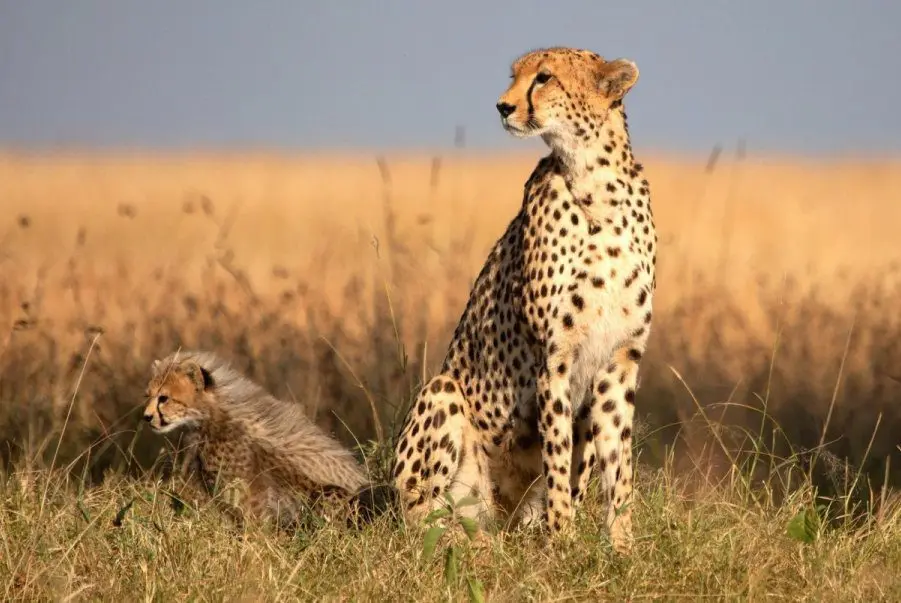
Females raise cubs alone, sometimes with three or four cubs, though many do not survive because of predators. Males often live in small coalitions of brothers. The mother moves her cubs frequently to avoid lions and hyenas. Watching a mother teach her cubs to hunt is one of the most memorable sights on safari.
Watching responsibly
Cheetahs rely on daytime hunting, and a crowd of vehicles can interfere with a hunt or scare away prey. Choose guides who keep a respectful distance, keep voices low and never encourage drivers to block a cheetah’s path. Vehicle numbers are controlled in some conservancies. See safari etiquette and reserve versus conservancy.
Photography
Cheetahs are great subjects when they climb on a mound or vehicle. A fast shutter speed and a long lens help. See our photography tips.
Cheetahs are vulnerable, so seeing them is a privilege. Ask us about the best times and places for a cheetah-focused trip.
Quick answers
Where is the best place to see cheetahs in Kenya?
The Maasai Mara is the best known, with Amboseli, Samburu and Laikipia also offering chances.
How can I tell a cheetah from a leopard?
Cheetahs are slim with solid spots and black tear marks on the face; leopards are heavier with rosette markings and often rest in trees.
How fast can a cheetah run?
Around 100 kilometres per hour in short bursts of a few hundred metres.
Safaris that fit this guide
These Cherish Africa Safaris trips match what this guide covers. We can adjust any of them to your dates, group size and budget.
- 7 Days Classic Kenya Safari – Maasai Mara, Lake Nakuru, Naivasha
- 5 Days Mid Range Maasai Mara Migration, Lake Nakuru, Lake Naivasha Safari
- 8 Days Kenya Safari Tour – Stunning Wildlife and Scenic Lakes Experience
Not sure which trip suits you? Browse all our Kenya safari tours or send us an enquiry.
How many cheetahs in Kenya are left?
Cheetahs in Kenya are vulnerable. Estimates vary, but there are roughly a thousand or so across the country, with the largest group in the Greater Mara ecosystem and others in Amboseli, Tsavo, Laikipia and the northern rangelands. Globally, cheetahs have lost most of their historic range, and Africa’s total population is only a few thousand. Cheetahs need huge open spaces, and they are poor competitors against lions, leopards and hyenas, which often steal their kills or kill their cubs. Because they live at low densities and breed slowly, small changes in habitat, disease or human conflict can have a large effect on their survival.
How cheetahs in Kenya hunt
Unlike lions or leopards, cheetahs hunt by day, when other predators rest. They climb onto a termite mound, a fallen tree or sometimes the roof of a safari vehicle to scan for prey. After a stealthy approach they sprint, reaching speeds of around a hundred kilometres per hour in a few seconds, then trip the animal with a front paw and bite its throat. The chase rarely lasts more than half a minute because the cheetah overheats and needs time to recover. After the kill, it must eat quickly before a hyena, lion or vulture arrives. Even then, a cheetah loses many kills to other predators, which is one reason its life is so hard. Typical prey includes Thomson’s gazelle, impala and young wildebeest.
Cheetah or leopard: telling the difference
- Spots: cheetahs have solid black spots, while leopards have rosettes, rings of spots.
- Face: only the cheetah has dark ‘tear lines’ running from the eyes to the mouth.
- Build: cheetahs are slim and long-legged with a small head, while leopards are stockier and muscular.
- Behaviour: cheetahs hunt by day and rest on mounds, while leopards are mostly nocturnal and often rest in trees.
- Claws: cheetah claws are semi-retractable and act like running spikes, while leopards have fully retractable claws.
For the other big cat, read our leopard guide and the lion guide.
Family life of cheetahs in Kenya
Female cheetahs live alone except when raising cubs. A litter usually has three to five cubs, which are born in hidden dens and carry a silvery mantle of fur on their backs that may help them resemble a honey badger. Mortality is high: many cubs die in the first months, mostly from lions, hyenas and other predators. The mother moves them frequently and teaches them to hunt by bringing live prey for practice. At around eighteen months the siblings separate. Females leave and live alone, while males often form coalitions with brothers, which helps them hold territory. Watching a mother and cubs on the plains is one of the great Kenyan wildlife experiences.
Where to see cheetahs in Kenya: best parks
- Masai Mara: the best-known place, with open plains and regular sightings. See our Masai Mara guide.
- Amboseli: open terrain and good visibility. See the Amboseli guide.
- Nairobi National Park: cheetahs are present but rare. See the Nairobi National Park guide.
- Laikipia and Samburu: private conservancies and dry-country reserves where cheetahs are sometimes seen. See the Samburu guide.
- Tsavo: thin bush makes cheetahs harder to find, but they are there.
Watching cheetahs responsibly
Cheetahs are sensitive to disturbance because they rely on daytime hunting. Too many vehicles can push a cheetah away from prey or cause a hunt to fail. Good guides keep a respectful distance, limit the number of vehicles near an animal, switch off engines and never drive off tracks. They do not follow a cheetah if it is trying to hunt. Please avoid loud talking, never throw objects, and do not encourage a cheetah to climb on your vehicle. If other vehicles crowd an animal, let your guide move away. Quiet, patient observation often brings the best photographs anyway. Read our responsible safari guide for more.
Cheetahs in Kenya through the year
Cheetahs are present year-round, but the dry seasons, June to October and December to February, make them easier to see because the grass is shorter. In the Mara, July to October is when the herds arrive, and the cheetahs follow the easy prey. After heavy rains, tall grass can hide them. Early morning is the best time, when the cat is most active. A good guide will check termite mounds, shade trees and open ridges.
How to plan a trip to see cheetahs
Allow at least three nights in the Mara, because the park is big and cheetahs wander over a wide territory. Add Amboseli for open views. Choose a private vehicle with a guide who knows how to read behaviour. See our 6-day and 10-day itineraries for routes that include cheetah country, and contact us to plan your own.
Cheetah facts worth knowing
- The cheetah is the fastest land animal, with a top speed of roughly 100 kilometres per hour over short distances.
- It cannot roar. Instead it chirps, purrs and makes a bird-like call that mothers use to find lost cubs.
- Its long tail works as a rudder, helping it turn sharply at speed.
- Cheetahs have a very low genetic diversity, which makes them more vulnerable to disease.
- Cubs have a long mantle of grey fur, which fades as they grow.
- A cheetah usually hunts for only a few hours each day, mostly in the early morning and late afternoon.
Threats facing cheetahs in Kenya
Habitat loss is the biggest danger, as farms, fences and roads fragment the open rangelands that cheetahs need. Conflict with herders occurs when cheetahs take livestock, and illegal trade in cubs is a continuing concern. Competition from lions and hyenas keeps numbers low even in protected areas. Conservation groups work with communities, research teams and the wildlife authorities to monitor cheetahs, reduce conflict and protect corridors. Tourism helps by giving local people a reason to protect predators and by funding patrols. Your choice of operator and your behaviour in the field both matter.
Quick photography settings for cheetahs
Use a fast shutter speed, at least 1/1000 second, for a cheetah in motion and 1/500 for a sitting cat. Set continuous autofocus, choose burst mode and keep the lens at a wide aperture. Photograph from a stable position and shoot at eye level when possible. Look for moments when the cheetah is climbing a mound, grooming or interacting with cubs. See our photography tips for more guidance.
A morning with cheetahs in the Mara: what to expect
A typical cheetah sighting starts with patience. You leave camp before sunrise as the plains turn gold, and your guide scans termite mounds and low rises with binoculars. Often the first clue is another guide’s vehicle parked at a distance. When you find the cat, you may watch it groom, stretch, yawn and survey the grass for an hour before anything happens. Or you may see a sudden burst of speed that ends in seconds. Either way, the quiet moments are part of the experience. Bring a flask of coffee, keep your phone silent and take time to enjoy the animal. Cheetahs reward those who wait.
Cheetahs in Kenya: our advice
Choose a trip long enough to give yourself several chances, travel in the dry season, and book a guide with a good track record in cheetah country. Respect the animals, and they will often let you share a little of their world. To plan a safari that puts cheetahs on your list, talk to our team.
Plan it with people who live here
We are a Nairobi-based team and every trip starts from our own doorstep. If you would like help turning these ideas into a real itinerary, message us on WhatsApp (+254 794 588 242), write to info@cherishafricasafaris.com, or use our contact form. We usually reply the same day.