Gorilla Trekking in Uganda: A Complete Guide to the Trek, Rules and Bwindi Sectors
What a gorilla trekking day in Uganda looks like: briefing, hike, the one hour with the family, fitness, rules and…

Uganda is known as the Pearl of Africa, and it is one of only three countries where you can see endangered mountain gorillas in the wild. We offer gorilla trekking in Uganda, and it makes a memorable addition to a Kenya or Tanzania safari.
Here is how it works and how to plan it.
A permit from the Uganda Wildlife Authority is required for each trekker.
Rangers lead groups into the forest. Treks last from one hour to a full day.
You spend one hour with a gorilla family at close range.
Bwindi sits in south-western Uganda on the border with the Democratic Republic of the Congo, on the edge of the Albertine Rift in the Kigezi Highlands. It was gazetted as a national park in 1991 and became a UNESCO World Heritage Site in 1994. It is managed by the Uganda Wildlife Authority.
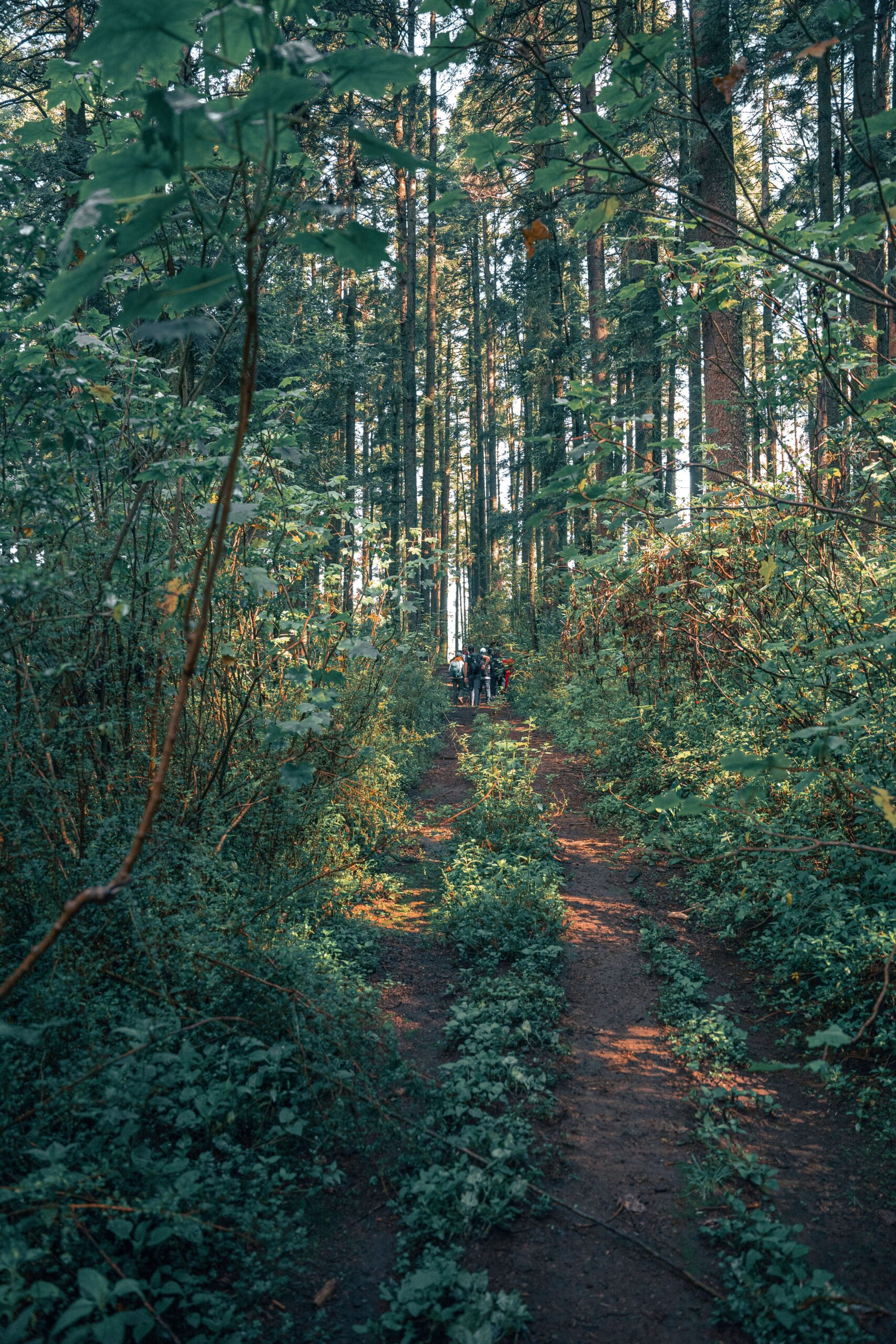
The forest is steep and hilly, with elevations from about 1,190 m to 2,607 m, and the park can only be explored on foot. That is part of its character: trekking here means climbing ridges, crossing streams and pushing through thick undergrowth, which is how the park earned its name.
Bwindi is also rich beyond its gorillas. It is home to around ten primate species, including chimpanzees and several monkeys, more than 350 bird species, and an exceptional range of butterflies, trees and ferns.
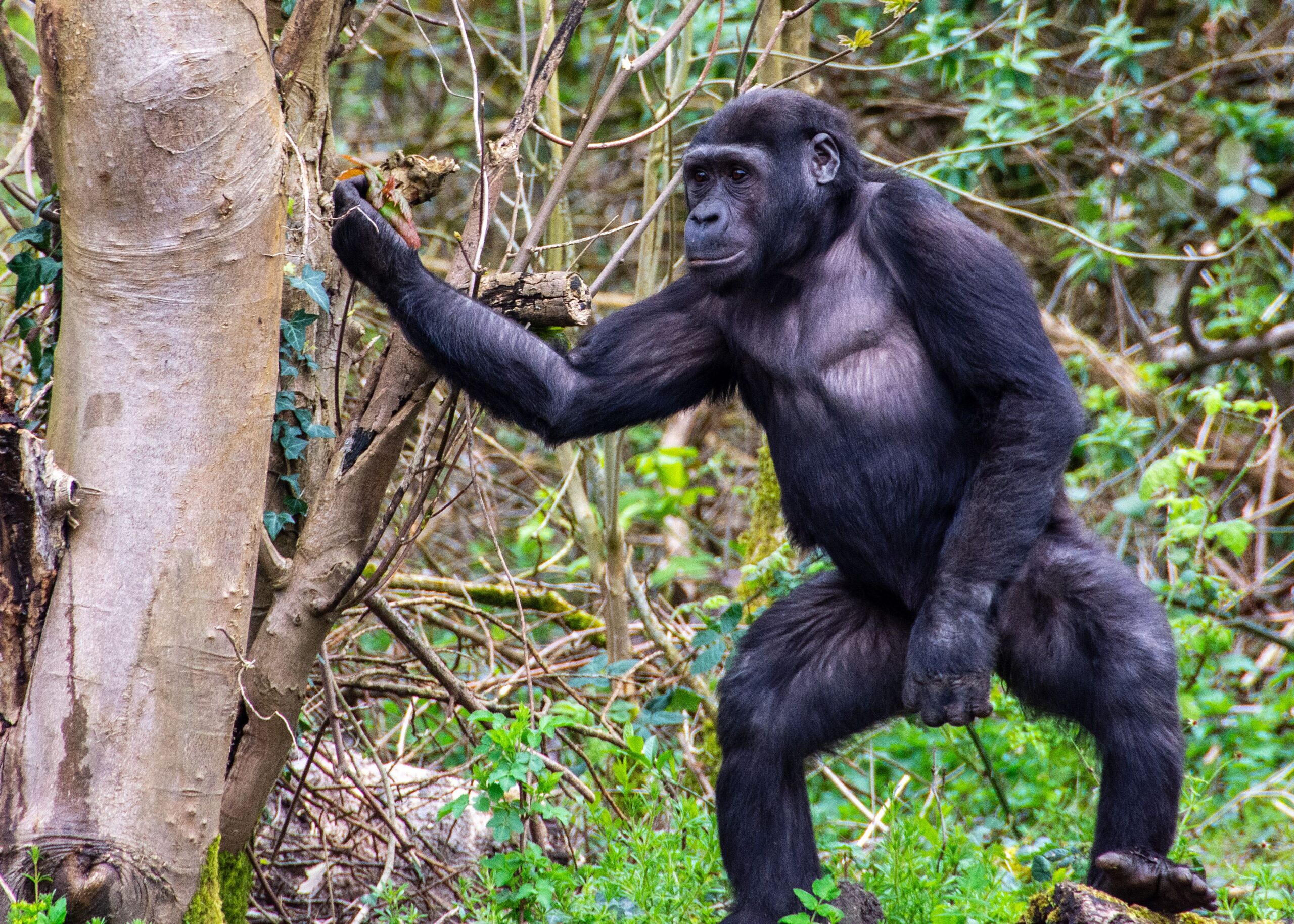
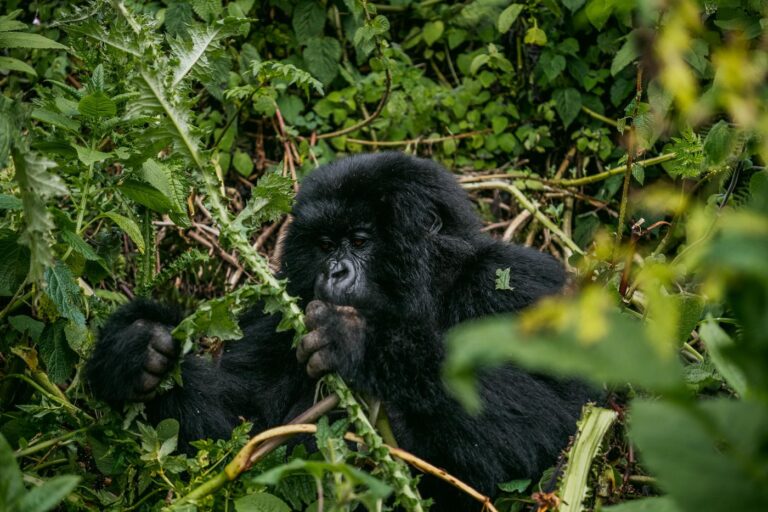
Mountain gorillas are listed as Endangered. Published estimates put the world population at a little over 1,000, living in just two places: the Virunga Mountains, which span Uganda, Rwanda and the Democratic Republic of the Congo, and Bwindi. A 2018 census counted 459 gorillas in 36 social groups in Bwindi, plus a number of solitary individuals.
Groups usually number between 5 and 30 animals and average around 10. A typical family is led by a dominant silverback, who chooses where the group feeds, settles disputes and defends the family. Gorillas eat mostly leaves, shoots, stems and pith, and an adult male can eat well over 15 kg of food a day.
Gorilla tracking in Bwindi began as a tourist activity in 1993. Tourism and the permit fees paid for it are a major part of how these animals are protected.
Trekking is organised from four sectors of the park, each with its own habituated gorilla families and its own feel:
Which sector suits you depends on the gorilla families available on your dates, how fit you are, and where you are travelling from. We check availability and match you to a sector when we plan your trip.
Gorillas share much of their genetic makeup with us and have little immunity to human illnesses. Infectious diseases, mostly respiratory, are reported to cause about a fifth of sudden deaths in mountain gorilla populations. This is why the rules matter:
Rules are set by the Uganda Wildlife Authority and can change, so we confirm the current requirements when you book.
Weighing gorilla destinations? Our guide to Uganda vs Rwanda gorilla trekking sets out the differences side by side.
See our Bwindi guide for sectors, packing and seasons. Add a Kenya safari before or after your trek.
Facts were checked against Wikipedia: Bwindi Impenetrable National Park and Wikipedia: Mountain gorilla. Population figures are published estimates and change with each census.
Our Uganda programme focuses on gorilla trekking.
As early as you can, because permits are limited, especially in peak months.
What a gorilla trekking day in Uganda looks like: briefing, hike, the one hour with the family, fitness, rules and…
Uganda or Rwanda for mountain gorillas? A plain comparison of permit prices, difficulty, travel time and how each fits with…
A Kenya and Uganda safari pairs savannah game with gorilla and chimp trekking. See routes, flights, visa tips, timing and…