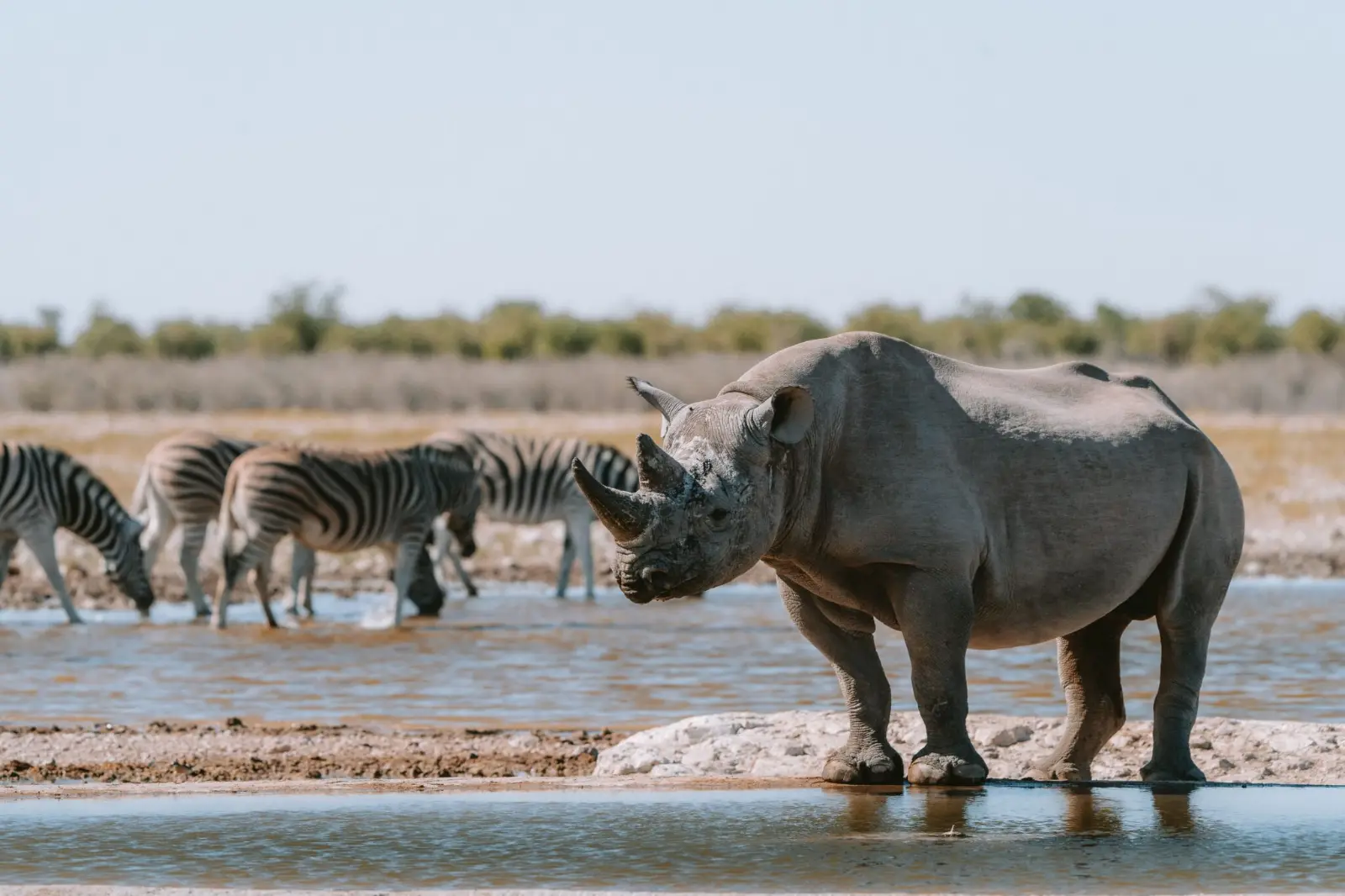
Black rhino vs white rhino
The two species are not distinguished by colour; both are grey. The main differences are:
- Lip shape. Black rhinos have a pointed, hooked upper lip for browsing leaves and twigs. White rhinos have a wide, flat lip for grazing grass.
- Size. White rhinos are larger and heavier.
- Behaviour. Black rhinos are more solitary and easily startled. White rhinos are often seen in small groups.
Where to see them
- Lake Nakuru National Park. One of the best places to see both black and white rhinos. See the Lake Nakuru guide.
- Ol Pejeta Conservancy. Home to black rhinos, southern white rhinos and the last two northern white rhinos. Read our Ol Pejeta guide.
- Lewa and Laikipia. Good for both species and walking opportunities with rangers.
- Nairobi National Park. Black rhinos are regularly seen just outside the capital; see the Nairobi park guide.
- Tsavo West’s Ngulia Sanctuary and Meru. Protected areas that hold rhinos in guarded zones; see Meru.
- Maasai Mara. A few black rhinos survive, but sightings are rare.
The northern white rhino
The northern white rhino is functionally on the edge of extinction. Only two females remain, living under armed protection at Ol Pejeta. Scientists are working on assisted reproduction using stored material, but the future is uncertain. Visiting them is a sobering and meaningful experience.
How conservation works
Rhino protection depends on armed rangers, monitoring, community support and tourism funding. Visitors help by choosing responsible operators and respecting rules at sanctuaries. Never support anyone selling rhino products.
Tips for watching rhinos
- Keep quiet and downwind; rhinos have poor eyesight but a great sense of smell and hearing.
- Follow ranger instructions on walking visits.
- Bring binoculars; rhinos are sometimes seen at a distance.
Rhinos are the final member of the Big Five that many guests try to see, as explained in our Big Five guide. If rhinos are a priority, choose parks and conservancies where they are reliably protected, and we will plan the route.
Quick answers
What is the difference between black and white rhinos?
Black rhinos have a pointed, hooked lip for browsing; white rhinos have a wide flat lip for grazing and are larger.
Where can I see rhinos in Kenya?
Lake Nakuru, Ol Pejeta, Lewa, Nairobi National Park and some parts of Tsavo West and Meru.
How many northern white rhinos are left?
Only two females remain, living under armed protection at Ol Pejeta.
Safaris that fit this guide
These Cherish Africa Safaris trips match what this guide covers. We can adjust any of them to your dates, group size and budget.
- 6 Days Comfort Safari: Amboseli, Lake Nakuru, and Maasai Mara Exploration
- 7 Days Classic Kenya Safari – Maasai Mara, Lake Nakuru, Naivasha
- 5 Days Mid Range Maasai Mara Migration, Lake Nakuru, Lake Naivasha Safari
Not sure which trip suits you? Browse all our Kenya safari tours or send us an enquiry.
The story of rhinos in Kenya
The history of rhinos in Kenya is a story of crisis and recovery. In the 1960s, black rhinos numbered in the tens of thousands across the country. Poaching for horn, driven by demand abroad, caused a catastrophic collapse, and by the late 1980s only a few hundred remained. Kenya responded by creating fenced sanctuaries, forming a dedicated rhino programme and deploying armed rangers to guard the animals around the clock. The effort has worked: numbers have grown steadily for decades, and Kenya is now one of the most important rhino strongholds in Africa. Success is not guaranteed, however, because the threats have not gone away, and every rhino you see is protected by people who watch over it daily.
Black rhino vs white rhino: how to tell them apart
- Lips: the black rhino has a hooked, pointed upper lip for browsing bushes, while the white rhino has a wide, square lip for grazing grass.
- Size: the white rhino is much larger, the second-largest land animal after the elephant.
- Head posture: the black rhino carries its head high, while the white rhino holds it low towards the ground.
- Behaviour: black rhinos are more solitary and sometimes more irritable, while white rhinos can be seen in small groups.
- Calves: a white rhino calf usually walks in front of its mother, while a black rhino calf follows behind.
Where to see rhinos in Kenya: a practical guide
- Lake Nakuru National Park: one of the best places for both black and white rhinos in a compact setting. See the Lake Nakuru guide.
- Ol Pejeta Conservancy: the largest black rhino population in East Africa and the home of the last two northern white rhinos. See the Ol Pejeta guide.
- Lewa Wildlife Conservancy: a pioneering conservancy known for both rhino species and for its community conservation work.
- Nairobi National Park: black rhinos within sight of the city. See the Nairobi National Park guide.
- Tsavo and Meru: rhino sanctuaries that are well protected, though sightings need more patience.
- Solio and Laikipia conservancies: private reserves with strong rhino programmes. See the Laikipia guide.
The northern white rhino: a species on the edge
Two northern white rhinos remain alive on Earth, both females, living at Ol Pejeta under constant armed protection. The last male, Sudan, died in 2018. Scientists are working on assisted reproduction using stored genetic material and surrogate southern white rhinos. Whether the effort succeeds or not, visiting Ol Pejeta lets you see the animals and understand the scale of loss. It is a sobering experience, and many guests say it changes the way they think about conservation.
How conservation protects rhinos in Kenya
Several things work together to keep rhinos alive. Sanctuaries and conservancies provide secure habitat with fences or patrols. Rangers monitor each animal, often by name, and track its health and movements. Intelligence networks and community partnerships help detect threats. Rhinos are moved between sanctuaries to maintain genetic diversity and prevent overcrowding. Revenue from tourism funds a large part of this work. When you buy an entry ticket or stay at a conservancy lodge, a share goes to protection. Rhinos are also sometimes dehorned or notched for identification, which is a hard but necessary tool in some places.
Best time to see rhinos in Kenya
Rhinos can be seen throughout the year, but the dry seasons, June to October and December to February, make them easier to spot because the vegetation is thinner. Early morning and late afternoon are best, when they are active. In Lake Nakuru, sightings are fairly reliable year-round because the park is small and open. In larger conservancies, a good guide and tracker make a major difference. Read the best time to visit Kenya for wider timing advice.
Rhino safety and etiquette
Rhinos have poor eyesight but a keen sense of smell and hearing. They can charge if they feel threatened, so keep your distance, stay quiet and follow your guide’s instructions. In some conservancies you may track rhinos on foot with an experienced ranger. Walk in single file, move slowly and do not make sudden moves. Never get between a mother and her calf. Always keep to the rules of the park or conservancy. A respectful visitor sees more than a hurried one.
Planning a rhino-focused trip
A trip focused on rhinos in Kenya could combine Nairobi National Park, Lake Nakuru and Ol Pejeta in a few days, with Lewa or Samburu added if you have more time. Most travellers include rhinos as part of a wider safari that also includes the Masai Mara and Amboseli. See the 10-day itinerary and 6-day itinerary for examples. To tailor a route to your interests, contact our team.
Rhino behaviour you might see on safari
Rhinos spend much of the day resting in shade or wallowing in mud to cool down and protect their skin from insects. They are most active in the early morning and evening. Males mark territory with dung middens, which they scatter with their back feet so the scent travels. Females are pregnant for about fifteen to sixteen months and raise a single calf that stays close for two to three years. Oxpeckers often ride on rhinos, eating ticks and acting as an alarm system when danger approaches. If you see a rhino stand still with its ears turned to the wind, it is probably listening for a threat. Give it time and space, and you may see how it moves with surprising speed for such a heavy animal.
Photographing rhinos in Kenya
Rhinos are best photographed in the soft light of early morning and late afternoon. Use a telephoto lens of at least 200 mm to keep a respectful distance. Focus on the eye, then wait for the head to turn for a better portrait. In dusty places, the rhino’s skin can look beautiful against the golden light. Keep the camera steady with a bean bag on the window ledge. Our safari photography tips explain settings and composition in detail. Avoid flash, and never lure the animal closer.
Common questions about rhinos in Kenya
Many visitors ask whether rhinos are dangerous. Like most wild animals, they can be if provoked, but they usually avoid contact. People also ask whether you can see rhinos on foot. Walking with rhinos is possible in some conservancies with armed rangers, but not in most national parks. Another common question is whether horns are removed; in some places they are, as a protective measure, though most rhinos you will see still have theirs. Finally, travellers often wonder how many they will see on a trip. The answer depends on the park and the day, but a visit to Lake Nakuru or Ol Pejeta gives you a very good chance.
Why seeing rhinos in Kenya matters
Every rhino you meet in Kenya is part of a long and fragile recovery. A visit supports rangers, vets, trackers and the communities that live alongside the sanctuaries, and it keeps the economic case for conservation strong. It also reminds you how quickly a species can be lost and how much effort it takes to bring it back. Many travellers say that standing a short distance from a wild rhino, watching it graze with its calf, is the moment they understood why protecting wildlife matters. If you are planning a trip, make rhinos a priority and give them time, because the best sightings reward patience and respect.
Plan it with people who live here
We are a Nairobi-based team and every trip starts from our own doorstep. If you would like help turning these ideas into a real itinerary, message us on WhatsApp (+254 794 588 242), write to info@cherishafricasafaris.com, or use our contact form. We usually reply the same day.