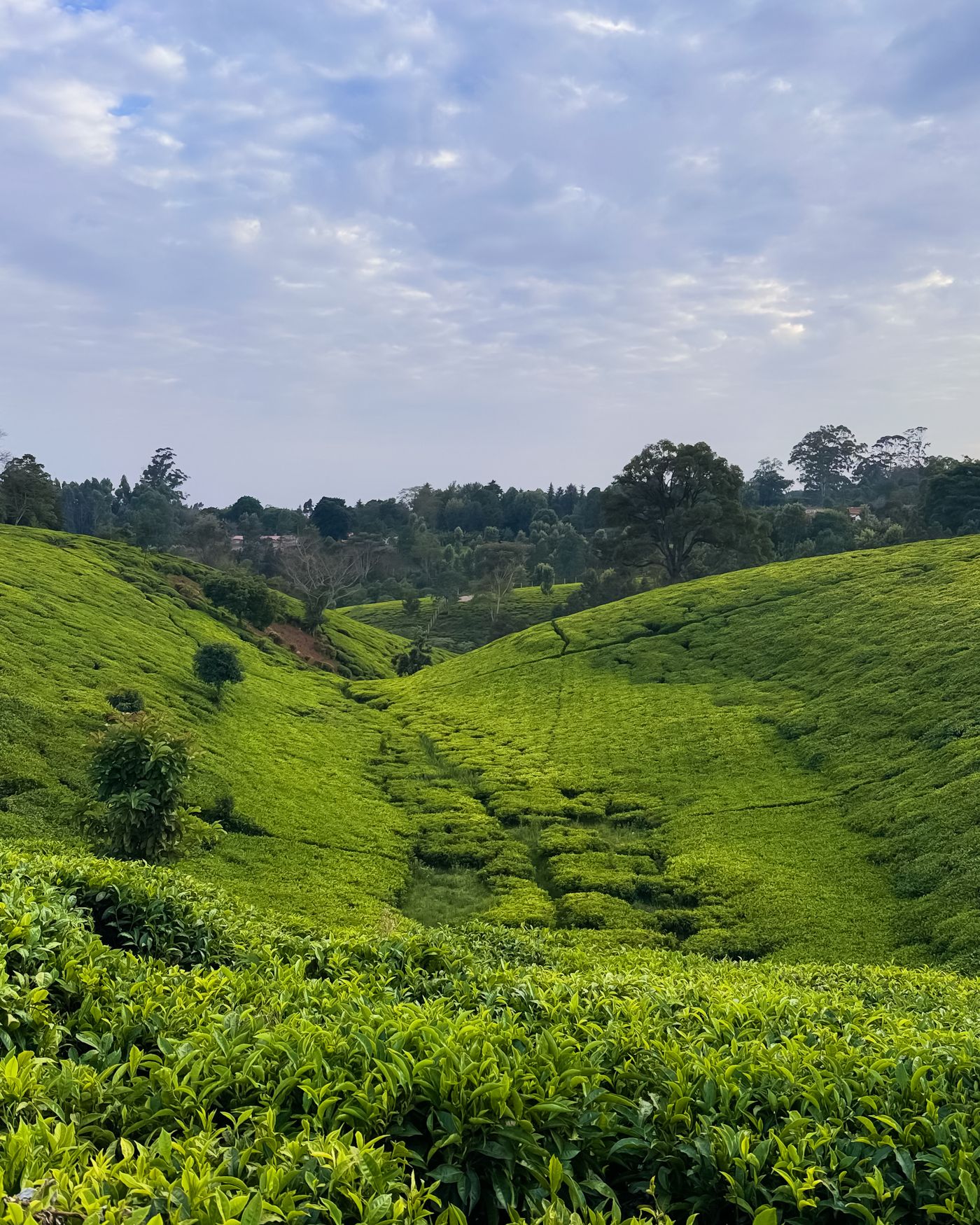
Kenya is known for its coffee and its tea, and both are grown in the highlands not far from Nairobi. A farm visit adds a different kind of day to a safari trip.
Coffee in Kenya
Coffee was first grown in Kenya in 1893, when French Holy Ghost Fathers brought trees from Réunion Island. Their mission farms near Nairobi became the base for later growing. Kenya mainly produces Arabica, and the main growing areas are the high plateaus around Mount Kenya and the Aberdare Range, with other areas including Kisii, Nyanza, Bungoma, Nakuru, Kericho, Nandi and Mount Elgon.
About 70 percent of Kenyan coffee comes from small farms, organised in a cooperative system covering production, processing, milling, marketing and auctions. Kenyan coffee is known for intense flavour, full body and aroma.
Tea in Kenya
Tea was introduced in 1903 by G.W.L. Caine and first planted in what is now Limuru. Commercial estates began in 1924. Most Kenyan tea is black tea, and much of it is processed by the crush, tear, curl method, which suits blends. Kenyan tea is sold through a public auction in Mombasa. The Kenya Tea Development Agency manages small-scale growers across the country.
What a farm visit can include
Typical visits cover the plants, how the crop is picked and processed, and a tasting. Details vary by farm and season, so ask us what is possible on your dates. We can plan it around your arrival or departure day. See Nairobi stopover guide and things to do in Nairobi.
Buying coffee and tea to take home
Packaged coffee and tea make easy gifts. Read what to buy in Kenya and check your airline’s baggage rules in flights and baggage limits.
Where it fits
A farm visit works best as a half-day extra on a Nairobi stay, not as part of a game drive day.
How the coffee industry is organised
An estimated 150,000 coffee farmers were counted in 2012, and small farms produce about 70 percent of the crop. Output has fallen over the long term, from about 130,000 tonnes in 1987/88 to around 40,000 tonnes in 2011/12, and recent figures range between about 34,500 and 51,900 tonnes. Coffee is sold through the Nairobi Coffee Exchange.
How the tea industry is organised
The Kenya Tea Development Agency manages small-scale growers, with 66 factories serving more than 500,000 smallholders. Kenya is one of the world’s leading tea exporters. Besides black tea, Kenya also produces green, yellow, white and purple teas, mainly to order for large producers.
Which to visit?
Coffee country lies on the high plateaus around Mount Kenya and the Aberdare Range, while tea is grown in the highlands on both sides of the Great Rift Valley. Both can be reached from Nairobi, and the right choice depends on your route. Tell us where you are heading and we will suggest what fits.
Frequently asked questions
When did coffee come to Kenya?
Coffee was first grown in 1893, when French missionaries brought trees from Réunion Island.
When did tea come to Kenya?
Tea was introduced in 1903 and first planted in what is now Limuru. Commercial estates began in 1924.
Where is Kenyan tea sold?
Through a public auction in Mombasa.
Can I visit a coffee or tea farm?
Often yes, depending on the farm and season. Ask us what is possible on your dates.
How many coffee farmers does Kenya have?
An estimate from 2012 counted about 150,000, and small farms produce about 70 percent of the crop.
Does Kenya grow tea other than black tea?
Yes. Kenya also produces green, yellow, white and purple teas, mainly on order from large producers.
Want help planning? Talk to our team and tell us your dates, who is travelling and what you would like to see.
Facts checked on 5 November 2026 from Wikipedia’s Coffee production in Kenya and Tea production in Kenya entries (secondary sources).