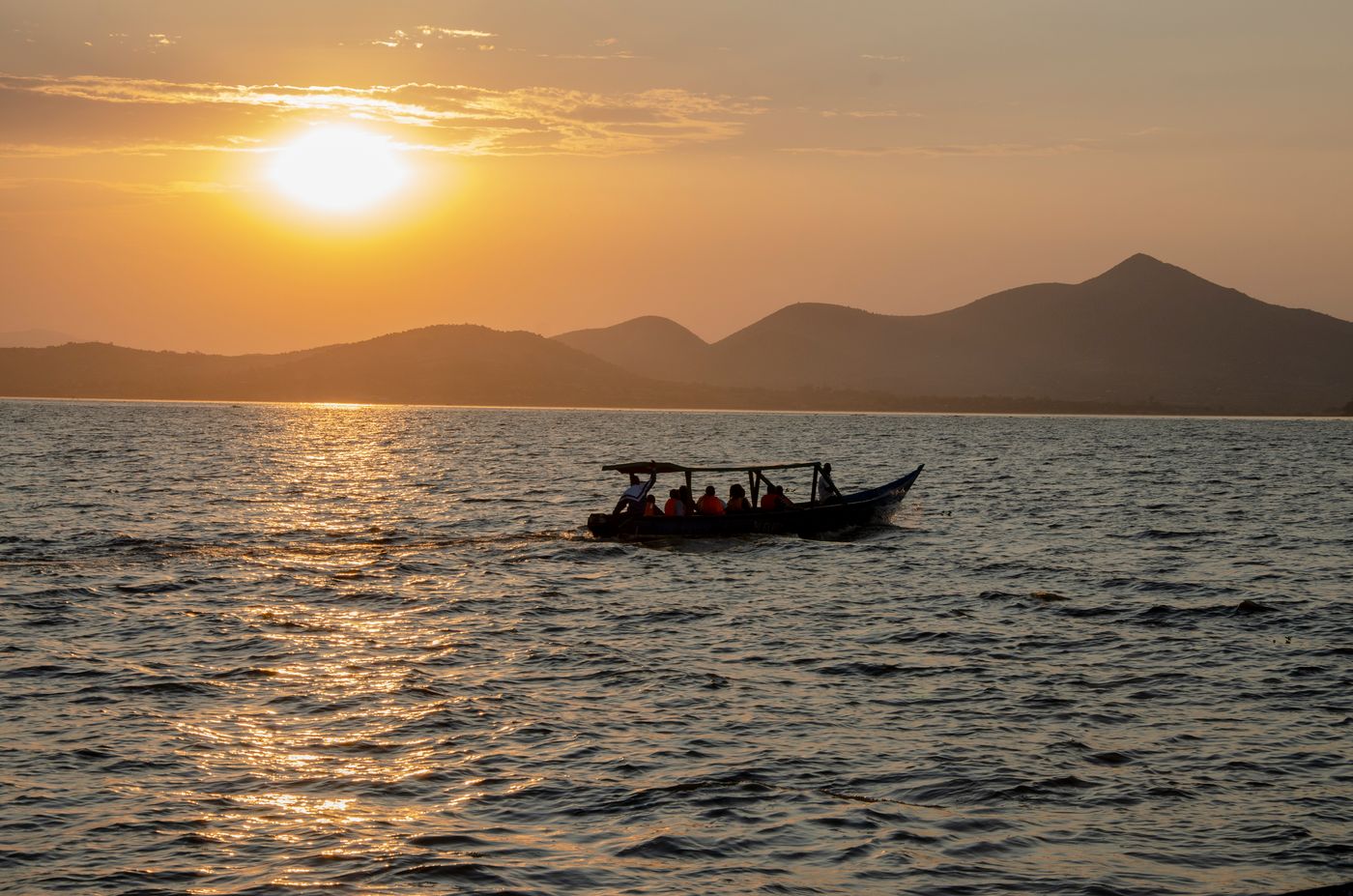
Most visitors to Kenya never see Lake Victoria. Rusinga Island, in the east of the lake, offers a very different trip: fossil history, lakeside life and a long way from the usual safari circuit.
Where it is
Rusinga sits in eastern Lake Victoria, at the mouth of the Winam Gulf, and belongs to Kenya’s Homa Bay County. It is roughly 16 kilometres long and 5 kilometres across. A bridge, which replaced an earlier causeway, links it to Mbita Point on the mainland.
A fossil site of world importance
The island is known for rich fossil beds of extinct Miocene mammals, dated to about 18 million years ago. Leakey expeditions began digging there in 1947 to 1948, and the first complete Proconsul skull, an early ape, was found in 1948.
Life on the island
- Residents farm and fish, though native tilapia has declined since Nile perch were introduced to the lake.
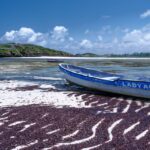
- Some beaches have dark sand.
- Ask locally about water safety before swimming.
Combine it with Ruma
The island pairs well with Ruma National Park, also in Homa Bay County. This is a quiet part of Kenya, so plan the route and travel time with your operator.
Plan it
Check our health checklist, especially for lake areas, and see the best time to visit Kenya.
More on the fossils
Mary Leakey found the first complete Proconsul skull in 1948. All Proconsul species were first named africanus, but several were later reclassified as nyanzae, major and heseloni, the last honouring Heselon Mukiri, who completed the skull’s excavation. About 15,000 fossils had been collected by the end of 1948. Other fossil primates from the island include Nyanzapithecus, Limnopithecus, Dendropithecus and Micropithecus, which show adaptations for life in trees.
An ancient volcano
The fossil beds are layers of volcanic ash from the early stages of a volcano about 120 kilometres across. Its eroded remains include the Kisingiri hills on the mainland, the Rangwa range and the islands of Rusinga and Mfangano.
Tom Mboya
Before his assassination in 1969, Tom Mboya was widely seen as Jomo Kenyatta’s likely successor as president. His family home and burial site are on Rusinga.
People and language
Estimates from 2006 put the population at 20,000 to 30,000. The local language is Luo. The ancestors of today’s residents were Suba people who arrived by boat from Uganda several hundred years ago, and an extinct language, Singa, was once spoken only on the island.
Beaches, fishing and access
The lakeside beaches have steady onshore winds and suit swimming and boating. Nile perch, introduced to the lake in 1954, has reduced the native tilapia. Poor roads to Homa Bay hinder trade and tourism, so allow generous travel time.
Frequently asked questions
Where is Rusinga Island?
In eastern Lake Victoria, in Kenya’s Homa Bay County, linked to the mainland by a bridge to Mbita Point.
Why is it famous?
For fossils of extinct Miocene mammals about 18 million years old, including the early ape Proconsul.
Who is buried on Rusinga?
Tom Mboya, the Kenyan politician. The island is also his family home.
How big is it?
Roughly 16 kilometres long and 5 kilometres wide.
What is Proconsul?
An early ape whose fossils were found on Rusinga. Mary Leakey found the first complete skull in 1948.
What language is spoken on Rusinga?
Luo. The island’s ancestors were Suba people who arrived by boat from Uganda several hundred years ago.
Want help planning? Talk to our team and tell us your dates, who is travelling and what you would like to see.
Facts checked on 5 November 2026 from Wikipedia’s Rusinga Island entry (secondary source).