You go to bed listening to a hyena whoop somewhere beyond the tents, and you wake up to hornbills arguing in the acacia above your fly sheet. That is what a camping safari in Kenya gives you that no lodge can. It is also the cheapest way to sleep inside a national park. But camping here is not a campsite in Europe with a shop and a shower block, and the pricing is confusing if you have never seen the Kenya Wildlife Service (KWS) fee schedule. If you are searching for a camping safari Kenya offers at a fair price, this guide explains how camping safaris in Kenya work, what KWS charges, which parks are best for it and what you need to bring.
Three ways to do a camping safari in Kenya
1. Public campsites
These are the standard KWS campsites. You share them with other campers, you do not need to book ahead and the facilities are basic: usually water, toilets and sometimes a cold shower. Some parks add a kitchen shelter. You pitch your own tent, or your operator does.
2. Special campsites
A special campsite is reserved for your group alone. It is remote and wild, with no facilities at all, so you bring water, firewood, toilets and everything else. You have to reserve it in advance, and KWS charges a non-refundable reservation fee of KES 10,000 per week on top of the nightly rate. Photographers and groups who want silence choose these.
3. A fully serviced camping safari with an operator
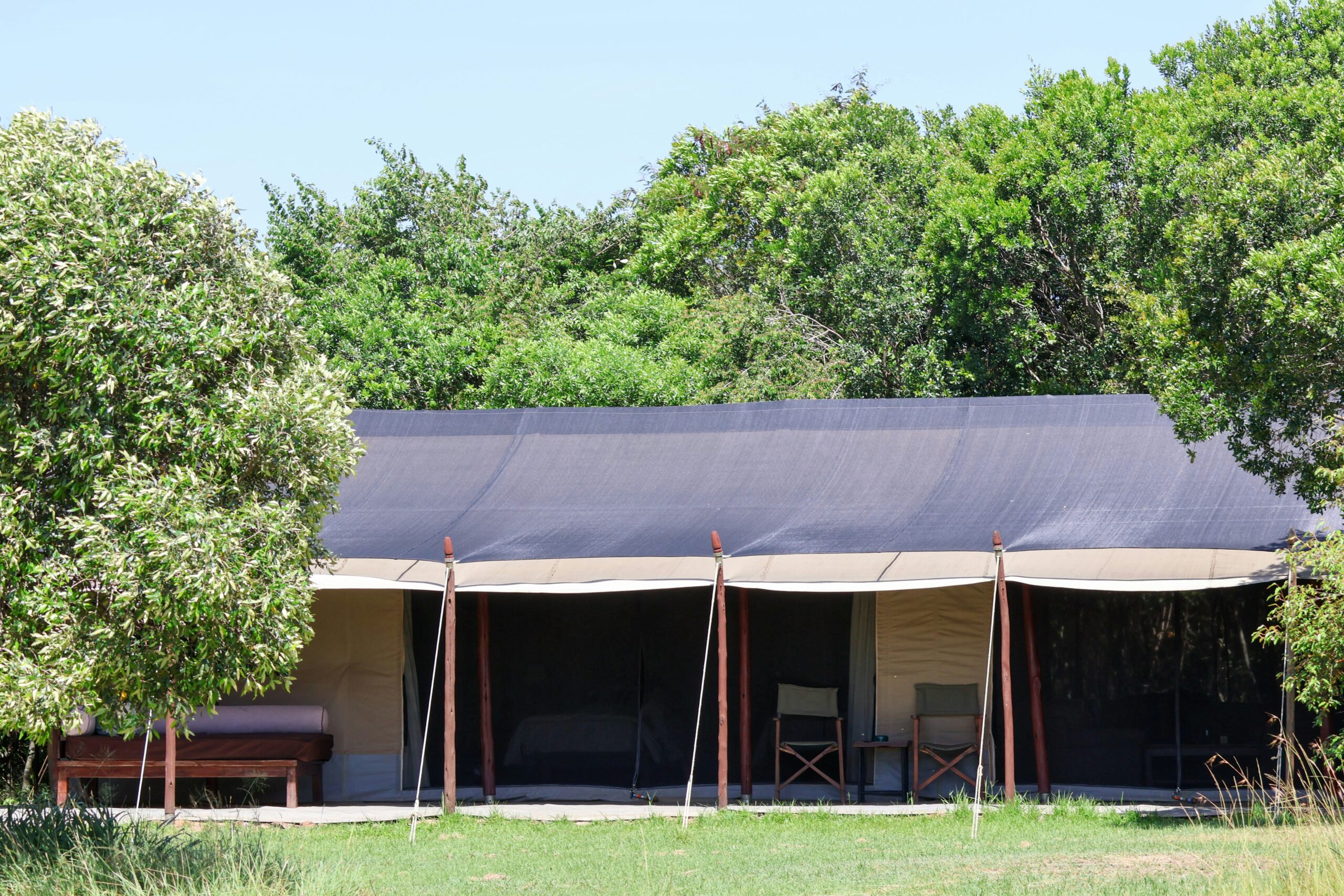
This is what most visitors choose. The operator supplies a safari vehicle, tents, mattresses and bedding, a cook, a guide and a camp assistant, and you simply turn up with a bag. A budget or “participation” safari can have you helping to pitch and cook. A mobile tented camp, by comparison, arrives ready: dining tent, proper beds and a bucket shower. If you are weighing both styles against a lodge, our guide on luxury versus mid-range safaris explains what you pay for at each level.
KWS camping fees (October 2025 schedule)
KWS publishes camping fees per person per night, split by park category. “Premium” parks, Amboseli and Lake Nakuru, cost more. Every other KWS park, including Tsavo East, Tsavo West, Hell’s Gate, Aberdare, Mount Kenya and Nairobi National Park, falls in the cheaper “all other parks” band. Children are charged at a lower rate.
| Campsite type | Non-resident adult / child (USD) | Kenya resident adult / child (KES) | East African citizen adult / child (KES) |
|---|---|---|---|
| Public, Amboseli and Lake Nakuru | 30 / 25 | 350 / 250 | 250 / 200 |
| Public, all other parks | 20 / 15 | 300 / 200 | 200 / 150 |
| Special, Amboseli and Lake Nakuru | 50 / 25 | 700 / 350 | 500 / 250 |
| Special, all other parks | 35 / 20 | 350 / 250 | 250 / 200 |
Camping fees are on top of the daily park entry fee, which is charged for each 24 hours you spend inside. Non-resident adult entry is currently US$90 at Amboseli and Lake Nakuru, US$80 at Tsavo East, Tsavo West and Nairobi National Park, US$70 at Aberdare and Mount Kenya, and US$50 at Hell’s Gate. A private vehicle under six seats pays KES 600 per day on top of that. You can see every park in our Kenya national park fees guide, or read the Amboseli fees breakdown.
Put together, that means a non-resident adult camping at a public campsite in Tsavo pays about US$100 a night in KWS charges (US$80 entry plus US$20 camping), before food, vehicle and guide. At Amboseli the same night is about US$120. It is still far below the cost of a lodge, which is why camping is the budget route into the parks. For other ways to cut costs, see our budget safari tips.
Which parks are best for a camping safari Kenya trip?
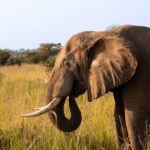
- Amboseli. Open plains, big elephant herds and Kilimanjaro on clear mornings. Premium rates apply. Read our Amboseli elephants guide.
- Tsavo East and Tsavo West. Huge, dry and wild. Good for people who want fewer vehicles at sightings. See the Tsavo guide.
- Hell’s Gate. One of the few Kenyan parks where you can walk and cycle. There are no big predators, so camping feels relaxed. More in our Lake Naivasha and Hell’s Gate guide.
- Lake Nakuru. Flamingos, rhinos and a compact park, a good first night out of Nairobi. Read the Lake Nakuru guide.
- Nairobi National Park. Camping a few kilometres from a skyline of office towers. A good test run before a longer trip. See the Nairobi National Park guide.
- Aberdare and Mount Kenya. Cold, misty and forested. Camping here is closer to hiking than game viewing.
What a day looks like
- Before sunrise. Tea or coffee from the cook, then out for a game drive when the animals are most active.
- Late morning. Back at camp for a cooked breakfast or brunch.
- Midday. Rest in the shade. Animals are resting too.
- Afternoon. A second game drive until sunset.
- Evening. Dinner cooked on a fire or gas stove, then bed early, because the next game drive starts in the dark.
Hot showers are not a given. Budget camping usually means bucket showers or cold water. Serviced camps offer hot water, but they cost more.
What to bring on a camping safari
- A warm sleeping bag. Nights are cold in the highlands, and even on Amboseli’s plains temperatures can fall sharply before dawn.
- A head torch and spare batteries.
- Insect repellent and malaria precautions. Read our travel health guide.
- Closed shoes, a fleece and a light rain jacket.
- A reusable water bottle, with water treatment if you are self-driving.
- A quick-dry towel and toiletries.
The full list is in our Kenya safari packing list.
Self-drive camping or guided? What to think about first
Self-driving is legal and popular with residents, but it asks more of you than most visitors expect. Park roads are rough and unsigned in places, a flat tyre in Tsavo means a long wait for help and a 4×4 is essential in the wet months. You also carry every litre of water and every meal. A guided camping safari costs more per person than a bare-bones self-drive, but you gain a guide who spots animals you would drive past, a cook, local knowledge of where the herds are this week and someone else to deal with the breakdown. If this is your first time camping in a Kenyan park, we strongly suggest going with an operator.
When to go camping in Kenya
The dry seasons, roughly June to October and January to February, are best. Grass is short, animals gather around waterholes and the ground is firm. The long rains from March to May turn some park tracks to mud and many campsites become hard to reach. The short rains in November can be patchy. Nights are coldest in July and August, especially at altitude in Aberdare and Mount Kenya. If you want to combine camping with the wildebeest herds, our best time to visit Kenya guide explains the calendar.
A sample four-day camping itinerary
- Day 1. Drive from Nairobi to Lake Nakuru or Hell’s Gate. Pitch camp, then a short evening game drive or walk.
- Day 2. Early game drive, then head to Amboseli or Tsavo, depending on your route. Camp near the park gate for an early start.
- Day 3. A full day of game viewing in the park, with a long midday break at camp.
- Day 4. Sunrise drive, then return to Nairobi.
We build camping trips like this from two nights up, and we can also combine a camping leg with lodge nights on the Mara. Ask us about the Mara conservancies if you want a more exclusive finish.
Staying safe in camp
- Stay inside the camp area after dark and never walk alone. Animals do walk through campsites.
- Lock food away. Baboons, monkeys and hyenas will raid anything open.
- Keep tent flaps zipped, and keep food and toiletries out of the tent.
- If an animal comes into camp, stay still, stay quiet and follow your guide.
Etiquette matters too: our guide on safari dos and don’ts covers how to behave around wildlife.
Is a camping safari in Kenya right for you?
It suits adventurous travellers, groups of friends, families with older children and anyone watching the budget. It does not suit anyone who needs a private bathroom, hot water on demand or a proper mattress. Plenty of travellers mix it: two nights camping in a park such as Amboseli, then a lodge on the Mara for comfort. If that sounds like you, tell us what you have in mind and we will suggest a route.
Frequently asked questions
How much does camping cost in Kenyan national parks?
For non-residents, KWS charges US$20 per adult per night at a public campsite in most parks and US$30 at Amboseli and Lake Nakuru. Special campsites are US$35 and US$50. Park entry fees are charged on top.
Do I need to book a public campsite in Kenya?
No. Public campsites in KWS parks are first come, first served. Special campsites must be reserved in advance with a KES 10,000 per week reservation fee.
Can I camp in Kenya on my own?
Yes, if you have your own vehicle and gear. Most visitors go with an operator who supplies the tents, bedding, cook and guide.
Is camping safe in Kenya?
Yes, with sensible rules. Stay in camp after dark, lock food away and follow your guide if an animal enters the campsite.
What is the difference between a public and a special campsite?
A public campsite is shared and has basic facilities. A special campsite is private to your group and has none, so you bring everything.
Which Kenyan parks have campsites?
Amboseli, Lake Nakuru, Tsavo East, Tsavo West, Hell’s Gate, Aberdare, Mount Kenya and Nairobi National Park all have KWS campsites.
Want a camping safari or a mix of camping and lodges? Message our team and we will plan it.