The figures come from the KWS fee schedule that took effect in October 2025. Fees can be revised, so we re-check them whenever we prepare a quote.
Amboseli at a glance
| Size | 392 sq km park within an ecosystem of about 8,000 sq km |
|---|---|
| From Nairobi | About 240 km via Namanga: 4 to 5 hours by road or a short flight |
| Park fee (non-resident adult) | USD 90 per day |
| Best for | Large elephant herds with Kilimanjaro (5,895 m) behind them |
| Best months | June to October, and January to February |
| Birds | More than 400 species |
Map data OpenStreetMap contributors. Fees are a planning guide and can change.
Amboseli National Park fees at a glance
| Visitor category | Adult | Child |
|---|---|---|
| Non-resident | USD 90 | USD 45 |
| African citizen (non-East African) | USD 50 | USD 25 |
| Kenya resident | KES 2,025 | KES 1,050 |
| East African citizen | KES 1,500 | KES 750 |
These are daily conservation fees per person. They are payable in addition to your accommodation, game drives and transport, and they are normally paid electronically through the KWS system, since the parks have moved away from cash at the gate.
What the Amboseli National Park fees cover
The fee gives you access to the park for a set period, generally 24 hours from the time you enter. It pays for rangers, anti-poaching patrols, road maintenance, research and community programmes. It does not include:
- Your vehicle fee, which is charged per vehicle per day (a standard safari vehicle under six seats is around KES 600 per day)
- Camping, if you stay in a public or special campsite
- Game drives or guides provided by your lodge
- Balloon flights, which are priced and booked separately
- Airstrip or landing fees, if you fly in
On a packaged safari, your operator pays all of these and builds them into the price. If you compare quotes, make sure each one states whether park fees are included.
Amboseli National Park fees for children
Children pay about half the adult rate. The rate for non-resident children is USD 45 per day, compared with USD 90 for adults. Families with several children should budget carefully: a family of two adults and two children pays USD 270 per day in Amboseli National Park fees for non-residents. Check the age range used by KWS when you book, since categories can change, and carry passports or birth certificates in case you are asked to prove a child’s age.
Multi-park packages
If you plan to visit more than one park in the same trip, KWS offers combined tickets at a lower price than paying separately:
| Package | Non-resident adult | Non-resident child |
|---|---|---|
| Tsavo West and Amboseli | USD 150 | USD 80 |
| Tsavo East, Tsavo West and Amboseli | USD 215 | USD 115 |
Compare that with paying separately: Amboseli (USD 90) plus Tsavo West (USD 80) comes to USD 170, so the package saves USD 20 per adult, and the three-park package, at USD 215, compares with USD 250 if bought separately. Packages are most useful when you spend at least a day in each park, so confirm the validity rules with your operator. Our guides to Tsavo East and the Tsavo parks explain how they fit with Amboseli in a route.
Camping fees in Amboseli
Amboseli is a premium park, so its camping rates are higher than elsewhere. KWS lists these rates for non-residents:
- Special campsite, premium parks: USD 50 per adult and USD 25 per child per night
- Public campsite, premium parks: USD 30 per adult and USD 25 per child per night
- Special campsite reservation: a non-refundable fee of KES 10,000 per week
Camping fees are charged in addition to the daily conservation fee. For ideas on how a camping safari works, see our camping safari guide.
How Amboseli fees compare with other parks
| Park | Tier | Non-resident adult | Non-resident child |
|---|---|---|---|
| Amboseli, Lake Nakuru | Premium | USD 90 | USD 45 |
| Nairobi National Park | Urban | USD 80 | USD 40 |
| Tsavo East, Tsavo West | Wilderness | USD 80 | USD 40 |
| Aberdare, Meru, Kora | Wilderness | USD 70 | USD 40 |
| Hell’s Gate, Mount Longonot | Scenic | USD 50 | USD 25 |
The Masai Mara is not on this list because it is county-managed. Its fees are USD 100 per adult from January to June and USD 200 from July to December. See our Masai Mara entry fees guide, and the Kenya national park fees page for the full table.
Is Amboseli worth the fee?
For most visitors, yes. Amboseli is small, at about 392 square kilometres, but its wildlife is easy to find: large herds of elephants, buffalo, zebra, wildebeest and giraffe gather around the swamps, with Mount Kilimanjaro behind them on clear mornings. The park is also close to Nairobi, which keeps transport costs lower than for more distant parks. You can see most of the highlights in two days, which limits how many daily fees you pay.
The trade-off is that Amboseli is dusty, can be busy in high season, and has no rhinos and few leopards. If you want a quieter experience, consider combining it with a conservancy or another park. Our guide to the elephants of Amboseli explains what makes them special.
How to budget for your Amboseli National Park fees
- Count days, not nights. A two-night stay usually means three daily fees if you arrive in the morning and leave on the third day. Plan arrival and departure times carefully.
- Check what your quote includes. Ask for park fees to be shown as a separate line.
- Use packages when visiting Tsavo and Amboseli on the same trip.
- Travel with children to benefit from the reduced rates.
- Carry a card. Cash is rarely accepted at the gate, so rely on your operator or a mobile payment.
- Leave a margin. Fee schedules can change with little notice, so avoid last-minute surprises by confirming rates when you pay.
How to pay Amboseli National Park fees
KWS collects fees through its electronic system. If you go through an operator, they pay on your behalf and you will see no gate transaction. If you travel independently, you can pay online before arrival or at the gate using a card or mobile money. Keep the receipt for the duration of your stay, since rangers may check it at exit points or when you move between sectors of the park.
The park has several entrances, including Meshanani, Iremito and Kimana, and the one you use depends on where you are coming from and where you stay. Your driver will choose the best gate for your route. For help with the journey, see our guide to getting from Nairobi to Amboseli, and for the right time of year, read when to visit Amboseli.
Sample budget for two adults
For two non-resident adults on a two-night Amboseli stay with three daily tickets, the conservation fee alone is USD 90 x 2 x 3 = USD 540. Add a vehicle fee of about KES 600 per day, and the cost of your driver, lodge and meals. If you are comparing this with a trip that spends the same days in a scenic-tier park like Hell’s Gate (USD 50 per adult per day), you can see how park choice affects the total.
What your Amboseli National Park fees pay for
It helps to know where the money goes, because it explains why Amboseli sits in the premium tier. The fees fund the rangers who patrol the park and the surrounding rangelands, the veterinary teams that treat injured wildlife, and the maintenance of the tracks that carry thousands of vehicles a year. They also support long-term research. Amboseli’s elephants have been studied continuously since 1972, which is why so many individuals are known by name, and why the park is one of the best-documented elephant populations in the world.
A share of tourism revenue is also meant to benefit the neighbouring Maasai communities, whose land forms the wider Amboseli ecosystem of about 8,000 square kilometres, crossing the border into Tanzania. Wildlife moves out of the park into community land, and herders move livestock around it, so the park depends on the goodwill of its neighbours. Choosing lodges and camps that employ local people and pay lease fees to landowners helps this relationship.
What you see for the fee
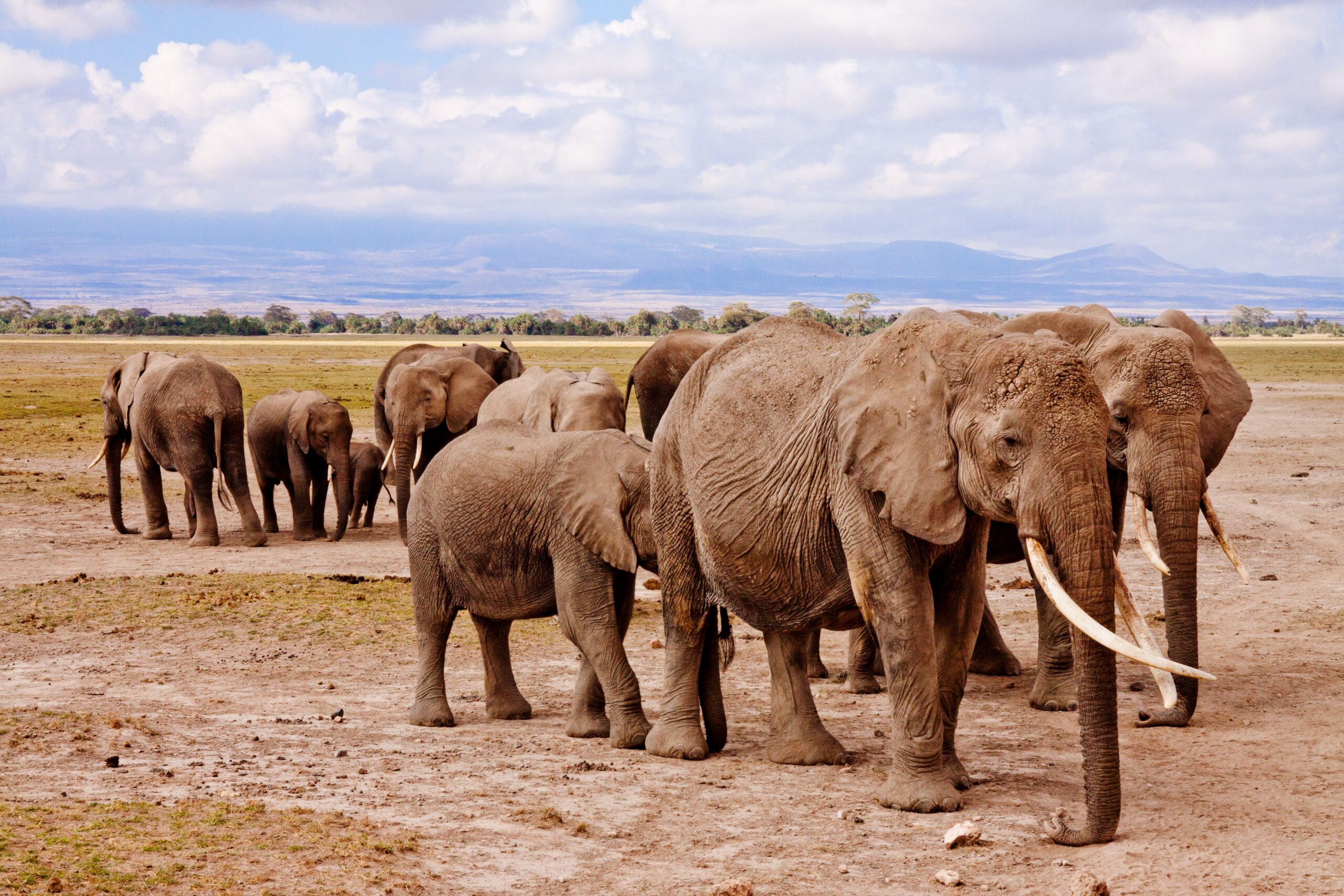
- Elephants: Large family groups gather at the central swamps, which are fed by underground streams from Kilimanjaro’s melting ice.
- Kilimanjaro: Africa’s highest mountain, at about 5,895 metres, rises across the border in Tanzania. The clearest views are usually at dawn, roughly 6 to 8:30 am, and again in late afternoon.
- Other mammals: Buffalo, Maasai giraffe, plains zebra, wildebeest, gazelles, lions, cheetahs and hyenas.
- Birds: About 400 species, including pelicans, crowned cranes and many raptors.
- Observation Hill: A raised viewpoint where visitors may leave their vehicle to walk and look over the basin.
Rhinos are absent and leopards are rarely seen, so do not count on the full Big Five here.
Planning days to get value from your Amboseli National Park fees
Because the park is compact, you can see its highlights in about two days, which is a good use of a premium-tier fee.
- Two nights: Arrive in time for an afternoon drive on day one, do two full drives on day two (one at dawn for Kilimanjaro), and leave after a final morning drive on day three. This uses three daily tickets and gives about four game drives.
- One night: Possible if you fly in, but you pay for two days and see less.
- Three nights: Suits photographers, birders and anyone who wants to spend time at one swamp or Observation Hill.
If you add Tsavo West on the same trip, use the combined package to save money. If you add the Masai Mara, remember that the Mara’s county fees are separate. Compare the options in our safari cost breakdown.
Staying outside the park
Some camps and lodges sit on community land around the park, in areas such as Kimana and the group ranches near the park boundary. They are not charged the national park fee for the nights you spend there, although you will pay the daily fee on every day you enter the park for game drives. Staying outside can be quieter and gives you access to activities like walking safaris and village visits that are not allowed inside the park. It may also reduce your total fee bill if you enter on fewer days. Your operator can explain the choice.
Hot-air balloons and extras
Balloon flights over Amboseli are sold separately from park fees and need booking in advance. Other extras include night drives from some camps, guided walks and Maasai cultural visits. None of these are covered by your daily conservation fee, so ask for each to be named in your quote.
Frequently asked questions
How much are Amboseli National Park fees in 2026?
Non-resident adults pay USD 90 per day and non-resident children USD 45. East African citizens pay KES 1,500 and KES 750, and Kenya residents pay KES 2,025 and KES 1,050.
Are Amboseli fees the same as other national parks?
No. Amboseli is in the premium tier with Lake Nakuru. Tsavo East and West cost USD 80, Aberdare, Meru and Kora USD 70, and Hell’s Gate and Mount Longonot USD 50 for non-resident adults.
Is there a combined ticket for Amboseli and Tsavo?
Yes. The Tsavo West and Amboseli package costs USD 150 per non-resident adult and USD 80 per child. The Tsavo East, Tsavo West and Amboseli package costs USD 215 and USD 115.
Are park fees included in safari prices?
On most packaged safaris they are, but not always. Ask for park fees to be listed separately, and check that your quote covers every day you will be in the park.
Can I pay Amboseli fees in cash?
KWS parks have moved to electronic payment, so rely on a card or mobile money, or let your operator pay in advance.
Do children pay the full Amboseli fee?
No. Non-resident children pay USD 45 per day, half the adult rate.
Want exact Amboseli costs for your dates? Ask our team and we will price it clearly.