Kenya protects a remarkable share of its land for wildlife, and the names on the map can be confusing. Is the Maasai Mara a national park? (No.) Is Hell’s Gate? (Yes.) What is the difference between a national park, a national reserve and a sanctuary? This guide sorts it out and gives you a region-by-region list of Kenya’s national parks, what each is known for, and what it costs to enter, so you can choose where to spend your days.
How many national parks are there in Kenya?
The answer depends on how you count. The Kenya Wildlife Service (KWS) describes its network as 23 national parks, 28 national reserves and 4 sanctuaries. Some sources add the marine parks and reserves as separate entries and arrive at higher totals. The practical point is that Kenya has well over 50 protected areas under national or county management, and roughly a dozen of them are the ones most visitors build a safari around.
Beyond the state-run areas, about 11% of Kenya’s land is in private and community conservancies, according to a 2024 Africa Check review that counted around 160 of them. Many of the best safari experiences, such as Laikipia and the Mara’s northern conservancies, happen there.
National park, national reserve, sanctuary: what is the difference?
- National park: Owned and run by KWS. Human settlement and livestock grazing are not permitted inside. Examples: Amboseli, Tsavo, Nairobi, Lake Nakuru.
- National reserve: Usually run by a county government, where local communities may keep some rights, such as grazing. Examples: Maasai Mara and Samburu. Entry fees are set by the county, not KWS.
- Sanctuary: A small area set up to protect a species or habitat, such as the Kisumu Impala Sanctuary or the Nairobi Safari Walk and Animal Orphanage.
This is why you will not find the Mara or Samburu in the national park list below, though they are two of Kenya’s best-known wildlife areas. See our Masai Mara guide and Samburu guide for those.
The headline national parks in Kenya and what they cost
KWS groups parks into price tiers. These are the October 2025 entry fees for non-resident adults and children, per day, in US dollars.
| Park | Tier | Non-resident adult | Non-resident child |
|---|---|---|---|
| Amboseli, Lake Nakuru | Premium | USD 90 | USD 45 |
| Nairobi National Park | Urban | USD 80 | USD 40 |
| Tsavo East, Tsavo West | Wilderness (A) | USD 80 | USD 40 |
| Meru, Kora, Aberdare | Wilderness (B) | USD 70 | USD 40 |
| Mount Kenya | Mountain | USD 70 | USD 35 |
| Hell’s Gate, Mount Longonot, Mount Elgon, Ol Donyo Sabuk, Shimba Hills, Kakamega | Scenic | USD 50 | USD 25 |
| Saiwa Swamp, Ruma, Sibiloi, Marsabit, Chyulu Hills, Central and South Island and others | Special interest | USD 40 | USD 20 |
| Marine parks (Watamu, Malindi, Mombasa, Kisite-Mpunguti and others) | Marine | USD 25 | USD 15 |
Vehicles are charged separately, and fees change, so check our Kenya national park fees page before you finalise a budget. Packages exist that cover several parks (for example Tsavo East, Tsavo West and Amboseli together) at a lower combined price.
National parks in southern Kenya and Nairobi
Nairobi National Park
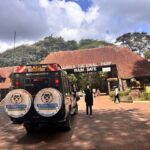
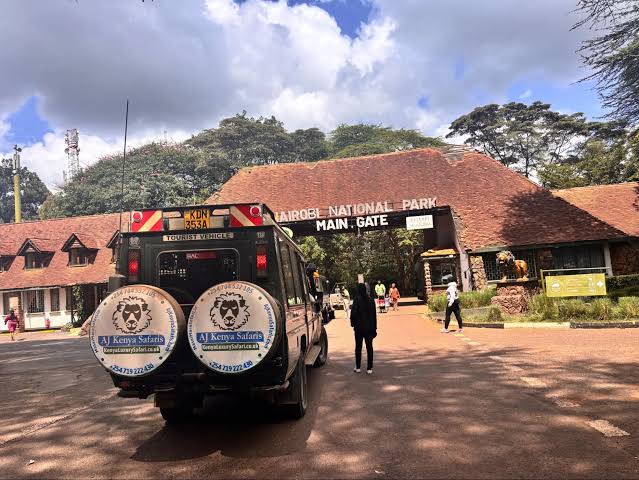
Established in 1946 as Kenya’s first national park, it sits against the city skyline. Lion, leopard, buffalo, giraffe and black rhino all live here, and you can finish a game drive and be at the airport an hour later.
Amboseli National Park
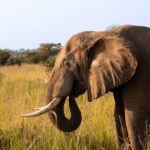
Famous for large elephant herds with Mount Kilimanjaro rising behind them on clear mornings. It is flat, open and ideal for photographers, and the swamps hold hippo and plenty of birds.
Tsavo East and Tsavo West
Together they form one of the largest protected areas in the world, at roughly 22,000 km². Tsavo East is open plains with the Galana River, Mudanda Rock and its famous red elephants; Tsavo West is hillier, with springs, lava flows and a rhino sanctuary. Read the Tsavo East guide and our post on Tsavo’s red elephants.
Chyulu Hills National Park
Green volcanic hills on the edge of Tsavo West and Amboseli, with lava caves and big views. It is quiet and good for walking.
The Rift Valley and Central Highlands
Lake Nakuru National Park
A small, fenced park around a shallow soda lake. It is one of the best places in Kenya to see both black and white rhino, along with Rothschild’s giraffe and large numbers of birds.
Hell’s Gate and Mount Longonot
These are the two parks where you can get out of the vehicle. Hell’s Gate has cliffs, gorges and cycling trails; Longonot is a volcano you can hike in half a day. See our Naivasha and Hell’s Gate guide and the Mount Longonot hike guide.
Aberdare National Park
Moorland, bamboo forest and waterfalls on the Aberdare range. Elephants, buffalo and bongo live here, and you can view animals at lodge waterholes.
Mount Kenya National Park
Africa’s second-highest mountain, with a UNESCO World Heritage listing. The peaks are for climbers; the lower forest slopes suit day walks. Read the Mount Kenya guide.
Meru and Kora
Remote northern parks with few visitors. Meru is known as the setting of the Born Free story and has a rhino sanctuary; Kora is wild bush on the Tana River.
Western Kenya and the Lake Turkana region
Mount Elgon National Park
An extinct volcano on the Ugandan border, known for its caves and montane forest.
Saiwa Swamp National Park
Kenya’s smallest national park and a sanctuary for the semi-aquatic sitatunga antelope. You explore on foot and from raised platforms.
Ruma National Park
Savannah near Lake Victoria where you can see roan antelope, Rothschild’s giraffe and other rare species.
Kakamega Forest
Kenya’s last remnant of equatorial rainforest, rich in primates and birds. It is managed as a national reserve.
Sibiloi, Central Island and South Island
Lake Turkana’s wild shores. Sibiloi holds the fossil sites of Koobi Fora, and Central Island has crater lakes. The area is a World Heritage site and very remote. Our guide to Kenya’s UNESCO sites explains more.
The Kenyan coast
Shimba Hills National Reserve, inland from Mombasa, is the one place in Kenya where you can see sable antelope. Arabuko Sokoke is the largest surviving block of coastal forest in East Africa and home to rare birds. The marine parks at Watamu, Malindi, Mombasa and Kisite-Mpunguti protect coral reefs and are good for snorkelling and dolphin trips. If you are heading to the coast, add history: our guide to Fort Jesus in Mombasa is worth an afternoon.
Which national parks in Kenya should you pick?
- First safari, one week: Maasai Mara plus Lake Nakuru, with Amboseli if you want elephants under Kilimanjaro.
- Elephants and big landscapes: Tsavo East and Amboseli.
- Something different: Samburu for northern species, or Hell’s Gate and Longonot for walking.
- Short on time: Nairobi National Park, which can be done in a morning.
- Beach add-on: Watamu or Kisite-Mpunguti marine parks.
Practical tips
- Fees are paid electronically (cashless) at most KWS gates, so a card or mobile payment is needed. Your tour operator normally prepays them.
- Entry is valid for 24 hours from the time you enter.
- Keep to marked tracks, never get out of the vehicle in predator areas, and follow your guide’s instructions.
- Book accommodation early for the July to October peak.
What wildlife can you see in Kenya’s national parks?
Each park has its own personality, and knowing which animals live where saves you from disappointment.
- Big cats: Lions are in almost every savannah park. Cheetah are best in open country such as Amboseli and the Mara; leopard is most reliable in Samburu and Lake Nakuru’s woodland.
- Rhinos: Lake Nakuru, Nairobi and Meru have both black and white rhino in protected zones. Tsavo West has a black rhino sanctuary.
- Elephants: Amboseli, Tsavo East and Tsavo West have the largest herds. Kenya’s 2025 national census counted 41,952 elephants, up from 36,280 in 2021.
- Primates: Kakamega Forest, Mount Kenya’s lower slopes and the Aberdare forest are the places for colobus and other forest monkeys.
- Birds: Lake Nakuru, Amboseli, Arabuko Sokoke and Kakamega all reward birders, with well over 400 species recorded in several of them.
Best time to visit Kenya’s national parks
For most parks the dry seasons, June to October and January to March, give the best wildlife viewing. Water is scarce, so animals gather at rivers and waterholes, the grass is shorter and the roads are drier. The long rains (April and May) and short rains (November) bring green landscapes, lower prices and excellent birding, but some tracks turn muddy. The Great Migration in the Mara peaks from July to October, but the other parks have no equivalent surge, so they are enjoyable all year.
Guided safari or self-drive?
Self-drive is legal in most KWS parks, and a 4×4 can reach many of them. In the big wilderness parks such as Tsavo, however, a guide who knows where the animals have been and who can read the tracks makes a real difference. Distances are long, roads can be rough, and a vehicle breakdown in remote country can be serious. Most visitors, and nearly all first-timers, are better served by a driver-guide who also handles the paperwork at the gate.
If you are comparing parks to build your route, our top 10 places to visit in Kenya is a good companion to this list, and the hidden gems in Kenya post covers quieter areas.
Frequently asked questions
How many national parks are in Kenya?
KWS describes its network as 23 national parks, 28 national reserves and 4 sanctuaries. Totals differ between sources depending on whether marine parks and reserves are counted separately.
Is the Maasai Mara a national park?
No. The Maasai Mara is a national reserve run by Narok County Government, so its fees are set by the county rather than KWS.
Which is the oldest national park in Kenya?
Nairobi National Park, established in 1946, is Kenya’s first national park.
Which Kenyan national park is the most expensive to enter?
Amboseli and Lake Nakuru are in the premium tier: USD 90 per adult and USD 45 per child per day for non-residents (KWS, October 2025).
Which national parks in Kenya allow walking?
Hell’s Gate, Mount Longonot, Mount Kenya, Chyulu Hills, Saiwa Swamp and Kakamega Forest are best for walking and hiking.
What is the best national park in Kenya for first-time visitors?
Amboseli, Lake Nakuru and Tsavo East are all good first picks, and Nairobi National Park is perfect for a short visit near the city.
Not sure which parks fit your dates? Ask our team and we will map out the route.