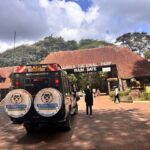
If you spend a week on Kenya’s coast and see only the beach, you miss the story of why the coast looks the way it does. Fort Jesus Mombasa is the best place to learn it, and it takes only a couple of hours. The massive coral-stone fort, finished in 1596, has been held by Portuguese, Omani, Swahili and British forces, and it is now a museum and UNESCO World Heritage Site. This guide covers its history, what to see inside, opening hours, the 2026 entry fees and how to fit it into your coast itinerary.
Fort Jesus at a glance
| Detail | Facts |
|---|---|
| Location | Nkrumah Road, Mombasa Island, beside the Old Town and the harbour |
| Built | 1593 to 1596 for the Portuguese crown |
| Architect | Giovanni Battista Cairati, an Italian from Milan |
| Wall height | About 18 m (15 m Portuguese, with about 3 m added later by the Omanis) |
| Site area | 2.36 hectares, with a 31-hectare buffer zone |
| UNESCO World Heritage | Inscribed in 2011 |
| Opening hours | Daily, about 8:30 am to 5:30 pm |
Why was Fort Jesus Mombasa built?
By the 1590s the Portuguese controlled the sea route from Europe to India but needed a secure base on the East African coast. Mombasa’s harbour was the best on the coast, and the Portuguese had already suffered attacks from local rulers and Ottoman raiders. King Philip II of Spain, who was also Philip I of Portugal, ordered the fort built. Construction began in 1593 and finished in 1596 on a coral ridge guarding the entrance to Mombasa’s Old Port.
The design is a late Renaissance military plan: a roughly square fort with four corner bastions, thick walls and lines of fire that cover every approach. It is often described as one of the finest examples of Portuguese military architecture outside Europe, and that is the main reason UNESCO listed it, under criteria (ii) and (v).
A fort that changed hands again and again
Few buildings in Africa have been fought over as often. The main turning points:
- 1631: The ruler of Mombasa, Sultan Yusuf, rebelled and seized the fort from the Portuguese.
- 1632: The Portuguese retook it and held it for decades.
- 1696 to 1698: Omani forces besieged the fort for about 33 months. When it fell, Portuguese rule on the northern coast effectively ended.
- 1728 to 1729: The Portuguese briefly returned.
- 1741 to 1837: Local Swahili rulers, the Mazrui family, controlled Mombasa and the fort.
- 1837 onwards: The Omani sultan of Zanzibar took control and used it as a barracks.
- 1895: The British took the fort and turned it into a prison, which it stayed until the 1950s.
Between 1631 and 1895 the fort changed hands at least nine times. The Omani additions, such as the raised ramparts and the house of the governor, are still visible, and you can read the layers in the stonework.
From prison to museum
Kenya declared the fort a national monument in 1958. The archaeologist James Kirkman then spent years excavating and restoring it, and the first museum opened in 1962, helped by a grant from the Gulbenkian Foundation. Today the National Museums of Kenya runs it. The fort became a World Heritage Site in 2011.
What to see inside Fort Jesus Mombasa
- The ramparts and bastions: Walk the walls for views over the harbour, Old Town rooftops and the Indian Ocean. Cannon positions and gun platforms are intact.
- The museum galleries: Pottery, glass, coins and trade goods from Gede, Manda and Ungwana show the reach of Swahili trade with Persia, India and China. Portuguese and Omani weapons and fittings tell the fort’s own story.
- Prison cells and Omani house: The British prison cells and the governor’s quarters show how the fort’s role changed.
- The courtyard and the Passage of the Arches: Shady spots with the oldest stonework in the fort.
- Graffiti and inscriptions: Prisoners and soldiers scratched names and ships into the stone.
- Mombasa Butterfly House: A small butterfly house on the same grounds, which you can add to your ticket.
Plan on 1.5 to 2 hours. Guides are available at the entrance, and a good one is worth it, because the fort’s layers of history are hard to follow on your own.
Light and sound show and night tours
Fort Jesus runs a weekly light and sound show that tells the story of the fort after dark. Groups of ten or more can also book a night tour between 6 pm and 10 pm. Both must be arranged in advance with the museum, so ask us to book them as part of your coast stay.
Fort Jesus Mombasa entry fees in 2026
The National Museums of Kenya introduced new entry fees on 7 May 2026. For Fort Jesus:
| Visitor category | Fort Jesus alone: adult / child | Fort Jesus plus Butterfly House: adult / child |
|---|---|---|
| Kenyan citizens | KES 550 / KES 300 | KES 650 / KES 400 |
| Residents of the rest of Africa | USD 9 / USD 6 | USD 12 / USD 7 |
| Visitors from outside Africa | USD 17 / USD 8 | USD 19 / USD 9 |
Payment is made through the eCitizen platform, and cash is not taken at the gate, so book your ticket beforehand or have a card or mobile money ready. Fees can change, so we confirm them again when you book.
How to get to Fort Jesus Mombasa
- From the beach hotels: Taxis and ride-hailing apps take 30 to 60 minutes from the north coast (Nyali, Bamburi) and longer from Diani, which needs the Likoni ferry or the Dongo Kundu bypass.
- From Mombasa railway station: About 20 to 30 minutes by taxi.
- On foot from the Old Town: The fort is a short walk from the Old Town streets and the harbour.
Combine Fort Jesus Mombasa with the Old Town
The best way to visit is as part of a half-day walk. Start at the fort when it opens (it is cooler and quieter), then walk into the Old Town’s narrow lanes to see carved Swahili doors, small mosques and spice shops, and finish with lunch of Swahili food near the harbour. Our guide to things to do in Mombasa has more ideas, and the fort is one of the sites in our guide to Kenya’s UNESCO World Heritage Sites.
Tips for visiting
- Go early. By 11 am the courtyard is hot, and the ramparts have little shade.
- Wear a hat, sunscreen and comfortable shoes, since the steps and stones are uneven.
- Dress modestly in the Old Town, with shoulders and knees covered.
- Keep valuables out of sight and leave extra cash at the hotel.
- Add the fort to a coastal safari: many travellers pair a few days at Tsavo East with the beach, and the fort is an easy stop on the way. See our Tsavo East guide.
The architecture of Fort Jesus Mombasa
The fort is built of coral stone cut from the island itself, bound with lime mortar. Its outline is an irregular square with a bastion at each corner, named for saints and Portuguese notables, so that cannon on any wall could cover the neighbouring one. A dry moat once circled it, cut into the coral. A single main gate leads into a courtyard, and the walls rise in stages so that defenders could fire from different levels. Visitors often say it looks like a ship, with the bastions as bows. After the Omanis took over, they added gun platforms, a mosque and living quarters, and the British later added the prison buildings. The result is a layered structure where each period is readable in the stonework.
Fort Jesus and the Swahili coast
The fort is only one chapter. For a thousand years before the Portuguese arrived, the Swahili coast was part of the Indian Ocean trade network, exporting ivory, gold and timber, and importing cloth, beads and porcelain. The museum’s displays use finds from Gede, Manda and Ungwana, three Swahili towns, to show this world. Seen together, the fort and the Old Town are the best introduction to the coast’s mixed Swahili, Arab, Persian, Indian and European heritage, and a good counterpoint to a week on the beach.
A half-day plan for visiting Fort Jesus Mombasa
- 8:30 am: Arrive when the gates open. Walk the ramparts first, while the light is soft and the air is cool.
- 9:30 am: Tour the museum galleries and the prison cells.
- 10:45 am: Walk into the Old Town for coffee, the carved doors and the spice shops.
- 12:30 pm: Lunch of fish, coconut rice and Swahili curries near the harbour.
Frequently asked questions
Who built Fort Jesus in Mombasa?
The Portuguese built it between 1593 and 1596 on the order of King Philip II of Spain (Philip I of Portugal). The Italian architect Giovanni Battista Cairati designed it.
How much is the Fort Jesus entrance fee?
Since 7 May 2026, visitors from outside Africa pay USD 17 for adults and USD 8 for children. Kenyan citizens pay KES 550 and KES 300, and residents of the rest of Africa pay USD 9 and USD 6.
What are the opening hours at Fort Jesus Museum?
The museum is open daily from about 8:30 am to 5:30 pm. A light and sound show runs weekly, and night tours can be booked for groups.
Is Fort Jesus a UNESCO World Heritage Site?
Yes. UNESCO inscribed Fort Jesus, Mombasa in 2011 as an outstanding example of 16th-century Portuguese military architecture.
How long does it take to visit Fort Jesus?
Allow 1.5 to 2 hours for the fort and museum, or half a day if you also explore the Old Town.
Can I pay with cash at Fort Jesus?
No. The museum uses the eCitizen payment platform and does not take cash at the gate.
Adding the coast to your safari? Ask our team and we will include Fort Jesus.