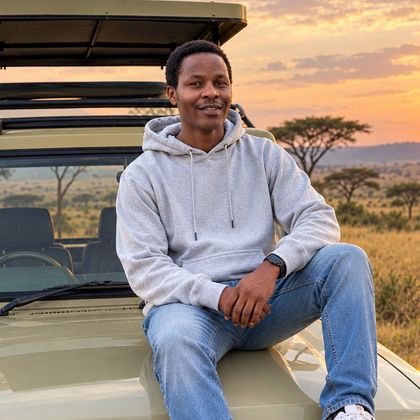
Quick answer: An LGBTQ safari in East Africa is possible, and many travellers do it without incident, but it needs honest planning. Same-sex relationships are criminalised in Kenya, Tanzania (including Zanzibar) and Uganda, and public attitudes are conservative. A safari is one of the lower-risk ways to travel here, because your days are spent in a private vehicle inside a national park and your nights in a lodge or camp. The legal risk to tourists is low in practice but never zero, so the sensible approach is discretion, a private itinerary and an operator who understands what you need.
Details checked in October 2026. Laws and attitudes change, so read your own government’s travel advice and confirm the current position before you book. This guide is travel advice, not legal advice.
Most of what you will find online about gay-friendly safaris falls into two camps. One says that everyone is welcome and nothing is wrong; the other makes the whole region sound too dangerous to visit. Neither helps you decide. This guide tries to do what a well-informed friend would do: tell you where the law stands, where the real risks sit, and what sensible travellers do about them.
Is Kenya LGBT friendly? The honest answer
Not in law, and only partly in practice. Sections 162 and 165 of Kenya’s Penal Code criminalise same-sex sexual acts, and in 2019 the High Court declined to strike them down. Public opinion is conservative, shaped strongly by religion, and local LGBTQ+ people face harassment and sometimes violence. That is the reality, and it is why visitors should not assume that Kenya’s easygoing tourism image extends to public displays of affection.
There is another side. Kenya has an established, mostly low-profile LGBTQ+ community, particularly in Nairobi, and a number of advocacy organisations that work in the open. In 2023 the Supreme Court ruled that one of them, the National Gay and Lesbian Human Rights Commission, was entitled to register. Prosecutions under the Penal Code sections are rare, and cases involving visitors are rarer still. The risks that tourists are more likely to meet are social ones: stares, uncomfortable questions, an unwelcome reaction from a stranger, or being targeted for extortion after a chance online meeting.
The practical summary for a couple on safari is that Kenya is workable if you are discreet and book carefully. You will be treated as two friends or a married couple sharing a room, and in most lodges nobody will ask you to explain anything.
Tanzania and Zanzibar
Tanzania criminalises same-sex relations on the mainland and in Zanzibar, with severe penalties on paper. Official statements have at times been harsher than in Kenya, and Zanzibar, which has a Muslim majority, is socially the most conservative place in this guide. Tourists are not usually the target, but this is the destination where we would ask you to be most careful about what you post, who you share details with and how visible you are in towns, markets and beaches.
Safari travel in the northern parks is still a reasonable option. The Serengeti and Ngorongoro are set apart from towns, and your contact with local life is mainly through your guide and lodge. If you are planning to combine Kenya and Tanzania, take the same precautions for the whole trip and read our Kenya and Tanzania combination guide with this one.
Uganda: gorilla trekking only
We only offer Uganda as a gorilla trekking destination, and we want to be direct about the law there. Uganda’s Anti-Homosexuality Act, signed in 2023, carries some of the harshest penalties in the world, including the death penalty for what it calls aggravated homosexuality. The Constitutional Court upheld most of the Act in 2024. The law also reaches beyond individuals to people seen to promote or facilitate same-sex relationships, which is why we ask LGBTQ+ travellers to think carefully before choosing Uganda at all.
If gorillas are the main goal and Uganda’s law is a dealbreaker, it is worth knowing that Rwanda has no law criminalising same-sex relationships, although Rwanda is outside what this guide covers. If you decide to trek in Uganda, the trek itself is short and highly structured: you travel with rangers and trackers, in a small group, for a few hours. Keep the rest of the trip private, keep your social media quiet until you leave, and talk to us before booking so we can discuss it openly.
What a safari day looks like in practice
Understanding the rhythm of a safari helps explain why it works well for couples who value privacy. You wake before dawn for a game drive, return for breakfast, rest through the middle of the day, and head out again in the afternoon. The people you meet are your driver-guide, the camp or lodge staff and, in a group, your fellow guests. Most of your time is spent with animals, not crowds.
At the lodge, the only relationship-related question the booking needs to settle is the bed. Camps will ask whether you want one double bed or two singles, and either is a perfectly ordinary request. Pick whichever makes you comfortable. Your guide and the staff are focused on getting you a good sighting and a good meal.
The main choice that affects privacy is the vehicle. A private vehicle means a driver-guide just for you, so you control the pace and the conversation. A shared vehicle on a group departure puts you with other travellers for several days, and some people prefer not to manage that. If privacy matters to you, it is usually worth paying a little more for a private safari.
Practical steps before you go
- Read your government’s travel advice. The UK, US, Canadian and Australian foreign offices all publish country pages that include sections for LGBTQ+ travellers, and they are updated more often than any blog.
- Choose a private itinerary. A private vehicle and a guide who knows your plans reduce the number of people you need to think about.
- Keep affection private in public. Holding hands or kissing in public draws attention in most of East Africa, even for heterosexual couples. Save it for your room or tent.
- Be careful on social media. Post photos after you have left the country, not while you are in it, and check what your public profiles already say before you land.
- Think twice about dating apps. People have been targeted for blackmail through them in the region. Many travellers choose not to use them for the duration of the trip.
- Check your documents. Trans and non-binary travellers should make sure the name and gender marker on their passport match their eTA or visa application, and should talk to us about the airports and border posts on their route. We cannot remove every risk, but we can help you plan around the awkward ones.
- Sort out insurance and emergency contacts. Confirm that your travel insurance has no relevant exclusions, save your embassy’s emergency number, and share your itinerary with someone at home.
- Carry medication properly. Keep prescriptions in their original packaging with a doctor’s letter.
Nairobi, the coast and everywhere in between
Nairobi is the most cosmopolitan place on the route and the easiest base if you need to arrive early or stay over, though the same discretion applies. The bush camps in the Maasai Mara, Amboseli or Samburu are remote and tend to be calm. On the coast, resorts around Diani are used to international guests, but the surrounding communities are more conservative, and a few days of beach time are best spent within the hotel grounds and the usual tourist areas. Our Diani Beach guide and the bush and beach planning guide describe how the coast works.
What we can and cannot do
As a Kenya-based safari company we can plan a private vehicle, choose lodges and a guide with your preferences in mind, and keep your plans between us. We cannot change a country’s laws, and we will not pretend that the risk is nil. If you tell us what matters to you, whether that is a double bed, a private vehicle, quieter camps or a route that avoids certain places, we will tell you honestly what is workable. Send us an enquiry or message us on WhatsApp, and only share what you are comfortable sharing.
Where to read more
The Human Dignity Trust keeps up-to-date legal profiles for every country on this route: Kenya, Tanzania and Uganda. They are a good place to check before you finalise your plans.
Safaris that fit this guide
These Cherish Africa Safaris trips match what this guide covers. We can adjust any of them to your dates, group size and budget. Prices shown are starting prices per person sharing, in US dollars; the final price depends on the season, the accommodation and the size of your group.
- 8 Days Classic Kenya Safari: Samburu, Ol Pejeta, Maasai Mara and Amboseli
- 6 Days Kenya Safari and Beach Holiday: Amboseli, Tsavo and Diani (from $883)
- 3 Days Amboseli Safari Adventure with Mount Kilimanjaro Views
Keep reading: Nairobi to the Maasai Mara by Road or Air, Kenya and Tanzania Safari Combination, Diani Beach Guide.
Not sure which trip suits you? Browse all our safari tours or send us an enquiry.
Frequently Asked Questions
Is Kenya safe for LGBTQ+ travellers on safari?
Kenya is workable for discreet couples on a private safari, but same-sex relations are illegal and attitudes are conservative. Most risks for visitors are social rather than legal. Keep public affection private, be careful with social media and dating apps, and read your own government’s travel advice.
Is it illegal to be gay in Kenya?
Yes. Sections 162 and 165 of the Penal Code criminalise same-sex sexual acts, and a 2019 High Court ruling kept them in place. Prosecutions are rare, and cases involving visitors are rarer, but the law is real and attitudes are conservative.
Can a same-sex couple share a room on safari?
Yes. Lodges and camps usually ask only whether you want one double bed or two single beds. Either is a normal request, and you do not need to explain your relationship to book a room.
Is Tanzania or Zanzibar safe for LGBTQ+ travellers?
Same-sex relations are criminalised in Tanzania, including Zanzibar, and Zanzibar is socially very conservative. Safari parks in the north are remote from towns, but visitors should be especially careful about visibility and social media.
Can I trek gorillas in Uganda as an LGBTQ+ traveller?
Uganda’s Anti-Homosexuality Act carries severe penalties, including the death penalty for aggravated homosexuality. A gorilla trek itself is a short, supervised activity, but we ask travellers to think carefully and talk to us before choosing Uganda.
Are there gay-friendly safari lodges in Kenya?
Few operators advertise this openly because of the legal climate. What matters is booking a private safari with a company that handles discreet requests. Tell us what you need and we will tell you honestly what is workable.
LGBTQ safari: Key Takeaways
The main points on LGBTQ safari are covered above. If you would like help applying them to your own dates and budget, our team can plan the trip with you. For more advice on LGBTQ safari, or a quote tailored to your group, contact Cherish Africa Safaris and we will reply the same day. Whatever your plans, it is worth checking the latest details on LGBTQ safari before you book. Our consultants answer questions about LGBTQ safari every day, so ask us anything that is still unclear. That is the short version of LGBTQ safari; the sections above give the full detail.