Quick answer: Serengeti National Park is Tanzania’s flagship park, about 14,750 square kilometres of open plains and woodland in the same ecosystem as Kenya’s Maasai Mara. Choose your region by month: the southern plains for calving (roughly January to March), the western corridor for river crossings (about June and July), and the north for Mara River crossings (about July to October). Plan at least four nights. The 2026 park fee is about US$82.60 per adult per 24 hours including VAT, and you can reach the park by a 1.5 hour flight from Arusha or a long drive.
Details checked in October 2026. Wildebeest movements follow the rains and shift from year to year, and park fees, concession charges and flight schedules change, so confirm current figures before you book.
The Serengeti is one of the few places on earth where the scale is part of the experience. Plains run to the horizon, kopjes rise like islands out of the grass, and in the right season more than a million wildebeest are on the move across the landscape. It is also easy to plan badly: the park is enormous, the herds are somewhere different every month, and a lodge in the wrong region can leave you hours away from what you came to see.
This guide breaks the Serengeti into its four main regions, explains when each one is at its best, and sets out the costs and logistics in plain terms.
Serengeti National Park at a glance
| What to know | |
|---|---|
| Where | Northern Tanzania, bordering Kenya’s Maasai Mara |
| Size | About 14,750 sq km, inside a much larger ecosystem |
| Status | UNESCO World Heritage Site and national park managed by TANAPA |
| Gateway | Arusha or Kilimanjaro International Airport |
| Getting there | About 1.5 hours by light aircraft from Arusha, or a full day by road via Ngorongoro |
| Park fee | About US$82.60 per adult and US$23.60 per child (5 to 15) per 24 hours, including 18% VAT; under 5s free |
| Typical stay | Four to six nights; seven or more if you want to cover two regions |
The four regions and what each is best for
Central Serengeti (Seronera). The park’s hub, with an airstrip, the most lodges and some of the most reliable big cat viewing in Tanzania. Resident lions, leopards in the sausage trees along the Seronera River, and cheetahs on the nearby plains make this a strong choice year round. It is also the busiest area, so go early.
Southern plains and Ndutu. Short-grass plains that hold the herds during the calving season, roughly January to March, when tens of thousands of calves are born within a few weeks. Predators follow, which makes this one of the most dramatic times to visit. Note that Ndutu itself lies just outside the national park boundary, so fees and rules can differ.
Western corridor (Grumeti). A woodland and river region where the herds usually have to cross the Grumeti River on the northward trek, commonly around June and July. The crossings are less famous than the Mara River’s but also less crowded.
Northern Serengeti (Kogatende and Lobo). The far north, where the herds cross the Mara River between about July and October. It is remote and quiet by comparison with Seronera, and it is the part of the park that links most naturally to the Maasai Mara.
When to go: where the herds usually are
| Months | Where the herds usually are | What you get |
|---|---|---|
| January to March | Southern plains and Ndutu | Calving season and predators |
| April to May | Moving north-west through the central and western areas | Long rains; green, quiet, lower prices |
| June to July | Western corridor, then heading north | Grumeti crossings, then first northern arrivals |
| August to October | Northern Serengeti and the Mara River | Mara River crossings, most dramatic and most visited |
| November to December | Heading back south | Short rains; fewer visitors and fresh green plains |
The migration is a loop, so dates are approximate and vary by year. If you want to see a river crossing, the safest approach is to stay several nights in the north rather than one. For a closer look at how the same herds behave on the Kenyan side, see our guide to the Great Migration in Kenya.
Wildlife beyond the wildebeest
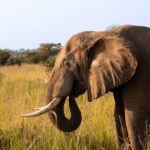
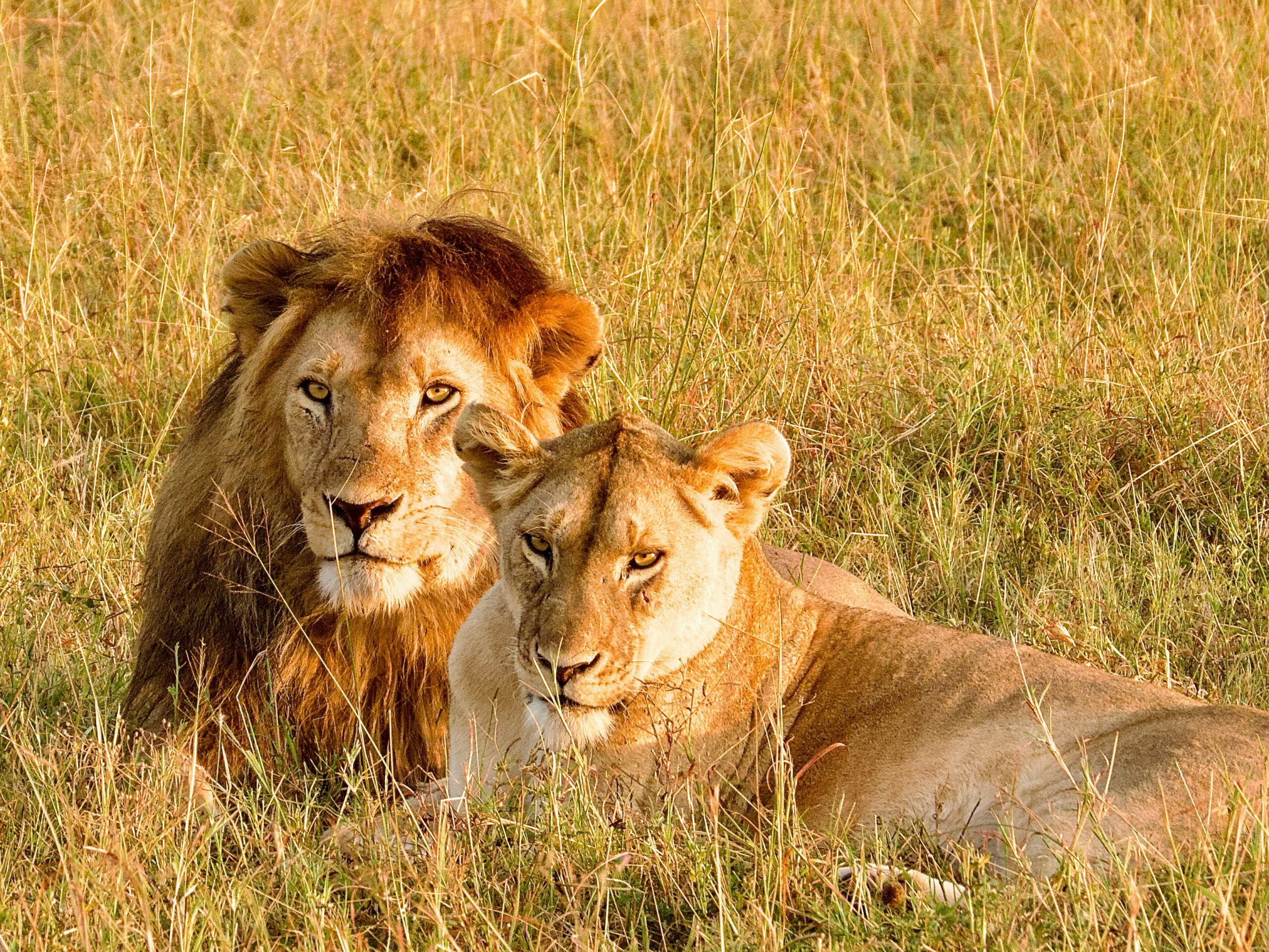
The Serengeti supports one of Africa’s largest lion populations, along with leopards, cheetahs, spotted hyenas, elephants, giraffes, buffalo, hippos and crocodiles. Rhinos are present but rare and are not a reason to choose the park. Resident wildlife is excellent throughout the year, which is why a Serengeti safari outside the migration peak can still be worthwhile.
What the park actually costs
Daily comparisons based only on park fees can mislead, so here is how the main charges work:
- Park conservation fee. Published at about US$82.60 per adult per 24 hours, including VAT, with children aged 5 to 15 at about US$23.60. Fees are charged per 24-hour period, so the number of days affects the cost, not just the number of nights.
- Concession or camping fees. Where you sleep inside the park carries a separate nightly charge, usually built into the lodge or camp rate.
- Vehicle fees. Charged per day for the safari vehicle and normally included in a quote.
- Ngorongoro Crater. If you pass through on the way, the crater is managed separately and a descent fee of about US$295 per vehicle applies, in addition to personal entry fees.
- Flights. A light aircraft transfer is the biggest swing factor. It saves a day of driving but adds cost.
Published tariffs often quote figures set in earlier years and many websites still repeat them, so always ask for an itemised quote. Our guide to saving on a safari explains where costs can be trimmed without hurting the experience.
How many days do you need?
Four nights is the minimum we recommend, split between two areas if possible. Three nights in one area is a short taste, and the distances inside the park are large. For a trip focused on river crossings, five or six nights in the north works better than a few nights in several places. If you are combining the Serengeti with Ngorongoro Crater, read our guide to what to expect at Ngorongoro.
Kenya or Tanzania, or both?
The Serengeti and the Maasai Mara form one ecosystem, and the best way to see how they differ is to visit both. Our comparison, Masai Mara vs Serengeti, explains how crowds, cost and logistics compare, and the guide on Kenya vs Tanzania helps if you are choosing one country. If you have nine days or more, a combined itinerary through both parks is often the most rewarding. See our notes on the Kenya and Tanzania safari combination.
Mistakes we see travellers make
- Choosing a lodge before choosing the month. In a park this size, the wrong region means long drives.
- Chasing one crossing. Herd movements follow rain, not dates, so allow several days.
- Squeezing the Serengeti into two nights. You spend most of it travelling.
- Comparing quotes on the nightly price alone. Fees, flights and transfers decide the real cost.
- Ignoring the calving season. It is one of the most dramatic periods and is often cheaper than July to October.
If you would like us to match your dates to a region and a route, tell us when you plan to travel, how many days you have, and whether you also want Kenya, and we will propose a plan.
Where these figures come from
Park fees are drawn from published TANAPA and NCAA tariffs as reported by SafariFind’s 2026 Tanzania fees summary, which notes that figures are based on 2023 to 2024 official tariffs and should be confirmed with TANAPA before travel. The area figure is the one we use across our own guides.
Safaris that fit this guide
These Cherish Africa Safaris itineraries include the Serengeti:
- 6-Day Maasai Mara, Serengeti and Ngorongoro Luxury Tour — Mara, Serengeti and the Crater in six days
- 8-Day Kenya and Tanzania Mid-Range Safari — a shorter combination
- 9 Days Kenya and Tanzania Safari — Kenya and Tanzania in nine days
- 10 Days of Kenya and Tanzania Mid-Range Safari — more time in each park
- 14-Day Kenya and Tanzania with Zanzibar — safari plus beach
Keep reading: Masai Mara vs Serengeti, Kenya vs Tanzania and the Great Migration in Kenya.
Not sure which trip suits you? Browse all our safaris or message us on WhatsApp and we will match your dates and budget to a plan.
Frequently Asked Questions
What is the best time to visit the Serengeti?
It depends on what you want to see. January to March is best for calving on the southern plains, June and July for the western corridor, and July to October for Mara River crossings in the north. Resident wildlife is good year round.
How much is the Serengeti park fee?
The published fee is about US$82.60 per adult and about US$23.60 per child aged 5 to 15 for each 24 hours, including 18 percent VAT. Under fives are free. Fees change, so confirm current figures with your operator before you travel.
How many days do you need in the Serengeti?
At least four nights, ideally split between two regions. Five or six nights in the north gives you a good chance of seeing river crossings if you travel between July and October.
How do you get to the Serengeti?
Most travellers fly from Arusha to Seronera or a northern airstrip in about 1.5 hours. The road journey from Arusha via Ngorongoro takes a full day.
Is the Serengeti the same as the Masai Mara?
They are separate parks in different countries, but they form one ecosystem. The Masai Mara in Kenya is the northern part, and the wildebeest cross between them each year.
Can you combine the Serengeti with a Kenya safari?
Yes. Many travellers combine the Maasai Mara with the Serengeti, usually on a trip of nine days or more, crossing the border by road or by flight.
Is the Serengeti worth it outside the migration?
Yes. Big cats, elephants and giraffes are resident, and the park is quieter and often cheaper from April to May and in November and December.
The main points on Serengeti national park are covered above. If you would like help applying them to your own dates and budget, our team can plan the trip with you. For more advice on Serengeti national park, or a quote tailored to your group, contact Cherish Africa Safaris and we will reply the same day.