Quick answer: Choose Kenya if you want variety, shorter distances, easy connections and a wider range of budgets, with the option of finishing on a beach. Choose Tanzania if you want scale and quiet, the Serengeti and Ngorongoro Crater, and you are comfortable with longer travel days. If you have eight days or more, you do not really have to choose. Kenya and Tanzania share an ecosystem, and combining them is straightforward. Below is everything you need to know about Kenya vs Tanzania safari, based on our own trips.
Details checked in October 2026. Entry rules, fees and flight schedules change, so confirm current requirements before you travel. Tour prices on this page are starting prices per person sharing.
Both countries offer the safari most people picture: open plains, acacia trees, big cats, enormous herds and a sunrise game drive with a flask of coffee. So the useful question is not which one has better animals. It is which one suits your time, your budget and the kind of trip you want to remember. This guide compares them on the points that actually decide the answer, and ends with a quick way to pick.
Kenya vs Tanzania safari at a glance
| Kenya | Tanzania | |
|---|---|---|
| Headline parks | Maasai Mara, Amboseli, Samburu, Ol Pejeta and Laikipia, Tsavo, Lake Nakuru | Serengeti, Ngorongoro Crater, Tarangire, Lake Manyara, plus remote southern parks such as Nyerere and Ruaha |
| Main gateway | Nairobi | Arusha and Kilimanjaro Airport; Dar es Salaam and Zanzibar for the coast |
| Distances | Shorter. Several parks sit within a day’s drive or a short flight of Nairobi. | Longer. The northern circuit often relies on internal flights. |
| The migration | Mara River crossings, usually late July to October | Calving in the south from about January to March; crossings in the north from July to October |
| Beaches | Diani, Watamu, Lamu | Zanzibar, Mafia |
| Ways to safari | Game drives, plus walking and night drives in private conservancies | Mostly game drives; walking and night drives only in some private areas |
| Budget range | Wide, from simple camps to ultra-luxury | Mostly mid-range to luxury in the north |
| Signature wildlife | Northern white rhinos at Ol Pejeta, the Samburu special five, Amboseli elephants under Kilimanjaro | The Ngorongoro Crater, Tarangire’s elephants and baobabs, the vast Serengeti plains |
What Kenya does best
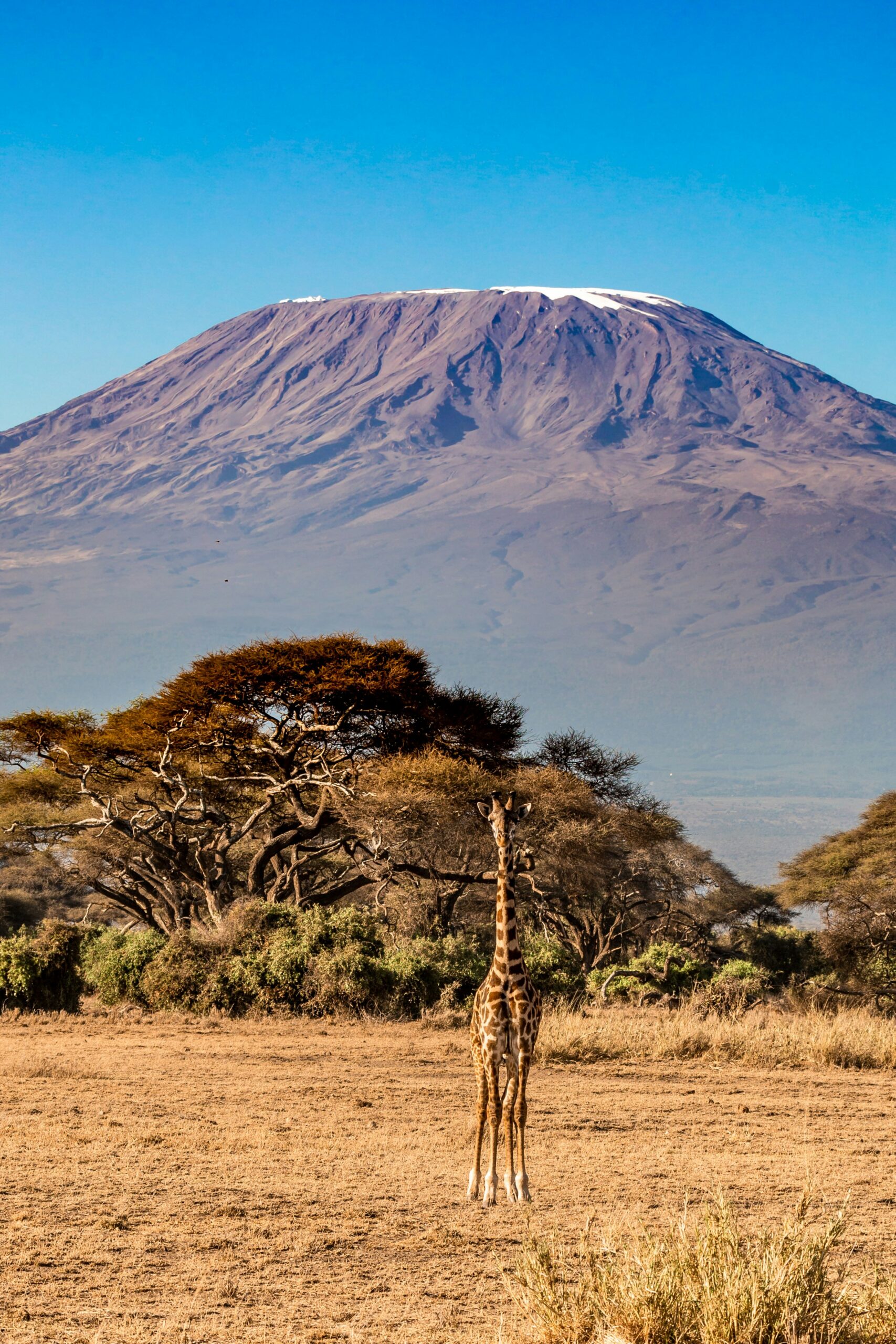
Kenya’s strength is variety packed into short distances. In a single week you can watch lions in the Maasai Mara, see elephants walk across the foreground of Mount Kilimanjaro in Amboseli, track the Samburu special five (Grevy’s zebra, reticulated giraffe, Somali ostrich, beisa oryx and gerenuk) and meet the world’s last northern white rhinos at Ol Pejeta. Our guides to the Maasai Mara and the Big Five in Kenya show how much variety the country holds.
Kenya is also the more flexible country for how you safari. Private conservancies around the Mara and in Laikipia allow walking safaris, night drives and off-road driving that national parks usually prohibit. And because most trips start and end in Nairobi, adding a few days on the coast is easy. If you like the idea of a safari followed by a beach, read our guide to adding Diani Beach to a Kenya safari.
What Tanzania does best
Tanzania’s strength is scale. The Serengeti National Park alone covers about 14,750 square kilometres, and the quiet that comes with that space is something many travellers remember longer than any single sighting. The Ngorongoro Crater, a collapsed volcano roughly 20 kilometres across, packs a remarkable density of wildlife onto its floor, including black rhino. Tarangire is famous for its elephants and baobab trees in the dry season, and Lake Manyara is a pleasant, green stop on the way.
The southern and western parks, such as Nyerere and Ruaha, are remote and rewarding for repeat visitors, but they are a longer and costlier trip than most first-time travellers need. For a first visit, the northern circuit of the Serengeti, Ngorongoro and Tarangire is the sensible choice. Our Ngorongoro Crater guide and best time to visit Tanzania go deeper on both.
Cost: what really changes the price
Tanzania is often more expensive than Kenya for a comparable mid-range trip. The reasons are practical rather than mysterious: longer distances, internal flights between parks, and a mix of national park and concession fees. Kenya has the wider spread, from budget camping safaris to ultra-luxury conservancy camps, so the cheapest way to see a great safari is usually in Kenya.
To give you a feel, with the caveat that trip length and style differ, our 6-day Kenya safari and beach holiday starts from $883 per person sharing, while our combined Kenya and Tanzania trips start from $3,545 for eight days. Do not compare daily park fees alone, because they change and are not the largest part of the bill. The camp category, the season, how you travel between parks and the size of your group usually matter more. Our guide to saving money on a Kenya safari shows where the real savings are.
When to go
Both countries share the same two dry seasons, roughly June to October and January to February, and both have long rains from March to May and shorter rains in November. Wildlife viewing is easiest in the dry months, when animals gather around water and the grass is short. The rainy months bring lower rates, green scenery and fewer visitors, with the trade-off of muddy roads and a few closed camps.
The migration adds a twist. If your priority is river crossings, plan for August to October in the Mara or northern Serengeti. If you want calving, plan for late January to March in the southern Serengeti. Our Masai Mara vs Serengeti comparison looks at that choice in detail.
Crowds and exclusivity
No famous safari destination is empty in peak season. The Mara’s river crossings and the Ngorongoro Crater floor are both busy in July to October. The difference is mostly one of structure. In Kenya, the private conservancies cap vehicle numbers and bed numbers, which gives you quieter sightings if you are willing to pay for them. In Tanzania, the vast size of the Serengeti dilutes the crowds across the park, though central areas can feel busy.
Visas, health and safety
Both countries require visitors from most nations to apply for an entry permit online before arrival, but the systems and fees are different, so check each government’s official page before you book. Yellow fever documentation may be required depending on where you travel from, and malaria prevention is advisable in both. Your doctor or travel clinic will give you current guidance. Safari travel in both countries is generally trouble-free for visitors who follow their guide’s advice and read their own government’s travel advisories.
Which should you choose?
| If you are… | We would lean towards | Why |
|---|---|---|
| On a first safari with 4 to 6 days | Kenya | Short transfers and dense wildlife mean more time watching animals. |
| Travelling on a tighter budget | Kenya | A wider range of camps and simpler logistics. |
| Hoping to add a beach | Kenya, or Kenya with Zanzibar | Diani is a short flight from Nairobi; Zanzibar works for a longer trip. |
| Travelling with young children | Kenya | Shorter drives and more family-friendly camps. |
| Wanting space and quiet | Tanzania | The Serengeti’s scale spreads visitors out. |
| Interested in Ngorongoro Crater | Tanzania | It is unique, and you cannot see it from Kenya. |
| Chasing the migration | Both, ideally | The herds cross the border, so a combined trip follows them. |
| Travelling for eight days or more | Both | You get more variety without a rushed schedule. |
What a first week looks like in each country
A week in Kenya might start with two nights in Amboseli for elephants and Kilimanjaro views, then a day of travel to the Maasai Mara for three nights of big cats and open plains, with a final night in Nairobi to rest before your flight. Add a few days at Diani Beach if you want to finish on the sand. Transfers are mostly short, and you spend the bulk of each day looking for animals.
A week in Tanzania usually flies you from Arusha to the Serengeti for three or four nights, drives or flies you on to the Ngorongoro Crater rim for one or two, and breaks the trip with a night or two near Tarangire or Lake Manyara. It is slower and more spread out, with long and scenic days. Neither version is better. They feel different, and people tend to prefer the one that matches how they like to travel.
Why many travellers do both
Because the two countries share an ecosystem and a border, combining them is not complicated. A typical trip starts in Nairobi, visits Amboseli and the Mara, crosses by road or air into Tanzania for the Serengeti and Ngorongoro, and ends in Arusha or Zanzibar. We explain the routes in how to combine Kenya and Tanzania, and you can browse every combined trip on our Kenya and Tanzania safaris page. If you are also weighing a third country, our Kenya vs South Africa safari comparison may help.
Not sure where to start? Tell us your dates, group size and budget, and we will suggest a route that fits.
Safaris that fit this guide
These Cherish Africa Safaris trips match what this guide covers. We can adjust any of them to your dates, group size and budget. Prices shown are starting prices per person sharing, in US dollars; the final price depends on the season, the accommodation and the size of your group.
- 8-Day Kenya and Tanzania Mid-Range Safari (from $3,545)
- 10 Days of Kenya and Tanzania Mid-Range Safari (from $3,900)
- 6-Day Maasai Mara, Serengeti and Ngorongoro Luxury Tour (from $4,085)
- 14-Day Kenya and Tanzania Safari with Zanzibar (from $7,595)
Keep reading: How to Combine Kenya and Tanzania, Masai Mara vs Serengeti, Best Time to Visit Tanzania.
Not sure which trip suits you? Browse all our safari tours or send us an enquiry.
Frequently Asked Questions
Is Kenya or Tanzania better for a first safari?
For most first-timers Kenya is easier. Distances are shorter, there are options at every budget, and a 4 to 6 day trip can include several different landscapes. Tanzania suits first-timers with a week or more who want a quieter, larger park.
Which is cheaper, a Kenya or a Tanzania safari?
Kenya is usually cheaper for a comparable trip, because the distances are shorter and the range of camps is wider. Tanzania costs more on average, mainly because of internal flights, longer distances and park and concession fees.
Can I visit Kenya and Tanzania on the same trip?
Yes. The countries share an ecosystem and a border, and many travellers combine the Maasai Mara with the Serengeti and Ngorongoro. A trip of eight to ten days works well, and we arrange the flights and transfers.
Which country has the better Great Migration?
Both do, at different times. The Mara River crossings are usually from late July to October on both sides of the border, and the calving season from January to March is in southern Tanzania.
When is the best time for a safari in Kenya and Tanzania?
The dry seasons, from June to October and January to February, are best for wildlife viewing. The rainy months from March to May are cheaper and greener but have more mud and some closed camps.
Do I need a visa for Kenya and Tanzania?
Most visitors need an online entry permit for each country. The systems and fees differ and change from time to time, so check the official government pages before you book.
The main points on Kenya vs Tanzania safari are covered above. If you would like help applying them to your own dates and budget, our team can plan the trip with you. For more advice on Kenya vs Tanzania safari, or a quote tailored to your group, contact Cherish Africa Safaris and we will reply the same day.