Why combine them?
Kenya offers variety: the Maasai Mara, Amboseli beneath Kilimanjaro, rhino sanctuaries and a beach coast. Tanzania adds the vast Serengeti, the Ngorongoro Crater and Tarangire’s baobabs. Together they cover almost every classic East African wildlife scene. If you are deciding between them, read our Kenya vs Tanzania comparison first.
Three popular combinations
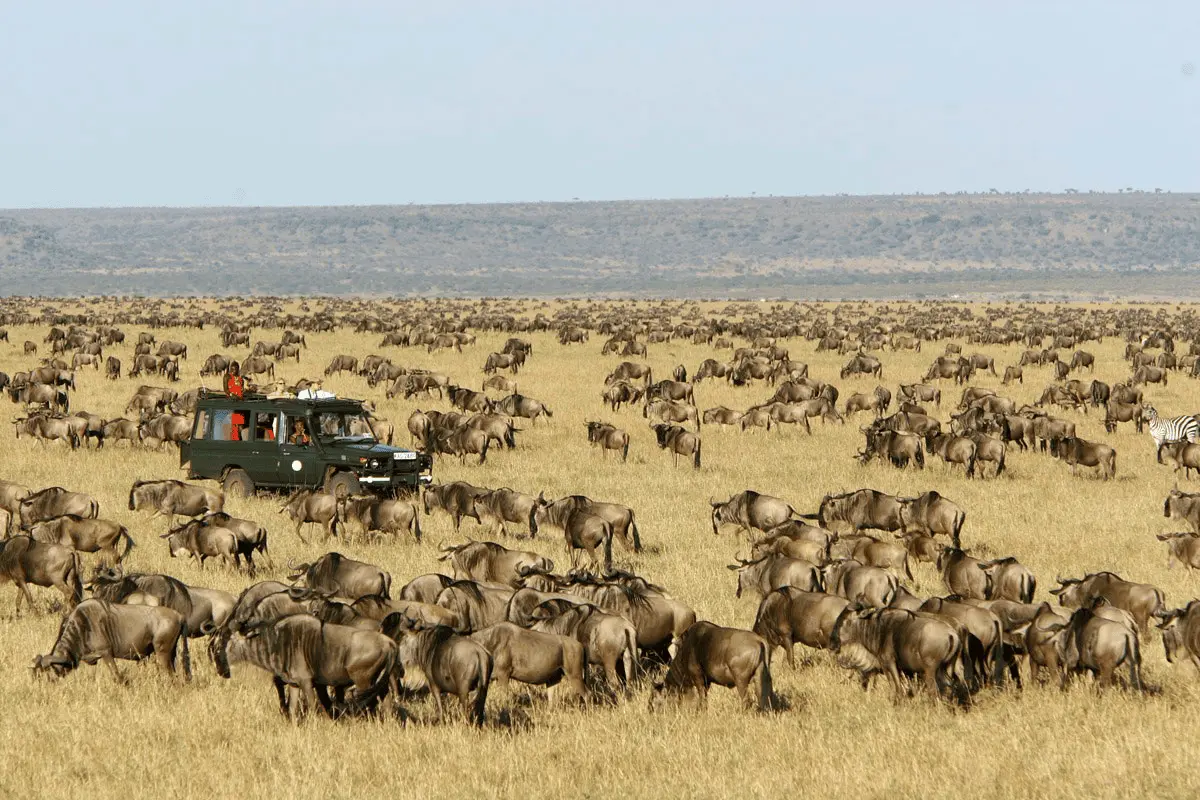
- Mara and Serengeti. Follow the migration across the border. In Kenya, the herds are in the Mara roughly from July to October, and in Tanzania they spread through the Serengeti for the rest of the year.
- Amboseli and northern Tanzania. Kilimanjaro views from the Kenyan side, then Arusha, Tarangire, Lake Manyara and Ngorongoro.
- Coast and islands. A Kenyan safari plus beach time in Zanzibar or Diani. See our beach holiday guide.
Crossing the border
The main overland crossings are Namanga (between Amboseli and Arusha), Isebania-Sirari (western Mara side) and Taveta-Holili (near Tsavo and Moshi). Transfers involve changing vehicles and guides at the border, and clearing immigration on both sides. Border formalities can take an hour or more, so allow plenty of time. Alternatively, you can fly between Nairobi and Kilimanjaro or Arusha, or fly open-jaw: arrive in one country and depart from the other to avoid backtracking.
Visas and paperwork
Kenya requires an electronic travel authorisation for most visitors, as explained in our entry requirements guide. Tanzania has its own visa system, which most travellers apply for online in advance. Check your nationality’s rules for both countries, and confirm any yellow fever certificate requirements when crossing between them.
Seasons
The dry season, June to October, is the most dependable for both countries. January to March is the calving season in Tanzania’s southern Serengeti, which is spectacular but outside Kenya’s migration window. See the Great Migration and best time to visit Tanzania.
What it takes
- At least ten days; two weeks is more comfortable.
- An operator who coordinates both sides and handles the border.
- Budget for two sets of park fees, which differ in structure.
For Tanzanian highlights, read Ngorongoro Crater. Share your dates, and we will propose a route with sensible transfers.
Quick answers
How many days do I need for Kenya and Tanzania?
At least ten days, with two weeks more comfortable.
How do I cross the border?
Overland at Namanga, Isebania-Sirari or Taveta-Holili, or fly open-jaw between countries.
Do I need two visas?
Usually yes, because each country has its own entry system. Check your nationality’s requirements.
Safaris that fit this guide
These Cherish Africa Safaris trips match what this guide covers. We can adjust any of them to your dates, group size and budget.
- 8-Day Kenya & Tanzania Mid-Range Safari
- 6-Day Maasai Mara, Serengeti and Ngorongoro Luxury Tour
- 9 Days Kenya Safari & Zanzibar Beach Holiday
Keep reading: Kenya vs Tanzania Safari: Which Country Is Right for You?, Amboseli National Park Guide: Elephants Under Kilimanjaro, Ngorongoro Crater: What to Expect on Your Tanzania Safari.
Not sure which trip suits you? Browse all our Kenya safari tours or send us an enquiry.
What each country adds to a Kenya and Tanzania safari
A Kenya and Tanzania safari is rewarding because the two countries offer different strengths. Kenya is known for the Masai Mara, Amboseli’s elephants and Kilimanjaro views, the rhinos of Lake Nakuru and Ol Pejeta, the dry north of Samburu, and a long tradition of guiding and community conservancies. Tanzania offers the vast Serengeti, the Ngorongoro Crater with its dense concentration of wildlife in a single caldera, Tarangire’s baobabs and elephants, and Lake Manyara’s tree-climbing lions and flamingo shores in a smaller setting. The migration moves between the two, so timing matters. Read our comparison Kenya vs Tanzania for the differences in style, cost and crowds.
Sample routes for a Kenya and Tanzania safari
- The classic loop (10 to 12 days): Nairobi, Amboseli, cross at Namanga to Arusha, Tarangire, Ngorongoro, Serengeti, then fly back to Nairobi or Kilimanjaro.
- The migration route (8 to 10 days): Masai Mara for the river crossings, then onward to the northern Serengeti, then fly home.
- The short version (7 to 8 days): Amboseli and Tarangire, with a night in the Ngorongoro highlands, for travellers short of time.
- The coast finish: a safari in both countries followed by a few days at the Kenyan or Tanzanian coast. See our safari and beach holiday guide.
How the border crossing works
Most overland combinations use the Namanga border crossing between Kenya and Tanzania, which is the busiest route between Nairobi and Arusha. You leave your Kenyan vehicle on one side, complete immigration and customs formalities, then continue with a Tanzanian vehicle and guide on the other side. This is normal because vehicles and guides are licensed per country. Allow extra time for paperwork and queues, and carry your passports, visas and vaccination records easily accessible. You can also fly between the two countries, which is faster but more expensive. Procedures and fees change, so we confirm the current process when we plan your trip.
Visas and paperwork for two countries
You need to meet the entry requirements of each country separately. Kenya uses an electronic travel authorisation, as explained in our entry requirements guide, and Tanzania has its own visa system. Yellow fever certificates may be asked for depending on where you have travelled from. Keep your passport valid for the period required, with enough blank pages, and carry copies. Check your insurance covers both countries, and read the travel insurance guide.
When to go on a Kenya and Tanzania safari
The dry months from late June to October suit both countries, and the migration usually shows in the Mara around July to October and in the northern Serengeti around the same period. From December to March, the herds are in the southern Serengeti and Ngorongoro area, calving season brings lots of predators, and Kenya is warm and dry. The long rains from March to May bring lower rates and fewer visitors but can complicate travel. See our Great Migration guide and best time to visit Kenya for details.
Planning budget and time
Costs depend on the route and style, but two-country trips usually cost more than a single-country safari because of extra park fees, a vehicle change, possible flights and a longer duration. Tanzania’s major parks have their own entry and conservation fees, and some, such as the Serengeti and Ngorongoro, are among the more expensive in Africa. Allow at least ten days if you want to see both countries properly, and avoid the temptation to cram too much in. Compare Kenya park costs in our park fees guide and understand the Kenyan side in the cost breakdown.
Tips for a smooth two-country trip
- Choose one operator who can coordinate both countries, so there are no gaps at the border.
- Keep your luggage light and soft-sided if you plan to fly.
- Carry small US dollar notes for tips, and confirm which currency each park or lodge accepts.
- Build in a rest day after the crossing.
- Check vaccination and malaria advice for both countries with your doctor.
- Confirm transfer times, meeting points and guide names before you travel.
For a custom itinerary that covers both countries, contact our team.
Highlights you do not want to miss in Tanzania
If you are adding Tanzania to a Kenya itinerary, the Ngorongoro Crater is the standout. Its floor is a self-contained world of grassland, swamp and lake, home to lions, elephants, buffalo, hippos and one of the better chances of seeing black rhino. Read what to expect in our Ngorongoro Crater guide. The Serengeti offers endless plains and, depending on the season, the migration. Tarangire is excellent for elephants and baobab trees, particularly in the dry season, while Lake Manyara is a compact park with varied scenery. Check the season in our best time to visit Tanzania guide.
How many days are needed for a Kenya and Tanzania safari?
A comfortable minimum is ten days, with two nights in each main park and a rest day after the border crossing. Twelve to fourteen days lets you add the Serengeti and Ngorongoro properly, and avoid constant packing. Shorter trips of seven or eight days are possible, but they involve long transfers and little rest. If you are short of time, consider choosing one country for depth and returning to the other on another trip. Our 10-day and 14-day Kenya itineraries show the Kenyan side of the journey.
Who should choose a Kenya and Tanzania safari?
This trip suits travellers who want variety, including repeat visitors who have seen one country and want a second. It suits migration enthusiasts, photographers and anyone who enjoys comparing different ecosystems. It is less suitable for people with very limited time or those who dislike travel days. Honeymooners and families with older children often love it, because the changes of scenery keep the trip fresh. Whatever your reason, a good plan and a reliable operator make the difference.
Common mistakes on a Kenya and Tanzania safari
The biggest mistake is trying to see too much. Travellers often add one more park without considering the long drives involved, and end up spending more time in the vehicle than watching wildlife. Another is assuming that each country follows the same rules: park fees, vehicle regulations, guide licensing and baggage limits differ. Travellers also forget to check vaccination and visa requirements for both countries, or leave too little buffer before an international flight. Finally, some people book separate operators for each side and discover that nobody is responsible for the border handover. A single coordinator, a sensible pace and clear paperwork prevent most problems and leave you free to enjoy the animals.
Next step for your Kenya and Tanzania safari
Tell us your dates, your interests and how long you have, and we will draw up a route that makes sense on the ground, with realistic drive times and a clear list of what is included. You can compare it with other quotes, and we will explain each choice.
Plan it with people who live here
We are a Nairobi-based team and every trip starts from our own doorstep. If you would like help turning these ideas into a real itinerary, message us on WhatsApp (+254 794 588 242), write to info@cherishafricasafaris.com, or use our contact form. We usually reply the same day.
Kenya and Tanzania safari: Key Takeaways
The main points on Kenya and Tanzania safari are covered above. If you would like help applying them to your own dates and budget, our team can plan the trip with you. For more advice on Kenya and Tanzania safari, or a quote tailored to your group, contact Cherish Africa Safaris and we will reply the same day.