Most people add Ngorongoro Crater to their Tanzania itinerary because a photo of it looked incredible, then arrive without really knowing what makes it different from the Serengeti next door. Here’s what you’re actually booking.
What Exactly Is Ngorongoro Crater?
It’s the collapsed remains of a volcano roughly the size of present-day Kilimanjaro, which caved in on itself about 2.5 million years ago. What’s left is, per Tanzania’s Ngorongoro Conservation Area Authority, the world’s largest intact and unfilled volcanic caldera — 20km across, 610 meters deep, and enclosing almost 260 square kilometers of grassland, forest, and a soda lake on the crater floor. The wider Ngorongoro Conservation Area around it is a dual UNESCO World Heritage Site, recognized both for its wildlife and for the human history buried in it — Olduvai Gorge and the Laetoli footprints nearby preserve nearly four million years of human evolutionary evidence, including footprints dated to 3.6 million years ago (UNESCO).
How Many Animals Actually Live in the Crater?
Around 25,000 large animals live inside the crater year-round, according to UNESCO’s own listing, including all of the Big Five — elephant, buffalo, rhino, lion, and leopard — alongside hippos, hyenas, zebra, and wildebeest that never leave. UNESCO specifically credits the area with the densest known lion population in Africa. What makes that possible is water: unlike the Serengeti, where animals move constantly chasing rain, the crater floor holds permanent water and grazing, so wildlife has no reason to migrate out.
Is Ngorongoro Part of the Great Migration?
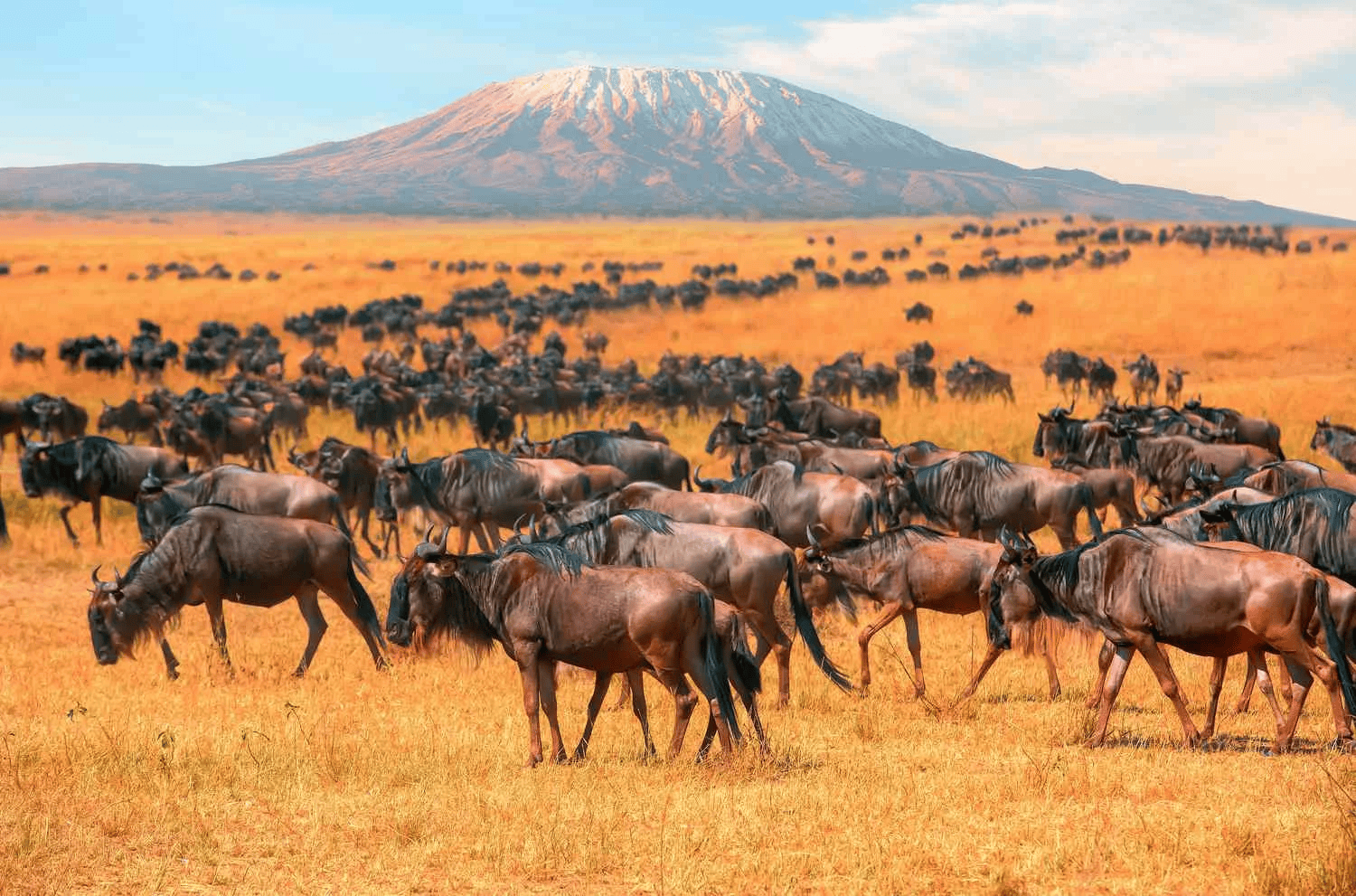
No, and this trips up a lot of first-time planners. The wildebeest migration moves through the Serengeti and up into Kenya’s Maasai Mara, but it doesn’t pass through Ngorongoro. That’s actually good news for your itinerary — it means the month you visit barely affects what you’ll see here, unlike a Serengeti safari timed around river crossings.
Can You Walk in the Crater, or Is It Game Drives Only?
Game drives only, on the crater floor. Per NCAA rules, only four-wheel-drive vehicles are permitted to enter, and walking safaris are restricted to the crater rim rather than the floor itself — for fairly obvious reasons once you consider the lion density mentioned above. Permitted floor activities include game drives, photographic safaris, birdwatching, and bush dining; sundowners are typically taken up on the rim.
How Much Does It Cost to Visit Ngorongoro Crater?
| Fee (non-resident) | Amount |
|---|---|
| Adult conservation entry (16+) | $70.80 |
| Child conservation entry (5–15) | $23.60 |
| Crater descent (service) fee | $295 per vehicle |
| Vehicle permit (up to 2,000kg) | $47.20 |
| Vehicle permit (2,001–3,000kg) | $177.00 |
All figures per the Ngorongoro Conservation Area Authority’s published tariffs. The crater descent fee is charged per vehicle per trip down into the crater, on top of the standard conservation entry fee — it’s the one most first-timers don’t budget for, since it isn’t obvious from a per-person quote unless your operator itemizes it.
Not sure how a Ngorongoro day fits into your overall Tanzania budget? Tell us your dates and we’ll show you exactly where this fee sits in the total.
Should You Stay on the Rim or Explore Beyond the Crater?
Rim lodges give you the view everyone’s photo is of, plus a shorter drive down into the crater each morning — worth it if photography and convenience matter more than budget, since rim properties tend to sit at the luxury end. Most itineraries treat Ngorongoro as a one- or two-night stop between the Serengeti and Lake Manyara or Tarangire, rather than a standalone destination, which keeps the crater descent fee to a single charge instead of paying it on multiple separate days.
Is Ngorongoro Worth a Full Day, or Just a Few Hours?
A full day, if you can manage it. Most vehicles descend early morning and spend four to six hours on the crater floor before the afternoon light flattens out and other vehicles start heading back up — a half-day visit usually means less time before the crater gets busy around midday. Given the descent fee is charged per vehicle per trip regardless of how long you stay down there, a rushed two-hour visit and a full morning cost exactly the same amount, which makes the full day the better value by default.
Frequently Asked Questions
Is Ngorongoro Crater the same as the Ngorongoro Conservation Area?
No — the Conservation Area is the much larger 809,440-hectare region; the crater itself is one feature within it, alongside other sites like Olduvai Gorge.
Do I need extra time for Olduvai Gorge if I’m visiting the crater?
Yes, budget it as a separate stop — most itineraries visit Olduvai Gorge en route between the Serengeti and Ngorongoro rather than on the same day as the crater floor visit.
Is Ngorongoro busier than the Serengeti?
It can feel that way on the crater floor itself, simply because the enclosed space concentrates both animals and vehicles — the Serengeti’s much larger area spreads visitors out more.
Can you see the Big Five in one day at Ngorongoro?
It’s one of the more realistic places in Tanzania to do it, since all five live in the crater year-round in a relatively contained area — though leopard sightings are never guaranteed anywhere.
Do children pay the crater descent fee too?
The $295 descent fee is charged per vehicle, not per person, so it doesn’t change based on how many people — adults or children — are in the vehicle.
Written by Francis Magere. Have questions about fitting Ngorongoro into your itinerary? Get in touch for a personalized itinerary, or reach us directly on WhatsApp.