Quick answer: Choose the Masai Mara if you have four to six days, want the easiest trip from Nairobi and want the best odds of close views of lions, leopards and cheetahs. Choose the Serengeti if you have a week or more, prefer space and quiet, or want to see the calving season on the southern plains. If you can spare nine days or more, do both. They are one ecosystem split by a border, not two different worlds. This guide covers Masai Mara vs Serengeti in detail, so you can plan with confidence.
Details checked in October 2026. Wildebeest timing follows the rains and changes from year to year, and park fees and flight schedules change, so confirm current figures before you book.
Ask ten people which park is better and you will get ten confident answers, usually from whoever visited most recently. The honest answer is less dramatic. The Masai Mara in Kenya and the Serengeti in Tanzania are two halves of the same grassland, and the wildebeest pay no attention to the border. What changes between them is everything around the wildlife: how long it takes to get there, how many other vehicles you share a sighting with, which months suit you, how you spend your days and what the whole trip costs.
One note on spelling before we start. Masai Mara and Maasai Mara are the same reserve. “Masai” is the older spelling and still the one most travellers type into a search bar; “Maasai” matches the name the people use for themselves and is the official form today. We use both on this site.
Masai Mara vs Serengeti at a glance
| Masai Mara (Kenya) | Serengeti (Tanzania) | |
|---|---|---|
| Size | About 1,500 sq km of reserve, plus private conservancies around it | About 14,750 sq km national park, inside a much larger ecosystem |
| Gateway | Nairobi | Arusha or Kilimanjaro Airport |
| Getting there | About 45 minutes by air or 5 to 6 hours by road from Nairobi | Around 1.5 hours by light aircraft from Arusha, or a full day by road |
| River crossings | Mara River, usually late July to October | Mara River in the far north in the same months; Grumeti River around June and July |
| Calving season | Not in the Mara | Southern Serengeti and Ndutu, roughly late January to March |
| Feel | Compact, wildlife-dense, busy at famous crossings | Vast and quiet, with longer drives between highlights |
| Off-road driving | Allowed in most private conservancies, restricted in the reserve | Not allowed in the national park |
| Walking and night drives | Offered in the conservancies | Not offered inside the national park |
| Where to stay | Camps and lodges at almost every price point | Mostly mid-range to luxury tented camps |
| Best for | First safaris, 3 to 6 days, combining with Amboseli or the coast | 7 days or more, calving, big landscapes, adding Ngorongoro Crater |
One ecosystem, two sets of logistics
The Mara is the northern tip of the Serengeti-Mara ecosystem, which covers somewhere between 25,000 and 30,000 square kilometres depending on where you draw the boundary. Because it is one landscape, the wildlife is largely the same on both sides: lions, leopards, cheetahs, elephants, buffalo, hippos, crocodiles, giraffe, zebra, topi, eland and, for part of the year, well over a million wildebeest. Black rhino live in both, but treat a sighting as a bonus rather than a promise.
That is why wildlife is rarely what decides the question. Time, season, budget and travel style do. If you read this far hoping for a winner, the useful reframe is this: ask which park fits the days and months you actually have.
Where the herds are, month by month
The migration is a loop, not a single event, and it follows the rain. These are typical patterns, not guarantees.
| Months | Where the herds usually are | What it means for you |
|---|---|---|
| January to March | Southern Serengeti and the Ndutu plains | Calving, with predators hunting newborns. The Mara has resident game only, and is quiet. |
| April to May | Moving north through the central and western Serengeti | Long rains. Lower rates and fewer visitors, but some camps close. |
| June | Western corridor and the Grumeti River | Early river crossings are possible in Tanzania. |
| July | Northern Serengeti; first herds reach the Mara in late July | Planning month: book early for August. |
| August to September | Both sides of the Mara River | Peak crossings and peak crowds in the Mara. |
| October | Crossings tail off; herds begin moving south | Still excellent in the Mara, with fewer vehicles at each sighting. |
| November to December | Heading back to the southern Serengeti | Short rains. The Mara is green and calm; the south refills. |
For a closer look at the Kenyan side, read our Great Migration in Kenya guide.
Crowds and the crossing circus
This is where the two parks differ most. A famous crossing point on the Mara River in August can have dozens of vehicles lined up along the bank, all waiting for the same moment. It is thrilling when it happens and a little undignified while you wait. The Serengeti has the advantage of scale: the northern crossings are spread over a longer river and fewer camps, and the park as a whole is simply bigger. The exception is the Seronera area in the centre, which is the Serengeti’s busiest corner.
In the Mara you can soften the crowding by staying in a private conservancy, where the number of vehicles per sighting is limited and camps cap their beds. We explain how that works, and what it costs, in Masai Mara reserve vs conservancies.
Wildlife, beyond “both have lions”
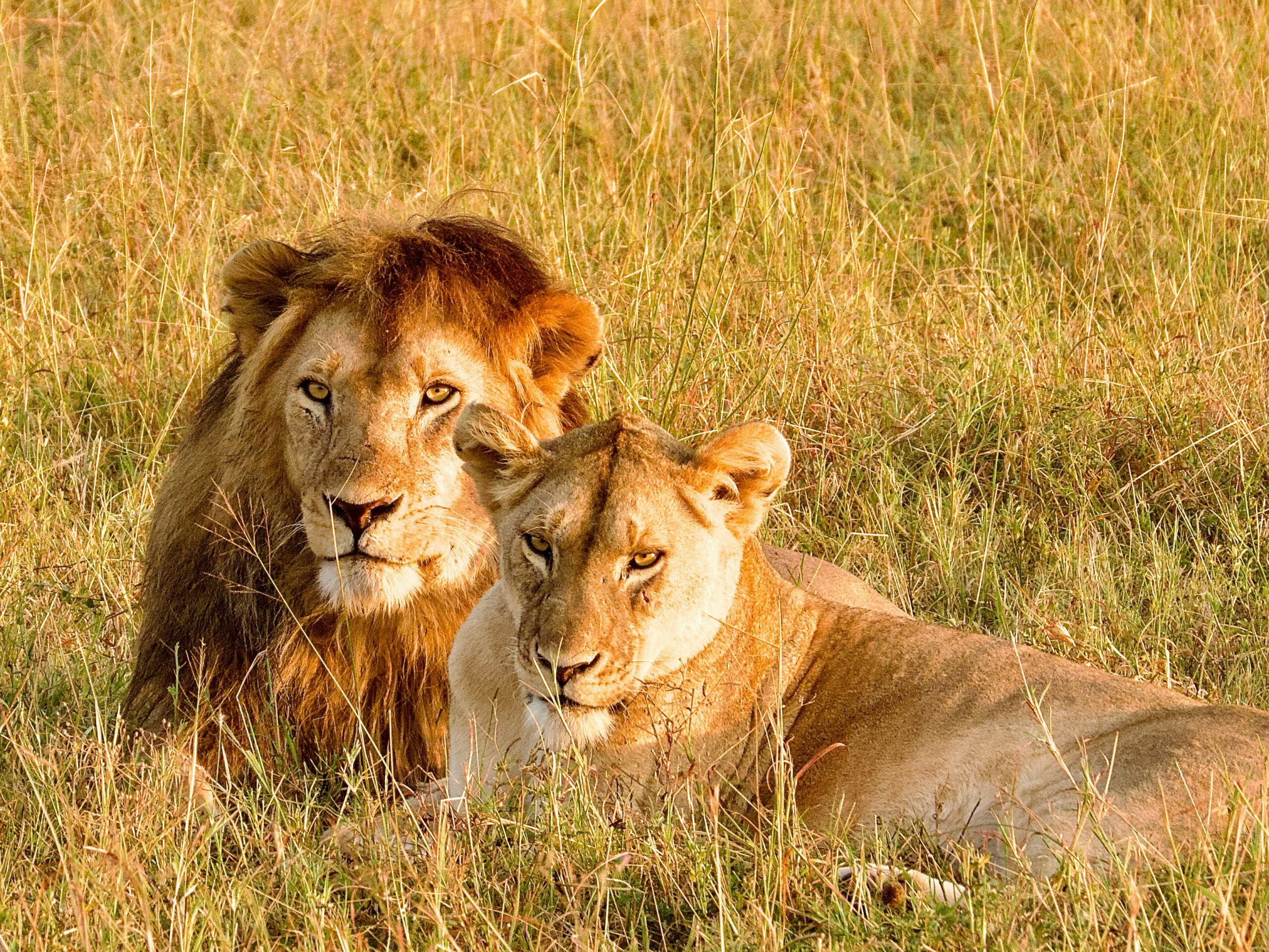
In the Mara the big cats are the reason people come back. Open plains, patchy cover and the Musiara marsh make for dependable lion prides, cheetahs hunting from termite mounds and leopards along the riverine woodland. The west bank, known as the Mara Triangle, is quieter and has a strong reputation for crossings.
In the Serengeti the picture is bigger. The Seronera valley is known for leopards resting in sausage trees and lions on the granite kopjes. The Grumeti River has large crocodiles waiting for the herds, and the southern plains in the calving season are among the most dramatic predator shows in Africa. If you love landscape as much as animals, the Serengeti’s endless grass and sky is hard to beat.
How you spend the day
Both parks offer sunrise and afternoon game drives and hot air balloon flights; our guide to the Maasai Mara balloon safari covers what to expect. Beyond that, the experience diverges.
- Walking safaris: available in the Mara’s private conservancies with armed rangers. Not offered inside the Serengeti National Park.
- Night drives: also a conservancy option in the Mara, and the best way to see aardvark, bat-eared foxes and hunting cats. The national park does not allow them.
- Off-road driving: allowed in the conservancies when a sighting justifies it. In the Serengeti you stay on tracks, which keeps the landscape intact but can put you further from the action.
- Cultural visits: Maasai communities live around both parks, and visits are simplest to arrange on the Kenyan side.
Getting there, and how many days you need
The Mara wins on convenience. You can fly from Nairobi’s Wilson Airport in about 45 minutes, or drive in five to six hours. Our guide to getting from Nairobi to the Maasai Mara compares the options honestly, including the state of the road. A good Mara trip can be done in three or four days, though five lets you slow down.
The Serengeti rewards patience. You typically fly into Arusha or Kilimanjaro, then take a light aircraft to an airstrip inside the park, or spend a long day on the road. Because the distances inside the park are larger, a Serengeti trip rarely feels right under four nights, and it usually includes Ngorongoro. Add the crater and a realistic itinerary is six or seven days. Our Ngorongoro Crater guide explains why it is worth the time.
What really drives the cost
It is tempting to compare daily park fees, but the numbers change and they are rarely the largest part of the bill. What moves the price is how you get around, the category of camp, the season and the size of your group. A Mara-based trip is usually cheaper than a Serengeti trip of the same length and comfort, mostly because the logistics are simpler. A luxury conservancy camp in the Mara can still cost more than a mid-range Serengeti camp, so compare like for like and ask for an itemised quote.
For reference, our 6-day Maasai Mara, Serengeti and Ngorongoro luxury tour starts from $4,085 per person sharing. That price covers three destinations and the movement between them.
Which one should you choose?
Pick the Masai Mara if:
- You have three to six days and want to spend them looking at animals, not in transit.
- It is your first safari and you want predictable, dense wildlife.
- You want to add Amboseli, Tsavo or a beach such as Diani to the same trip.
- You like the idea of walking safaris or night drives in a conservancy.
Pick the Serengeti if:
- You have at least a week and enjoy long, open landscapes.
- You want to see the calving season between January and March.
- You plan to add Ngorongoro Crater, Tarangire or Zanzibar.
- You would rather share a sighting with fewer vehicles, and do not mind longer drives to get there.
The case for doing both
If you have nine or ten days, combining Kenya and Tanzania removes the dilemma. You can follow the herds across the border, see two countries’ worth of scenery and add Amboseli’s view of Kilimanjaro on the way. The detail is in our guide to combining Kenya and Tanzania in one trip, and you can browse every combined route on our Kenya and Tanzania safaris page. If you are still weighing the two countries as a whole, read Kenya vs Tanzania safari next.
Mistakes we see travellers make
- Building the whole trip around one crossing. Crossings are unpredictable. Plan for a great safari and treat a crossing as a gift.
- Booking only two nights. A single game drive can be quiet; the third day is often the best one.
- Ignoring the weather. The long rains in April and May make some roads and camps difficult, even if the rates look attractive.
- Underestimating Tanzanian distances. The Serengeti is enormous, and its camps are not next door to each other.
- Waiting too long to book August. The best camps fill many months ahead.
If you would like us to match your dates and budget to the right park, tell us what you have in mind, or message us on WhatsApp.
Safaris that fit this guide
These Cherish Africa Safaris trips match what this guide covers. We can adjust any of them to your dates, group size and budget. Prices shown are starting prices per person sharing, in US dollars; the final price depends on the season, the accommodation and the size of your group.
- 6-Day Maasai Mara, Serengeti and Ngorongoro Luxury Tour (from $4,085)
- 8-Day Kenya and Tanzania Mid-Range Safari (from $3,545)
- 9 Days Kenya and Tanzania Safari (from $3,975)
Keep reading: The Ultimate Masai Mara Guide, Best Time to Visit Tanzania for a Safari, Kenya vs South Africa Safari.
Not sure which trip suits you? Browse all our safari tours or send us an enquiry.
Frequently Asked Questions
Is the Masai Mara or the Serengeti better for a first safari?
For most first-timers the Masai Mara is the easier choice. It is a short flight from Nairobi, the wildlife is dense, and a three to five day trip is enough to see a great deal. The Serengeti is better if you have a week or more and want a quieter, larger landscape.
Is the Masai Mara the same as the Serengeti?
They are separate parks in different countries, but they form one ecosystem. The Masai Mara in Kenya is the northern part of the Serengeti-Mara ecosystem, and the wildebeest cross between them each year.
Can you see the Great Migration in both parks?
Yes, at different times. The Mara River crossings are usually between late July and October on both the Kenyan and Tanzanian sides. The calving season, roughly January to March, happens in the southern Serengeti and not in the Mara.
Which is cheaper, the Masai Mara or the Serengeti?
A Mara trip is usually cheaper for the same number of days and level of comfort, mainly because it is simpler to reach. Costs vary by camp, season and group size, so compare itemised quotes rather than park fees alone.
What is the best month to visit each park?
For the Mara, August to October for river crossings, or January and February for quieter big cat viewing. For the Serengeti, January to March for calving in the south, and July to October for the northern crossings.
Can I visit the Masai Mara and the Serengeti on one trip?
Yes. Most travellers combine them with a flight between Kenya and Tanzania, and a trip of nine days or more gives the best balance. We can plan the border logistics and the flights for you.
The main points on Masai Mara vs Serengeti are covered above. If you would like help applying them to your own dates and budget, our team can plan the trip with you. For more advice on Masai Mara vs Serengeti, or a quote tailored to your group, contact Cherish Africa Safaris and we will reply the same day.