Uganda or Rwanda for mountain gorillas? A plain comparison of permit prices, difficulty, travel time and how each fits with a Kenya safari.
Quick answer: In the Uganda vs Rwanda gorilla trekking decision, choose Uganda if you want a lower permit price, more choice of gorilla groups and a trek that feels like a real forest adventure. Choose Rwanda if you want shorter treks, a quick transfer from the capital and are happy to pay more for the permit. A Uganda permit costs far less than a Rwanda permit, and Uganda offers reduced low-season rates, so ask us for current figures.
Details checked in October 2026. We run gorilla treks in Uganda, so we have said where our own experience stops.
Uganda vs Rwanda gorilla trekking, side by side
Uganda
Rwanda
Permit (foreign non-resident)
Lower; reduced rates in the wettest months
Considerably higher
Where
Bwindi Impenetrable and Mgahinga
Volcanoes National Park
Gorilla groups open to visitors
About twenty across Bwindi and Mgahinga
About a dozen
Trek
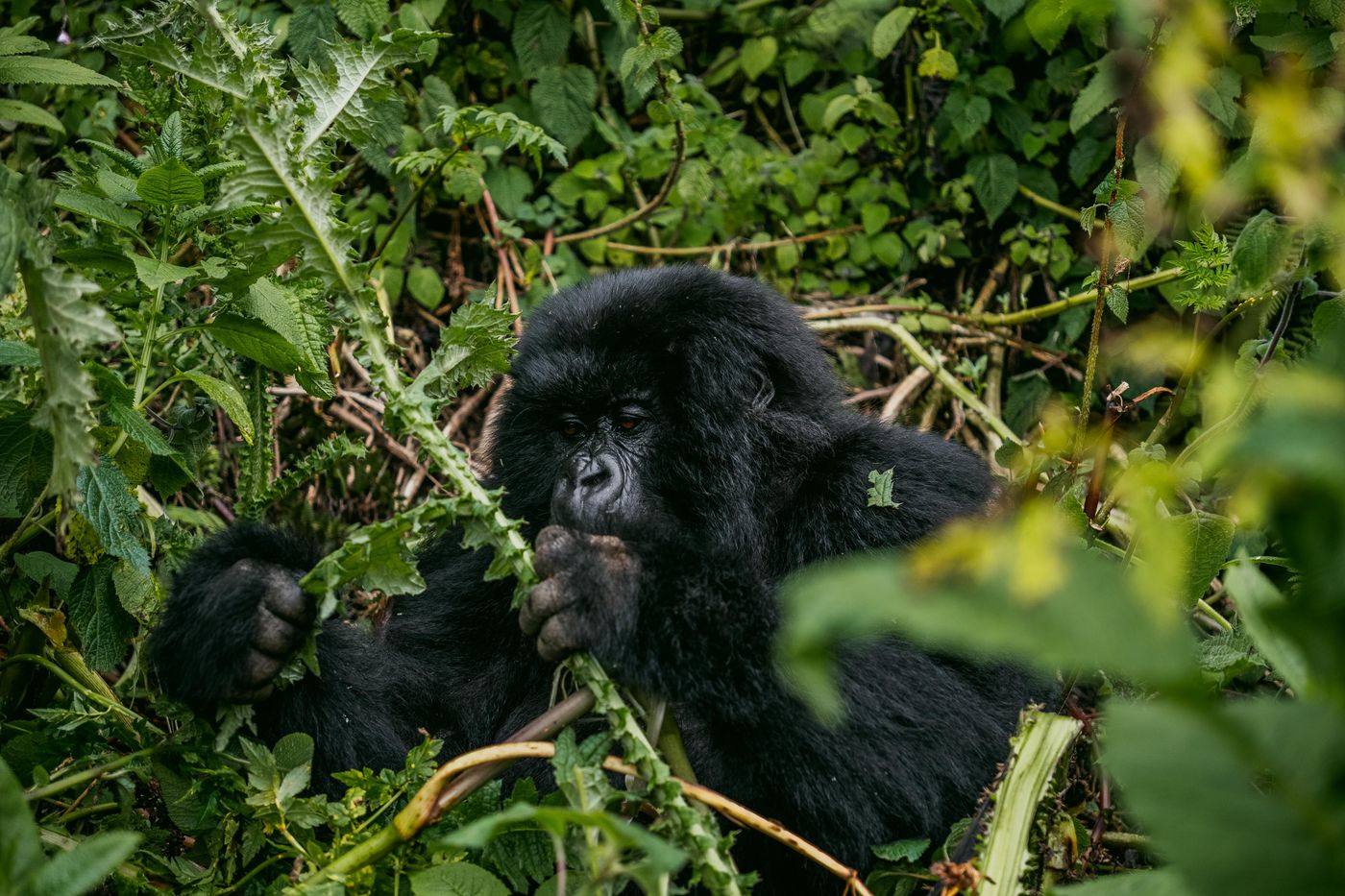
Steep, dense forest; can take several hours
Bamboo and volcano slopes; often shorter
From the capital
Long road transfer, or a domestic flight
About 2.5 hours from Kigali
Group size and age
Up to 8 visitors per group; minimum age 15
Up to 8 visitors per group; minimum age 15
Time with gorillas
One hour
One hour
Permit price and what it means
The permit is the biggest cost. Uganda is much cheaper than Rwanda, and in the wettest months a discounted low-season permit is offered, though those permits are paid in full when you book and cannot be rescheduled. For two people, the difference in permits alone can pay for several nights of lodging. Our article on gorilla permit costs in 2026 has the detail.
How hard is the trek?
Uganda’s Bwindi is a dense, steep forest, and some treks last hours. Rwanda’s trails on the volcano slopes are usually shorter, though the altitude can be tough. Either way, you can ask for a group that suits your fitness, and porters are available to carry your bag and help on slopes. Wear sturdy boots, gloves and long sleeves; see our packing list as a starting point and add rain gear.
Getting there
Rwanda wins on access: Volcanoes is about two and a half hours from Kigali. Bwindi is far from Entebbe by road, so many travellers fly to an airstrip or cross from Kigali. That makes Uganda better suited to a longer trip, which you can combine with chimpanzee tracking and savannah parks, and Rwanda better for a short add-on.
Which suits a Kenya safari?
If you are already travelling in Kenya, either country can be added. Uganda pairs well with a longer holiday, and our Kenya and Uganda combination explains how to link the two. Rwanda is a shorter hop with a quick flight. If you are choosing a country for your first African safari, our comparison of Kenya and Tanzania may help.
Booking rules to know
Permits are limited and sell out in the dry months, especially June to September and December to February, so book several months ahead.
Uganda now requires full payment at booking; the old seven-day hold has been removed.
You must be 15 or older, and you may not trek if you have a cold or other contagious illness, because gorillas are susceptible to human diseases.
You keep a distance from the animals and wear a mask during the encounter.
Our advice
If you want the best value and a longer trip, go to Uganda. If you have only a few days, want an easier trek and have a larger budget, Rwanda makes sense. We are happy to say so, even though we run treks only in Uganda: the best choice is the one that fits your time and budget.
Getting there: Uganda vs Rwanda gorilla trekking logistics
Logistics often decide the Uganda vs Rwanda gorilla trekking question. Rwanda is compact. Volcanoes National Park lies roughly two to three hours by road from Kigali, so a short trip can fit a trek in two or three days. Uganda is larger and the gorilla forests are further from the capital. The overland journey from Entebbe or Kampala to Bwindi takes most of a day, and many travellers prefer a light-aircraft flight to an airstrip near the park. Mgahinga in the far southwest suits those who want to combine gorillas with golden monkeys and volcano hikes. If you are short of time, Rwanda is the easier choice. If you have a week or more, Uganda adds scenery and stops along the way.
The trekking experience in each country
In both countries the encounter is similar: a small group of up to eight visitors is led by rangers and trackers to a habituated gorilla family and spends one hour in their company. What differs is the terrain. Bwindi Impenetrable Forest is a steep, ancient, dense forest of vines and ridges, and the walk can last from an hour to many hours depending on where the family has moved. Volcanoes National Park offers bamboo, volcanic slopes and open meadows, and some treks are shorter, though others are tough because of altitude. Ask which group you are assigned and request an easier or harder trek when you book. Porters are available in both parks and are a good way to support local communities.
Wildlife and extras beyond the gorillas
Rwanda’s Volcanoes National Park also offers golden monkey tracking and the hike to the area where the primatologist Dian Fossey worked and is buried. Nyungwe Forest and Akagera National Park add chimpanzees and a savannah safari. Uganda offers chimpanzee tracking in Kibale, tree-climbing lions at Queen Elizabeth National Park, boat rides on the Kazinga Channel and Murchison Falls. Uganda suits travellers who want a longer, wildlife-rich itinerary, while Rwanda suits those who want a concentrated trip. Our Uganda gorilla trekking guide describes the day in detail.
Who should choose Uganda?
Travellers on a tighter budget who still want a classic gorilla encounter.
Those with at least a week, who enjoy road journeys and variety.
Visitors who want to combine gorillas with chimpanzees, big game and lakes.
Anyone who wants a larger choice of gorilla families and trekking sectors.
People who enjoy adventure and are prepared for steep terrain.
Who should choose Rwanda?
Travellers short of time, who want a quick trip from Kigali.
Those who prefer polished, well-organised tourism infrastructure.
Visitors with a bigger budget and a preference for a compact itinerary.
People who want golden monkeys, Dian Fossey’s story and Nyungwe in one trip.
Honeymooners and luxury travellers seeking boutique lodges.
Combining either country with Kenya
Many guests start with a Kenya safari and finish with gorillas, or the reverse. Nairobi has direct flights to Entebbe and Kigali, and the journey takes roughly an hour and a half. A typical combination is five to seven days in the Masai Mara, Amboseli or Lake Nakuru, followed by three or four days in the gorilla forests. Read our 4-day and 6-day Kenya safari itineraries to plan the Kenya portion, and see best time to visit Kenya to match the seasons. Dry months bring easier trekking but higher demand for permits, so check the weather for both countries before choosing dates.
Health, fitness and age rules
Both countries require visitors to be at least fifteen to trek gorillas. You should be reasonably fit, but you do not need to be an athlete. Anyone with a cold or contagious illness may be refused, to protect the gorillas. Vaccinations suitable for the region are needed, and malaria prevention is advised. See our vaccination checklist and talk to your doctor early. Travel insurance that covers medical evacuation is strongly recommended because the forests are remote. See the travel insurance guide.
Practical packing for either trek
Whichever country you choose, pack sturdy waterproof boots, long trousers and sleeves to protect against nettles and insects, a light rain jacket, gardening gloves for gripping vegetation, a hat, and a small daypack with water and snacks. Keep your camera in a dry bag and leave flash off. Gaiters help with mud and ants. A walking stick is usually provided at the start. Pack light, because a porter can carry your bag but you still want to move comfortably through steep forest.
Our verdict on Uganda vs Rwanda gorilla trekking
There is no wrong answer. Both countries protect mountain gorillas well, and both give you an unforgettable hour in the forest. Choose Uganda for value, variety and adventure; choose Rwanda for convenience, comfort and speed. Whichever you pick, book early because permits are limited and sell out in the dry months. If you want help deciding, send us a message and we will match the trip to your time, budget and fitness.
Season and weather: Uganda vs Rwanda gorilla trekking through the year
The forests in both countries are wet for much of the year, so you should pack for rain whenever you go. The drier months, roughly June to September and December to February, make trails less slippery and are the most popular, so permits and lodges fill early. The wettest months, around March to May and October to November, bring mud and heavier showers, but fewer visitors, lower prices at many lodges and lush scenery. Gorillas can be trekked in any season, and the animals tend to stay at lower elevations in wet weather, which can sometimes shorten the walk. Choose dates that match your tolerance for rain and your need for flexibility.
How to book gorilla permits for Uganda or Rwanda
Permits are issued by each country’s wildlife authority and allocated to specific dates and gorilla families, so your operator needs your exact passport details and preferred dates. Book as early as you can, ideally several months ahead for peak seasons. Check the cancellation and rescheduling terms before paying, since rules differ between countries and seasons. We handle the permit booking, lodges and transfers, and we confirm the current official rates for your dates in writing, so you know exactly what you are paying for.
Once your permit is secured, it is time to plan flights, lodges and the rest of your journey. For first-time visitors, a trip of about four days for gorillas alone is enough, or longer if you combine it with Kenya’s big game.
Frequently asked questions
Is Uganda or Rwanda better for gorilla trekking?
Uganda is cheaper, with more gorilla groups and wilder forest. Rwanda is easier to reach and has shorter treks, but costs more.
How much is a gorilla permit in 2026?
Uganda permits cost far less than Rwanda permits, with reduced rates in the wettest months. Ask us for the current official figures for your dates.
How long do you spend with the gorillas?
One hour in both countries.
What is the minimum age to trek gorillas?
15 years old in both Uganda and Rwanda.
How far in advance should I book a permit?
Several months for peak seasons, which are June to September and December to February.
Plan it with people who live here
We are a Nairobi-based team and every trip starts from our own doorstep. If you would like help turning these ideas into a real itinerary, message us on WhatsApp (+254 794 588 242), write to info@cherishafricasafaris.com, or use our contact form. We usually reply the same day.
Francis Magere
Specialist Safari Content
Francis writes and curates the safari guides, destination features and travel tips on this site. Working with the Cherish Africa Safaris team in Kenya, he turns first-hand knowledge of the parks, wildlife seasons and routes into clear, practical advice, so you can plan your safari with confidence.
Have a question about a destination or an itinerary? Write to him directly.
To provide the best experiences, we use technologies like cookies to store and/or access device information. Consenting to these technologies will allow us to process data such as browsing behavior or unique IDs on this site. Not consenting or withdrawing consent, may adversely affect certain features and functions.
Functional Always active
The technical storage or access is strictly necessary for the legitimate purpose of enabling the use of a specific service explicitly requested by the subscriber or user, or for the sole purpose of carrying out the transmission of a communication over an electronic communications network.
Preferences
The technical storage or access is necessary for the legitimate purpose of storing preferences that are not requested by the subscriber or user.
Statistics
The technical storage or access that is used exclusively for statistical purposes.The technical storage or access that is used exclusively for anonymous statistical purposes. Without a subpoena, voluntary compliance on the part of your Internet Service Provider, or additional records from a third party, information stored or retrieved for this purpose alone cannot usually be used to identify you.
Marketing
The technical storage or access is required to create user profiles to send advertising, or to track the user on a website or across several websites for similar marketing purposes.