Kenya is home to three of the world’s four giraffe species. Here is how to tell them apart and where to see each one.
Quick answer: Giraffes in Kenya belong to three of the world’s four species: the Masai giraffe, the reticulated giraffe and the Nubian giraffe, which includes Rothschild’s giraffe. You see Masai giraffe in the Mara, Amboseli and Tsavo, reticulated giraffe in Samburu and Laikipia, and Rothschild’s giraffe at Lake Nakuru and the Giraffe Centre in Nairobi.
Details checked in October 2026. Giraffe taxonomy has changed in recent years, and some older guides still list one species.
How to tell them apart
Giraffe
Pattern
Where to see it
Masai giraffe
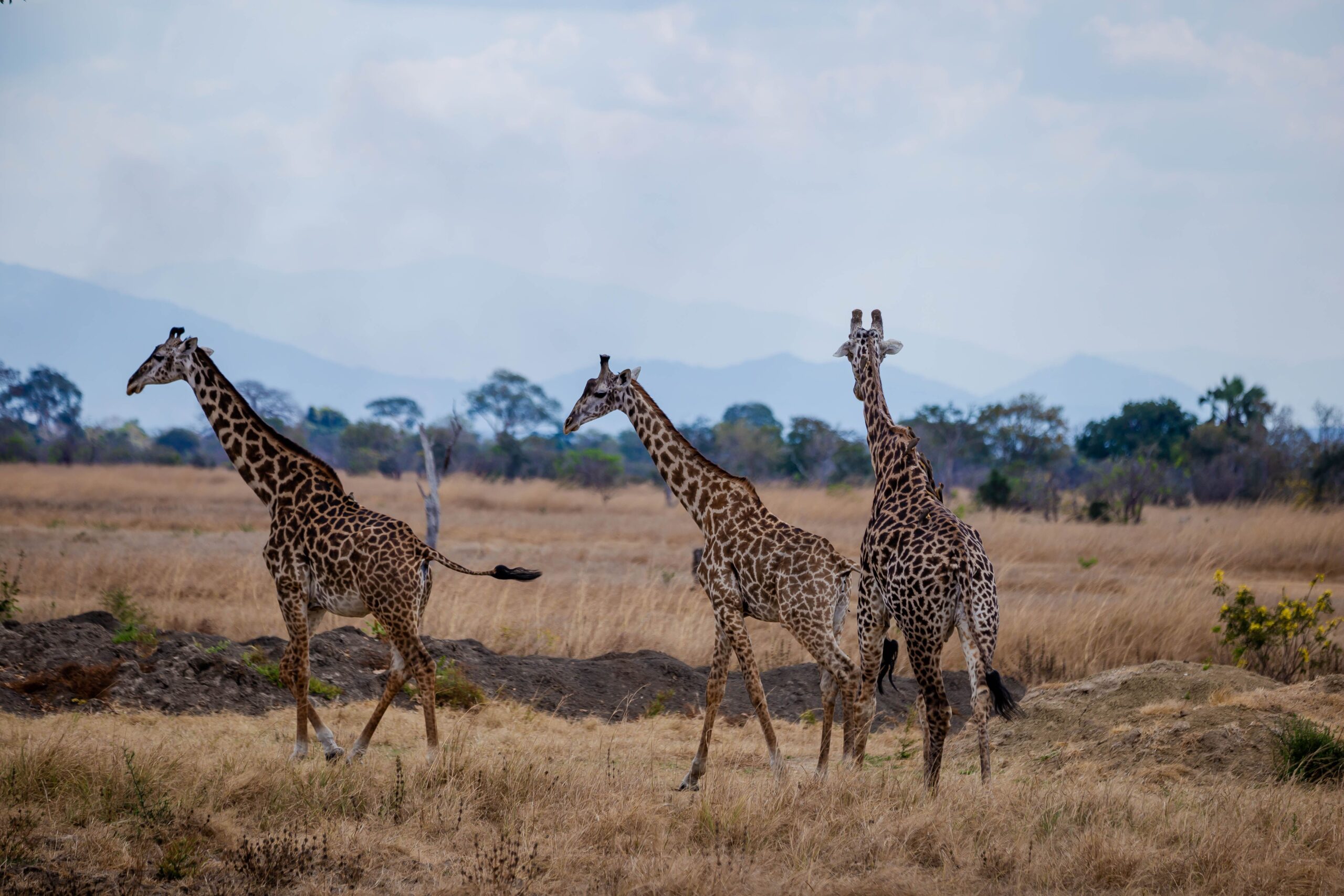
Jagged, vine-leaf shaped blotches that look torn at the edges, on a tan background
Masai Mara, Amboseli, Tsavo, Nairobi National Park
Reticulated giraffe
Large, neat polygons separated by thin white lines, like a net, with a deep chestnut colour
Samburu, Buffalo Springs, Laikipia, Meru and Lewa
Nubian giraffe (including Rothschild’s)
Pale, irregular patches, and lighter, cream-coloured legs with no markings below the knees
Lake Nakuru National Park, Soysambu, the Giraffe Centre
Masai giraffe: the Mara and the south
The Masai giraffe is Kenya’s most common giraffe, and the one you will meet on most safaris. Kenya’s 2021 census counted 13,530 of them. They are tall, relaxed and easy to photograph on the open plains of the Masai Mara and Amboseli. See the Mara guide and the Amboseli guide.
Reticulated giraffe: the north
Samburu, Buffalo Springs and the Laikipia conservancies are the places for the reticulated giraffe, one of the dry-country “special five” of Samburu. Its coat is the most striking of the three. See the Samburu guide and the Laikipia conservancies guide.
Rothschild’s giraffe: Nakuru and Nairobi
Rothschild’s giraffe belongs to the Nubian giraffe group and is rare in the wild. In Kenya you can see it at Lake Nakuru National Park, where animals have been moved, and in Nairobi at the Giraffe Centre and Giraffe Manor. Read our Giraffe Centre guide, the Giraffe Manor guide and the Lake Nakuru guide.
Why giraffes need protection
Giraffe numbers across Africa have fallen sharply over the past decades, and the IUCN now lists several giraffe species as Endangered or Critically Endangered. Habitat loss, poaching and fragmentation are the main causes. Kenya is one of the places where some populations are stable or growing, thanks to conservancies and translocation programmes. Visiting a conservancy or the Giraffe Centre helps fund that work.
Giraffe facts you can use on safari
A giraffe is the tallest land animal, with adult males reaching about five metres.
They sleep very little, in short naps, because they are vulnerable lying down.
Calves are around 1.8 metres tall at birth and can stand within an hour.
Giraffe feed on acacia leaves, and their long tongues help them avoid thorns.
Giraffe rarely drink, but when they do they spread their legs and bend down, which is the moment they are most exposed.
Best time to see giraffes
Giraffes live in Kenya all year. They are easiest to see in the dry months from June to October and January to February, when they feed in open areas. Our best time to visit Kenya article has the details.
Plan a giraffe-focused trip
Start in Nairobi with the Giraffe Centre, then visit Lake Nakuru for Rothschild’s giraffe, the Mara for Masai giraffe and Samburu for reticulated giraffe. That covers all three species in about a week. Our 7 day itinerary is a good base. For other animals, see animals in Kenya.
Our advice: You do not need a special trip to see all three. Samburu, the Mara and Lake Nakuru between them cover the lot, and the Giraffe Centre in Nairobi is an easy first-day stop.
Safaris that fit this guide
These Cherish Africa Safaris trips match what this guide covers. We can adjust any of them to your dates, group size and budget.
Giraffes in Kenya are some of the most graceful animals you will see on safari, and Kenya is one of the few countries where you can find three different types. Many visitors treat them as background scenery on the way to the lions, which is a mistake. Watching a giraffe tower over an acacia, splay its legs to drink or run in slow motion across a plain is a highlight in its own right. Understanding which kind you are looking at and where to find it turns a casual sighting into a real wildlife encounter.
Giraffes in Kenya by the numbers
Height: adult males can reach about five metres, making them the tallest land animals on Earth.
Neck: giraffes have the same number of neck bones as humans, seven, but each is hugely elongated.
Tongue: a dark, prehensile tongue about forty-five centimetres long strips leaves from thorny acacias.
Sleep: they sleep in very short bursts, often only a few minutes at a time, and rarely lie down in the wild.
Calves: a newborn is about 1.8 metres tall and can stand within an hour of birth.
Population: giraffe numbers have fallen across Africa in recent decades, and several populations are classed as threatened.
Giraffe behaviour to watch on safari
Giraffes live in loose, shifting groups rather than tight herds. You may see males ‘necking’, swinging their heads at each other in a slow contest for dominance. Mothers may leave calves in nursery groups guarded by one adult while they feed. Giraffes drink rarely because they get most of their water from leaves, but when they do, they must spread their legs wide, which makes them vulnerable to lions. That is why they take turns watching for danger. Birds called oxpeckers often ride on their backs, eating ticks. Watch their tails and ears for signals of alarm. Learn these cues and your sightings become richer.
Where to see giraffes in Kenya: quick guide
Masai Mara and Amboseli: Masai giraffes, the largest species, with jagged leaf-shaped patches. See the Amboseli guide.
Samburu, Buffalo Springs and Shaba: reticulated giraffes, with sharp polygon patterns divided by thin white lines. See the Samburu guide.
Lake Nakuru and Nairobi: Rothschild’s giraffes, with pale ‘stockings’ and patches that stop at the knee. See the Lake Nakuru guide and the Giraffe Centre guide.
Giraffes are easy subjects because they move slowly and tolerate vehicles. Shoot at eye level when you can, which means a low angle for the animal’s face and a wide lens for the animal in its landscape. Early light brings out the patterns of the coat. Look for silhouettes against sunset, mothers with calves, and moments when giraffes cross a road. If a giraffe is feeding in a tree, wait until it turns its head, then take the picture with the leaves framing the face. Our safari photography tips cover settings and technique.
The Giraffe Centre and conservation
The Giraffe Centre in Nairobi runs a breeding and education programme for the endangered Rothschild’s giraffe. Visitors can feed giraffes from a raised platform and learn about their ecology. It is open daily and is an easy stop before or after a safari. Beyond Nairobi, conservancies and community groups protect giraffe habitat, run monitoring and reduce conflict with farmers. When you visit a park, you contribute through entry fees. If you want to understand the species better, read our guide to elephants in Kenya too, since both animals share habitat and face similar threats.
How to plan a trip focused on giraffes in Kenya
You can see all three types on a trip that combines Nairobi, Lake Nakuru, the Masai Mara and Samburu. The south and central circuit delivers Masai and Rothschild’s giraffes easily. Add the north for the reticulated type. Choose the dry season for easier sightings, and travel with a guide who can explain the differences. Ask us for a custom route. See our 10-day itinerary for an example that includes all three, or contact our team to plan your own.
Telling the three types of giraffes in Kenya apart
A quick field guide helps. Look at the patches first. Masai giraffes have irregular, jagged, vine-leaf shaped blotches that run down to the hooves. Reticulated giraffes have large, neat polygons separated by narrow white lines, like a mosaic. Rothschild’s giraffes have rectangular patches with pale cream lines and no markings below the knee, so their legs look white. Ossicones, the horn-like knobs on the head, can also help, since Rothschild’s usually has a fifth small bump in the middle of the forehead in males. Once you can read these cues, you can identify the type from the vehicle and impress your fellow travellers.
Giraffe threats and what you can do
Giraffes face habitat loss, fencing, poaching for meat and hides, and illness. They are sometimes called a silent extinction because populations fall without much notice. You can help by choosing operators that support conservation, by visiting parks and conservancies that fund anti-poaching, and by following wildlife rules. Share what you learn with friends, because awareness is one of the best forms of protection. If you love giraffes, consider adding the Giraffe Centre to your Nairobi stay so your visit contributes to education and breeding programmes.
Giraffe sightings by season
Giraffes can be seen year-round, but dry months make them easier to spot because trees are leafless and visibility is better. In wet months the foliage is thick and giraffes browse high in the canopy, so look carefully. Calves are born throughout the year, so you have a good chance of seeing young ones on any trip. Early morning and late afternoon are the best times to catch them feeding and moving.
Frequently Asked Questions
How many giraffe species are there in Kenya?
Three: the Masai giraffe, the reticulated giraffe and the Nubian giraffe, which includes Rothschild’s giraffe.
Where can I see reticulated giraffes?
In Samburu, Buffalo Springs, Laikipia, Meru and Lewa, in northern Kenya.
Where can I see Rothschild’s giraffes?
At Lake Nakuru National Park, Soysambu and the Giraffe Centre in Nairobi.
How many Masai giraffes are in Kenya?
Kenya’s 2021 wildlife census counted 13,530 Masai giraffes.
Can I feed giraffes in Kenya?
At the Giraffe Centre in Nairobi, yes, from a raised platform. In the wild you should never feed any animal.
Plan it with people who live here
We are a Nairobi-based team and every trip starts from our own doorstep. If you would like help turning these ideas into a real itinerary, message us on WhatsApp (+254 794 588 242), write to info@cherishafricasafaris.com, or use our contact form. We usually reply the same day.
Francis Magere
Specialist Safari Content
Francis writes and curates the safari guides, destination features and travel tips on this site. Working with the Cherish Africa Safaris team in Kenya, he turns first-hand knowledge of the parks, wildlife seasons and routes into clear, practical advice, so you can plan your safari with confidence.
Have a question about a destination or an itinerary? Write to him directly.
To provide the best experiences, we use technologies like cookies to store and/or access device information. Consenting to these technologies will allow us to process data such as browsing behavior or unique IDs on this site. Not consenting or withdrawing consent, may adversely affect certain features and functions.
Functional Always active
The technical storage or access is strictly necessary for the legitimate purpose of enabling the use of a specific service explicitly requested by the subscriber or user, or for the sole purpose of carrying out the transmission of a communication over an electronic communications network.
Preferences
The technical storage or access is necessary for the legitimate purpose of storing preferences that are not requested by the subscriber or user.
Statistics
The technical storage or access that is used exclusively for statistical purposes.The technical storage or access that is used exclusively for anonymous statistical purposes. Without a subpoena, voluntary compliance on the part of your Internet Service Provider, or additional records from a third party, information stored or retrieved for this purpose alone cannot usually be used to identify you.
Marketing
The technical storage or access is required to create user profiles to send advertising, or to track the user on a website or across several websites for similar marketing purposes.