
Giraffe Centre Nairobi: fees and hours
The centre is open every day, including weekends and public holidays, from 9 am to 5 pm. Entry fees, according to the centre’s own information, are:
| Visitor | Adult | Child (3 to 12) |
|---|---|---|
| Non-resident | KES 1,500 (about USD 15) | KES 750 (about USD 7.50) |
| Kenya or East African resident | KES 400 | KES 200 |
Children under 3 enter free. Students under 23 with a valid student ID pay the child rate. Residents should bring ID, a passport or an alien card as proof. Rates can change, so we confirm them again when you book a Nairobi day with us.
About 90 percent of entrance fees, and of shop and tea house sales, go towards the centre’s conservation and education work, so the money does real good.
Where is the Giraffe Centre Nairobi and how do you get there?
The centre is in Lang’ata, on Nyumbi Road off Duma Road, about 15 km from Nairobi’s city centre. It is close to the Karen Blixen Museum, the Bomas of Kenya and the Nairobi National Park gate, which makes it easy to combine with other attractions.
- By taxi or ride-hailing app: The simplest option. Allow 30 to 60 minutes from the city centre depending on traffic, and agree on a return pick-up or order another ride when you finish.
- With a driver-guide: If you are on a safari, your guide can add the centre to a day in Nairobi, together with other stops.
- On a combined tour: Many half-day Nairobi tours pair the Giraffe Centre with the Sheldrick elephant orphanage or the Karen Blixen Museum.
Use a map app to navigate to the entrance, as signage on the final roads is limited. Traffic in Nairobi can be heavy during the morning and evening rush hours, so aim to arrive mid-morning or early afternoon.
Best time to visit the Giraffe Centre Nairobi
- Mornings after 9 am: The giraffes are active and hungry, and the weather is cool.
- Weekdays: Quieter than weekends, when families and school groups arrive.
- Dry months: June to October and January to February, when the walkways are dry and the nature trail is easy.
- School holidays: Expect crowds in April, August and December. Arrive early to secure a good spot on the platform.
Plan 1.5 to 2 hours, which is enough to feed the giraffes, attend the talk, walk the trail and have a drink at the tea house.
What you do at the Giraffe Centre Nairobi
Feed the giraffes
The main attraction is the raised feeding platform, built at head height so that visitors can meet the giraffes face to face. Staff hand out a small bag of pellets, and the giraffes come to the platform expecting them. Hold the pellets flat on your palm and keep your fingers together. The tongue is long, strong and sticky, but it is gentle. Some visitors even try feeding a pellet from their mouth, which makes a famous photograph but is not required.
Join the educational talk
A staff member gives a short lecture about giraffes and other wildlife, covering their diet, height, social life and the threats they face. Questions are welcome, and the talk is especially good for children.
Walk the nature trail
Behind the main enclosure is a nature conservancy with a short trail through indigenous forest. You may see warthogs, which roam freely at the centre, and birds, and the quiet walk is a good break from the crowd at the platform.
Take a break at the tea house
The on-site tea house sells drinks and snacks, and sales support the centre. The gift shop sells souvenirs, and you can adopt a giraffe or support education projects.
Rothschild’s giraffe: why the Centre exists
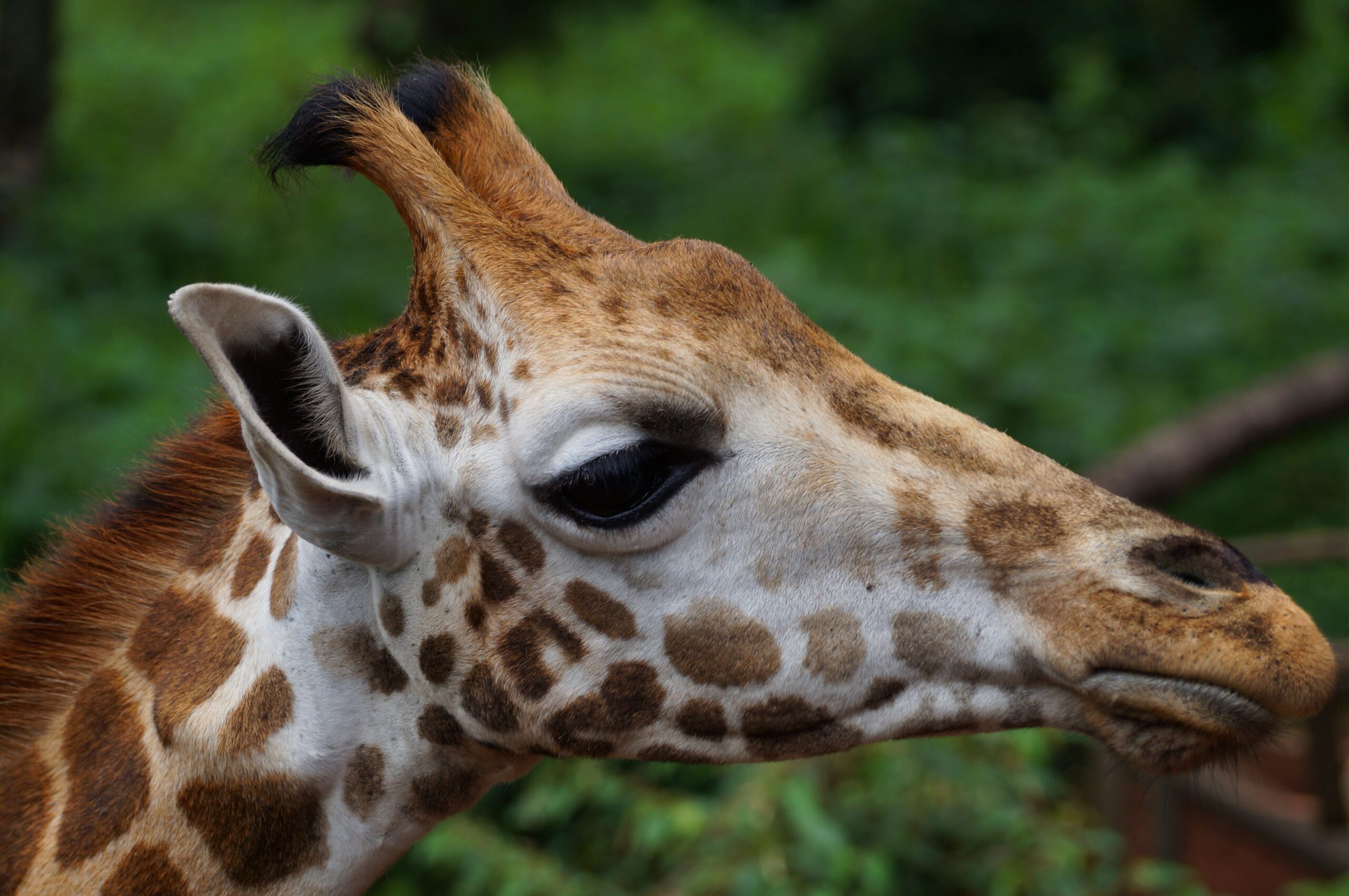
The Giraffe Centre was founded in 1979 by conservationists to protect the Rothschild’s giraffe, a subspecies with very few animals left in the wild at that time. Rothschild’s giraffes have pale lower legs, with no markings below the knee, and a patchwork of dark, irregular patches separated by pale lines. The founders bred them in captivity, protected the young animals, and later released them into national parks and conservancies, where the population has recovered. The centre also runs an education programme that brings thousands of Kenyan schoolchildren to see wildlife and learn about conservation.
Giraffes overall are in trouble: their numbers have fallen sharply across Africa, and several subspecies are threatened. See our guide to giraffes in Kenya to learn about the species you can see in the wild.
Giraffe Centre or Giraffe Manor?
The two are often confused, but they are separate. The Giraffe Centre is a public attraction with an entry fee and a feeding platform. Giraffe Manor is a boutique hotel next door, where the giraffes put their heads through the windows at breakfast, but you have to be a guest to enjoy it, and it books out months ahead. If you cannot get a room, the Giraffe Centre is a very good alternative. Our guide to Giraffe Manor explains how booking works.
Combine the Giraffe Centre with other Nairobi stops
The centre fits well into a half-day Nairobi itinerary:
- Sheldrick elephant orphanage: Public visits take place from 11 am to noon, and need to be booked in advance by email. See our orphanage visit guide.
- Karen Blixen Museum: A short drive away. Read our Karen Blixen Museum guide.
- Nairobi National Park: Lions, rhinos and giraffes within sight of the city skyline. See our Nairobi National Park guide.
- Bomas of Kenya: A cultural centre with traditional dances. See our Bomas of Kenya guide.
For other ideas, browse things to do in Nairobi and our Nairobi stopover guide.
Tips for visiting the Giraffe Centre Nairobi
- Arrive early. The platform is less crowded in the morning.
- Keep your hands flat. Pellets slide off an open palm to the giraffe’s tongue easily.
- Go slowly with children. Younger children may feel nervous the first time a giraffe approaches.
- Bring a hat and sunscreen. The platform has little shade.
- Do not feed the warthogs. Follow staff instructions.
- Carry some cash or a card. The shop and tea house accept payments for souvenirs and drinks.
- Keep your belongings secure. Giraffes will not steal them, but crowds can be busy.
Fun facts to share at the platform
- Giraffes are the tallest land animals, with adult males reaching about 5 to 5.5 metres.
- Their tongues are around 45 centimetres long and dark in colour, which helps protect them from sunburn while feeding.
- They sleep very little, often just a few short naps a day.
- Despite a neck that is seven vertebrae long, the same number as humans, each bone is enormously elongated.
- Each giraffe’s coat pattern is unique, like a fingerprint.
Staff are glad to answer questions, so ask about the individual giraffes, who often have names and distinct personalities, and about how the centre cares for them.
Visiting the Giraffe Centre Nairobi with children
This is one of the best child-friendly stops in Kenya. Children from age 3 pay a reduced fee, the platform is easy to reach by a short flight of steps, and the giraffes are gentle. Some practical tips for families:
- Show children how to hold the pellets before the giraffe arrives, so they feel confident.
- Let them watch from a distance first if they are nervous. Seeing other children feed the giraffes builds courage.
- Bring wet wipes, since the tongue leaves a sticky, slippery residue.
- Keep an eye on small children near the warthogs, which wander the grounds.
- Use the educational talk to help children understand why giraffes need protection.
The visit is short enough to fit into a long-haul traveller’s first or last day in Nairobi, when energy is limited. Our arriving in Nairobi guide has more ideas for a gentle first day.
Giraffe Centre or wild giraffes?
The Giraffe Centre gives you something a safari cannot: close contact. In the wild, you watch giraffes from a vehicle at a distance, and you should never approach them on foot. The centre is a controlled setting that is great for photographs and for children, but it is not a wilderness experience. If you are going on safari, you will see giraffes in places like the Masai Mara, Amboseli, Nairobi National Park and Lake Nakuru. The two experiences complement each other: the centre builds your affection for giraffes, and safari shows you how they behave in the wild, browsing acacia trees and standing guard over their calves.
If you have time for only one Nairobi attraction, choose based on your interests. The Giraffe Centre suits animal-lovers and families, the elephant orphanage suits anyone who loves elephants, and the national park suits those who want a real game drive.
Sample half-day plan around the Giraffe Centre Nairobi
- 9:00 am: Arrive at the Giraffe Centre when it opens. Feed the giraffes and attend the talk.
- 10:30 am: Walk the nature trail and have tea.
- 11:00 am: Drive to the elephant orphanage nursery for the 11 am public visit (booking required in advance).
- 12:30 pm: Lunch in Karen, where there are many restaurants and cafés.
- 2:00 pm: Visit the Karen Blixen Museum or the Bomas of Kenya for cultural performances.
A driver-guide can arrange all of this and take care of tickets, so you avoid queues and navigation problems.
What to wear and bring
- Comfortable shoes with grip, since the platform and trail can be slippery after rain.
- A hat, sunglasses and sunscreen, because shade is limited.
- A light jacket in the cooler months from June to August.
- A camera or phone with a strap, so it does not fall when you reach for a giraffe.
- Small cash for the tea house and shop, as well as a card.
Supporting giraffe conservation
If you enjoy the visit and want to help, you can adopt a giraffe, buy items from the shop, or support the education programme, all of which fund the centre’s work. You can also choose safari operators that support wildlife conservation and community projects. Our post on how safari tourism funds conservation in Kenya explains how your travel money turns into protection for wildlife.
Frequently asked questions
How much is entry to the Giraffe Centre Nairobi?
Non-resident adults pay KES 1,500 (about USD 15) and non-resident children aged 3 to 12 pay KES 750. Residents pay KES 400 for adults and KES 200 for children. Under-3s are free.
What are the Giraffe Centre opening hours?
Daily from 9 am to 5 pm, including weekends and public holidays.
How long should I spend at the Giraffe Centre?
Plan about 1.5 to 2 hours to feed the giraffes, attend the talk, walk the nature trail and have a drink.
Where is the Giraffe Centre?
In Lang’ata, on Nyumbi Road off Duma Road, about 15 km from Nairobi’s city centre.
Is the Giraffe Centre the same as Giraffe Manor?
No. The Giraffe Centre is a public attraction with a feeding platform. Giraffe Manor is a separate boutique hotel next door, which you must book to stay.
Where does the entrance fee go?
About 90 percent of entry fees and shop and tea house sales support the centre’s conservation and education work.
Want the Giraffe Centre in your Nairobi day? Ask our team and we will plan it with you.