Ask a guide in the Maasai Mara what makes Samburu special and you will get the same answer every time: animals you cannot see anywhere else on a classic Kenya route. Samburu National Reserve sits north of the equator, in hotter, drier, redder country, and a different set of species has settled there. Together they are known as the Samburu Special Five: Grevy’s zebra, reticulated giraffe, Somali ostrich, Beisa oryx and gerenuk. Tick all five in a couple of game drives and you have seen things that most Kenya visitors never do.
This guide explains what each of the five looks like, how to tell it apart from its southern cousin, where in the reserve to find it, and how to plan a trip to see all of them. If you want the wider picture of the reserve itself, our Samburu National Reserve guide covers access, lodging styles and the bigger-cat sightings.
What is the Samburu Special Five?
The Big Five (lion, leopard, elephant, buffalo, rhino) is a hunting-era list. The Samburu Special Five is a wildlife-watcher’s list, and it is built on a simple fact: five species live in Kenya’s arid north and are rare or absent in the southern parks such as the Mara and Amboseli. Each has a southern look-alike, which is exactly why they are fun to spot.
| Special Five species | Southern look-alike | How to tell them apart |
|---|---|---|
| Grevy’s zebra | Plains (Burchell’s) zebra | Larger, much finer stripes, white belly, big rounded ears |
| Reticulated giraffe | Maasai giraffe | Neat polygon patches with bright white lines between them |
| Somali ostrich | Maasai ostrich | Males have a blue-grey neck and legs, not pink |
| Beisa oryx | Fringe-eared oryx (Tsavo and Amboseli) | No ear tufts, black and white face mask, longer horns |
| Gerenuk | Impala | Very long neck, small head, stands on its hind legs to feed |
Grevy’s zebra: the rarest of the five
Grevy’s zebra is the largest of the three zebra species and the one in real trouble. It is classed as endangered, and the 2025 national wildlife census counted roughly 2,465 in Kenya. Most of the world’s remaining Grevy’s live in the northern rangelands that include Samburu, Buffalo Springs and the conservancies around them.
You will know one when you see it. The stripes are narrow and densely packed, the belly is white and unstriped, and the ears are huge and rounded, almost like a mule’s. The body looks heavier and more donkey-like than the plains zebra. Stallions defend territories around water, so the riverbank is the best place to look, especially in the late afternoon when herds come in to drink. Conservation groups and local communities in the north run monitoring programmes because a single drought can set numbers back sharply.
Reticulated giraffe: the one with the jigsaw coat
A reticulated giraffe has large, sharply edged reddish-brown patches separated by thin white lines, a bit like a cracked glaze. The patches run down the legs too, where a Maasai giraffe’s markings fade out. Males can reach about 5.5 metres (around 18 ft). Fewer than 16,000 reticulated giraffe remain in the wild, which makes Samburu one of the most reliable places to watch them.
They browse acacia and commiphora in the dry bush away from the river, so scan the tops of the trees rather than the water’s edge. In the cool morning you will often see a tower of five or six moving together.
Somali ostrich: the blue-legged bird
For years the Somali ostrich was treated as a subspecies, and it is now widely recognised as a separate species. Males are easy to pick out: black and white plumage and a blue-grey neck and legs, which turn a brighter blue in the breeding season. In southern Kenya, the Maasai ostrich male has a pinkish neck and legs instead. An adult can stand close to 2.7 metres (9 ft) and run at up to 70 km/h, faster than any other bird on land.
Look for them on open ground near the reserve’s central tracks, where they feed on seeds, shoots and the odd insect. Males put on a courting dance with a lot of wing-flapping, and a nest in the dust usually holds eggs from several females.
Beisa oryx: the straight-horned antelope
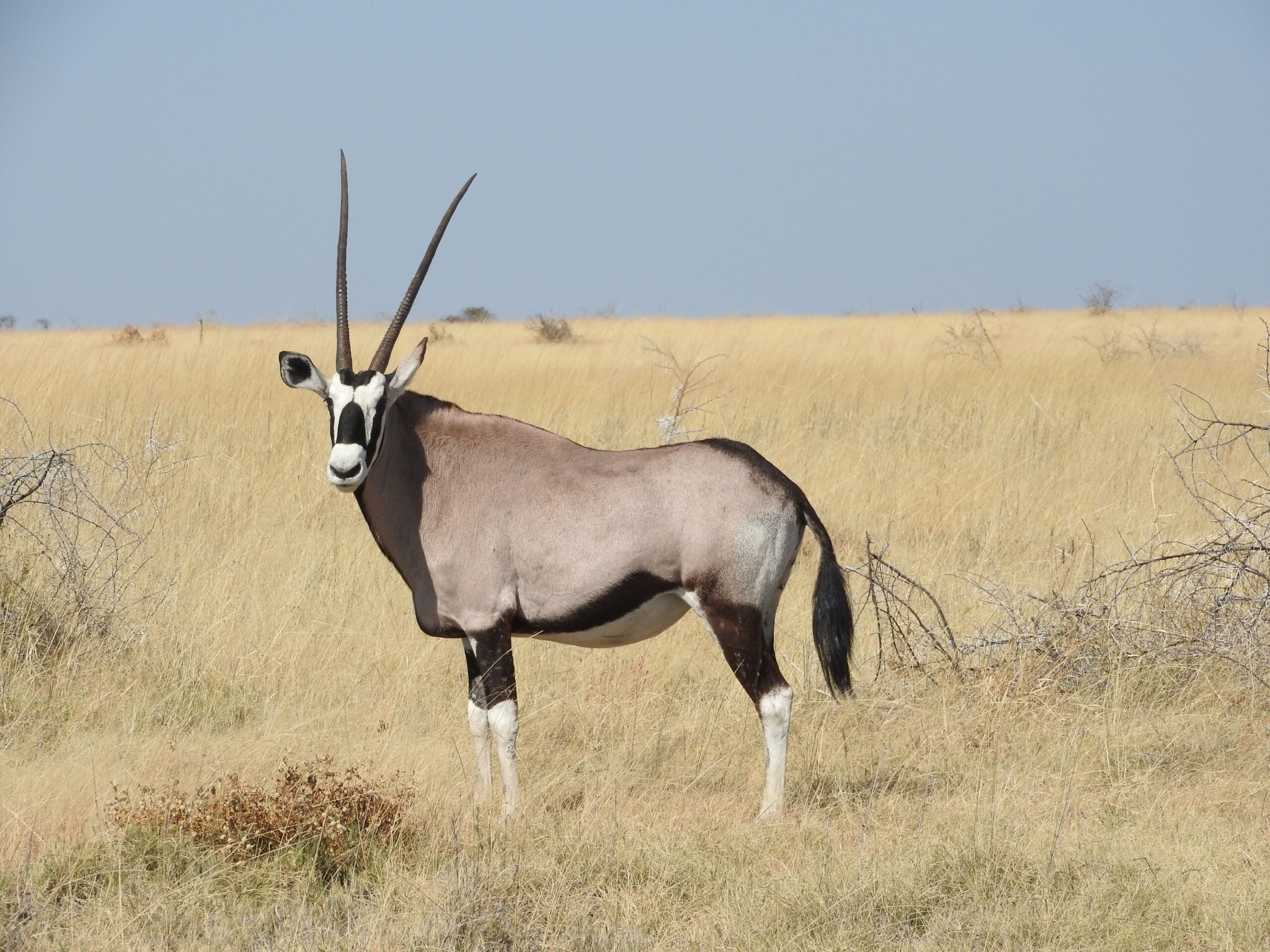
The Beisa oryx is a sturdy, sandy-grey antelope with a black and white face and two long, straight, ringed horns that can be a metre or more. It lives in herds of roughly 5 to 20 and can go a long time without drinking, getting moisture from the plants it eats. Its look-alike in Tsavo and Amboseli, the fringe-eared oryx, has tufts on its ears; the Beisa does not.
Samburu’s most famous oryx story comes from 2002, when a lioness named Kamunyak began adopting oryx calves, which is the opposite of what a lioness normally does. She guarded them from other predators, and the story made news around the world. It is a good reminder that the reserve still has surprises.
Gerenuk: the giraffe-necked gazelle
“Gerenuk” comes from Somali words meaning “giraffe-necked”. It is a slender antelope with an absurdly long neck and a small head, and it is the only one in Kenya that regularly stands on its hind legs, front hooves resting on a branch, to eat leaves out of reach of impala and dik-dik. Gerenuk can live without drinking water, taking all the moisture they need from leaves.
They are shy and usually found in twos or threes in thornbush, so stop the vehicle, switch off the engine and look at the shapes of the branches. Males carry thick, curved horns; females have none.
Beyond the five: what else lives in Samburu
The Special Five get the headlines, but the reserve is excellent for general wildlife too:
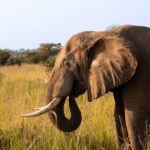
- Elephants. Samburu’s herds are among the best studied in Africa thanks to long-term research by Save the Elephants, based in the reserve.
- Predators. Lion, leopard and cheetah all live here. Leopards often rest in the trees along the river.
- Crocodiles and hippos. The Ewaso Ng’iro River, which forms the southern boundary of the reserve, holds both.
- Birds. More than 450 bird species are recorded, including the striking vulturine guineafowl with its blue-and-white mantle.
Rhinos are not reliably seen here. If rhino is a priority, plan a stop at Lewa or Ol Pejeta on the same trip. For those, see our guide to seeing elephants in Kenya for a sense of how the northern and southern parks compare.
Where is Samburu and how do you get there?
Samburu National Reserve covers about 165 km² on the north bank of the Ewaso Ng’iro, roughly 350 km north of Nairobi. It borders Buffalo Springs National Reserve on the south side of the river, and Shaba National Reserve lies to the east. Together they form a block of about 535 km², with Kalama Conservancy on the north side.
- By road: About 5.5 to 6.5 hours from Nairobi via Nanyuki and Isiolo, mostly on tarmac.
- By air: Scheduled and charter flights from Nairobi’s Wilson Airport take about 1 to 1.5 hours to the airstrips in the reserve.
Samburu and Buffalo Springs are county-managed reserves, not Kenya Wildlife Service national parks, so their entry fees are set separately from the KWS tariff. We include them in your quote so there are no surprises at the gate.
Best time to see the Samburu Special Five
Samburu is good year-round because the river keeps the animals close, but the dry months are best: June to October, and December to March. In the dry season the vegetation thins, animals concentrate along the river, and Grevy’s zebra and oryx come to water. The short rains (November) and the long rains (April and May) make the bush greener and the animals more spread out, though the birdlife is at its best. Plan on at least three nights, which gives you six game drives and time to look properly for the gerenuk.
Tips for spotting the Samburu Special Five
- Go out at dawn and dusk. Gerenuk, oryx and Grevy’s are far more active in the cooler hours.
- Ask your guide to focus on the five. A guide who knows the area will have a feel for where each species has been that week.
- Split your time. The riverbank for Grevy’s, elephant and leopard; open plains for ostrich and oryx; thornbush for gerenuk and giraffe.
- Bring binoculars. Gerenuk and oryx keep their distance.
- Combine regions. Samburu pairs naturally with Lake Nakuru, Laikipia or the Mara. See our top places to visit in Kenya for ideas on routes.
If photography is part of the plan, our safari photography tips cover lenses, light and settings.
Is Samburu worth it compared with the Mara or Amboseli?
It depends on what you want. The Mara wins on the Great Migration and big cat density. Amboseli wins on elephants under Kilimanjaro. Samburu wins on variety you cannot see elsewhere, and it is usually much quieter, with fewer vehicles at each sighting. Many travellers add three nights in Samburu to a Mara safari to round out their wildlife list.
A sample three-night Samburu itinerary for the Special Five
- Day 1: Drive from Nairobi through Nanyuki and Isiolo, with lunch at the gate or lodge, then an afternoon drive along the river for elephants, Grevy’s zebra and crocodiles.
- Day 2: A dawn drive into the open plains for Somali ostrich and Beisa oryx, with a break at camp, then a late afternoon search of the thornbush for gerenuk and reticulated giraffe.
- Day 3: Visit Buffalo Springs or Shaba, which are quieter and have their own springs and wildlife. Join a walk or village visit if offered.
- Day 4: One more dawn drive, then travel back to Nairobi or on to Laikipia or Lake Nakuru.
The Samburu people and their land
The reserve is named after the Samburu, a pastoral people closely related to the Maasai who speak a similar language. Their territory covers much of the north, and many of the guides, lodge staff and rangers you meet come from local communities. Visiting a cultural village or a community conservancy such as Kalama can add a human side to your wildlife trip. Check that any visit is arranged with the community and that fees reach the people hosting you.
Frequently asked questions
What is the Samburu Special Five?
The Samburu Special Five are Grevy’s zebra, reticulated giraffe, Somali ostrich, Beisa oryx and gerenuk. All five are found in Kenya’s arid north and are rare or absent in southern parks such as the Maasai Mara and Amboseli.
Where can I see the Samburu Special Five?
Samburu National Reserve, neighbouring Buffalo Springs and Shaba, and the conservancies around them. Samburu is about 350 km north of Nairobi, 5.5 to 6.5 hours by road or 1 to 1.5 hours by air.
What is the best time to visit Samburu?
June to October and December to March are the driest months, when animals gather along the Ewaso Ng’iro River and are easiest to find.
How many days do I need in Samburu?
Three nights is a good minimum. That gives you about six game drives, enough to find all five species and the main predators.
Can I see rhinos in Samburu?
Not reliably. For rhino, add Lewa Conservancy or Ol Pejeta to your route.
Is Samburu a national park?
No. Samburu is a national reserve managed by the county government, so entry fees differ from Kenya Wildlife Service national parks.
Want to see all five in Samburu? Ask our team and we will build the route around them.