Quick answer: For most travellers in Kenya, the best safari vehicle is a 4×4 Land Cruiser with a pop-up roof and a guaranteed window seat for every guest. A pop-up roof minibus costs less and suits large groups on good roads, but it struggles on muddy tracks and gives a bumpier ride. Open-sided vehicles are mainly used by camps in conservancies. Ask for the vehicle type, the seat count and the window-seat promise in writing. Below is everything you need to know about Kenya safari vehicles, based on our own trips.
Details checked in October 2026. Vehicle rules in parks and reserves change, so confirm the current rules with your operator, especially for the Maasai Mara.
The three kinds of safari vehicle
You will meet three kinds of vehicle on a Kenya safari. They look similar from a distance, but they behave very differently on a rough track at six in the morning.
- 4×4 Land Cruiser with a pop-up roof. A closed-sided four-wheel-drive vehicle with a roof that lifts so you can stand and look out. This is the standard on most private safaris.
- Minibus or van with a pop-up roof. A road vehicle adapted for safari. It is cheaper and common on shared trips and day tours.
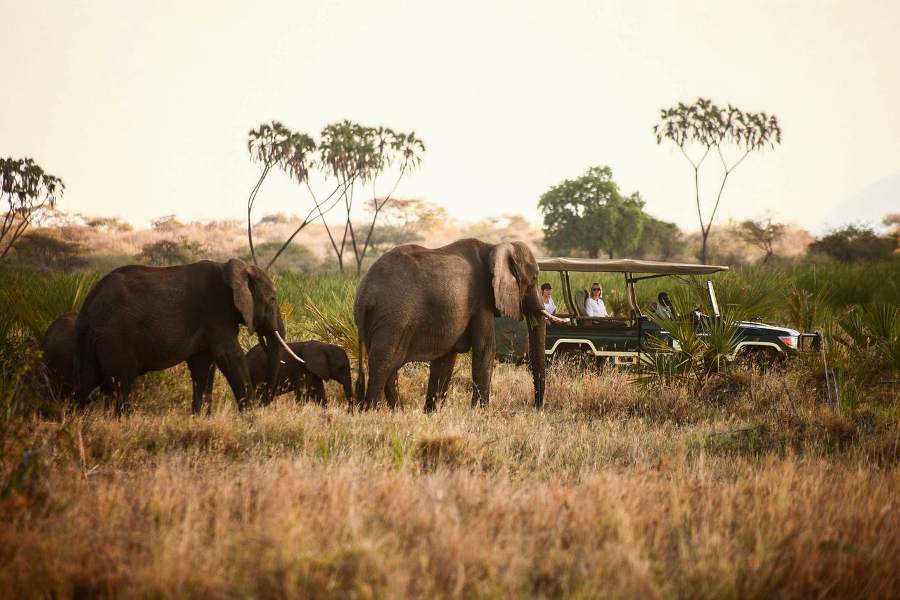
- Open-sided 4×4. A modified Land Cruiser with no windows or side panels and raised seats. Camps and lodges in conservancies often use these.
The 4×4 Land Cruiser
This is the workhorse. It handles black cotton soil, which turns to glue after rain, and it copes with the corrugated tracks between the parks. The suspension is firmer and the ground clearance is higher than a minibus, so you stay mobile when other vehicles are stuck. Most have a roof hatch for standing, charging points and a cool box for water.
The trade-off is price. A private Land Cruiser costs more than a seat in a shared minibus, but you also get more control over where you stop and for how long. Our guide to private and group safaris explains when that matters.
The pop-up roof minibus
A minibus is the most affordable option, and on good tarmac it is perfectly comfortable. It works for big groups, short day trips and budget safaris. Its weak points show up off the tarmac: it sits lower, it can get stuck after rain, and long days on rough roads can be tiring. If you are choosing a budget safari, read ways to save on a Kenya safari and ask exactly what the vehicle is before you accept the lower price.
The open-sided 4×4
Many guests love the open-sided vehicle because nothing blocks the view and the light is better for photographs. In Kenya they are mostly operated by camps and conservancies, rather than by the operator who drives you from Nairobi. If a conservancy stay is part of your plan, you will probably move into one for your game drives. Read about the Mara’s conservancies in our responsible safari guide.
Seats and window seats
This is the detail most people forget to ask about. A vehicle that seats seven can feel full with six guests plus a driver-guide. The safest standard is a window seat for every guest, so nobody sits in the middle without a view. Ask:
- How many guests will share the vehicle?
- Is every guest guaranteed a window seat?
- Is the vehicle private to your group or shared with strangers?
If you travel with children, our guide for families covers seat choices and driving days. If anyone has limited mobility, read our accessible safari guide and tell your operator early.
The roof, the view and the camera
A pop-up roof lets you stand and look in every direction, which makes a real difference when a cheetah is in the grass. For photographers, a bean bag or a lens support on the window ledge is worth more than a heavier lens. Our safari photography tips cover how to shoot from a vehicle, and our safari etiquette guide explains why you should keep your voice low and your arms inside.
The Maasai Mara rule you should know
In June 2024 Narok County, which manages the Maasai Mara National Reserve, stopped private vehicles from doing game drives in the reserve and said visitors must use authorised safari vehicles. Reports at the time named safari trucks, Land Cruisers and vans. How the rule is applied at each gate can vary, so ask your operator what vehicle they will use and that it is accepted for game drives. This is one more reason to book a real safari vehicle, not an ordinary car. We explain the wider picture in our self-drive safari guide.
Comfort on the long drives
Not all of a Kenya safari happens inside a park. The drive from Nairobi to the Mara or Amboseli takes hours, and the vehicle matters most then. Ask how long each driving day is and whether a flight makes sense for one leg. Our guides to getting to the Mara and to flying safaris compare the options.
Questions to ask before you book
- What exact vehicle will we use, and is it 4×4?
- Does it have a pop-up roof?
- How many guests will it carry, and does everyone get a window seat?
- Is the vehicle private, or shared with other guests?
- Will the same driver-guide stay with us for the whole trip?
- What happens if the vehicle breaks down?
- Are charging points and drinking water provided?
How we help you choose
Tell us how many of you are travelling, whether anyone takes photographs seriously and how much driving you can enjoy in a day, and we will suggest the vehicle and the route that suit you. Our safaris are guided by a driver-guide who knows the parks, and our team is based in Nairobi.
Mistakes we see
- Accepting a cheaper quote without asking what vehicle it uses.
- Booking a minibus for a route with rough tracks or a wet season.
- Not asking for a window seat for each guest.
- Packing too many large bags for the space in the vehicle.
Sources
- Kenya Geographic: no more game drives in private vehicles in the Mara
- Chalo Africa: Kenya safari vehicles compared
Safaris that fit this guide
These itineraries use a guided vehicle and give you a clear route to compare:
- 7 Days Classic Kenya Safari: Maasai Mara, Lake Nakuru, Naivasha and Hell’s Gate — a classic route by road
- 6 Days Luxury Flying Package — fly between parks and spend more time on game drives
- 8 Days Kenya Safari: Samburu, Lake Nakuru, Masai Mara, Naivasha and Amboseli — a longer multi-park trip
Keep reading: what to pack for a Kenya safari, safari tents or lodges and first-time safari mistakes.
Frequently Asked Questions
What is the best vehicle for a safari in Kenya?
A 4×4 Land Cruiser with a pop-up roof is the best all-round choice. It copes with rough and muddy tracks, gives everyone a view and lets you stand to look out. Minibuses are cheaper but less capable off the tarmac.
Do I need a 4×4 in Kenya?
For safari tracks, yes, a 4×4 is recommended, especially in the rainy months when roads turn muddy. On tarmac between towns, an ordinary vehicle is fine, but most itineraries include some rough ground.
What does a pop-up roof do?
A pop-up roof lifts so you can stand inside the vehicle and look out on all sides. It is useful for wildlife viewing and for photographs, and you can close it for dust and rain.
Will I get a window seat?
Not automatically. Ask your operator to guarantee a window seat for every guest and to tell you how many people share the vehicle. A smaller group in one vehicle usually means a better view for everyone.
Are open-sided vehicles allowed in Kenyan parks?
Open-sided vehicles are mostly run by camps and lodges in conservancies and some private areas. Rules differ between parks and reserves, so ask your operator which vehicle will be used where.
Can I use my own car on safari in Kenya?
In some parks you can, but not everywhere, and the Maasai Mara National Reserve restricts private vehicles for game drives. Our self-drive guide explains the limits, the roads and the risks.
Kenya safari vehicles: Key Takeaways
The main points on Kenya safari vehicles are covered above. If you would like help applying them to your own dates and budget, our team can plan the trip with you. For more advice on Kenya safari vehicles, or a quote tailored to your group, contact Cherish Africa Safaris and we will reply the same day.