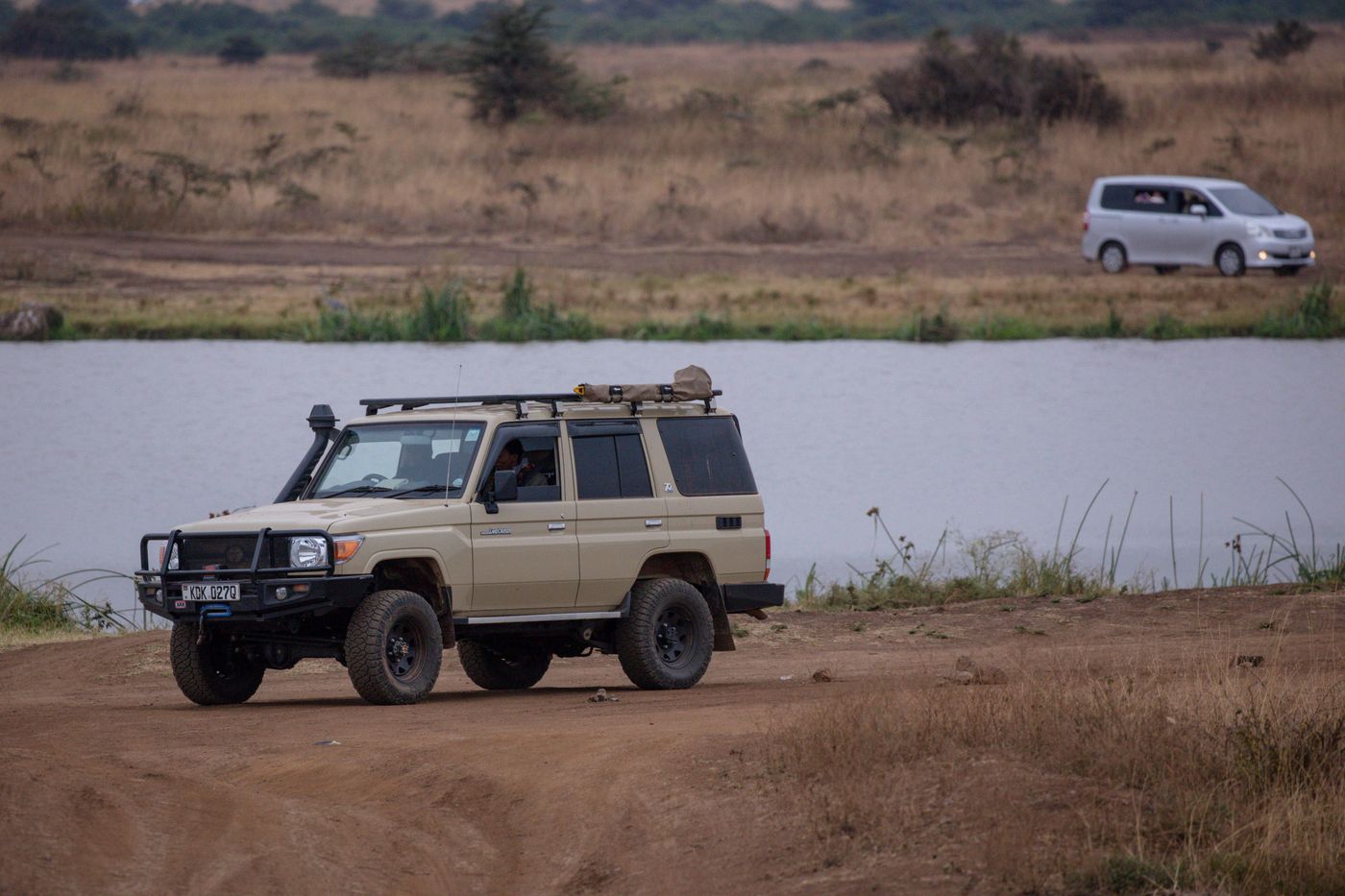
Details checked in October 2026. Rental terms, park rules, fees and licence rules change and are enforced differently from gate to gate, so confirm everything with the rental company, the park and the official authority before you go.
Is self-drive allowed in Kenya?
Yes, visitors can drive in Kenya, and many rental companies offer cars and 4×4 vehicles. The question for a safari is not whether you can drive. It is whether you can use that vehicle for game drives in the park you want. That depends on the park, and the rules change.
The licence and rental basics
- Kenya drives on the left.
- Carry your original driving licence. Most rental companies also ask for your passport, and many recommend or ask for an International Driving Permit, especially if your licence is not in English.
- Minimum ages and deposits differ by company, so ask before you book.
- Ask in writing about the insurance excess, what is excluded (tyres, windscreen, off-road damage), who pays for recovery and whether park use is covered.
Check the licence rules for your own country with the rental company and with Kenya’s official transport authority, because foreign-licence rules and time limits are explained differently by different sources.
The roads are the real challenge
Distances look short on a map and are not. Tarmac roads between towns are busy with trucks, buses and motorbikes, overtaking is common and hazards include potholes and pedestrians. Safari tracks may be muddy, corrugated or washed out, and travel times can be much longer than the kilometres suggest. After rain, black cotton soil can stop an ordinary car completely.
Fuel stations are common on main roads and in towns, but fewer in rural areas, and diesel may be limited. Refuel before you leave a big town. Avoid driving at night. Our guide to getting to the Maasai Mara by road or air shows how long the main routes really take.
Police checks and security
Expect checkpoints on major roads. Keep your licence, passport, rental agreement and insurance together and easy to reach, stay calm and polite, and ask for an official receipt if you are asked to pay anything. Lock the doors in slow traffic and keep valuables out of sight. Read our guide on whether Kenya is safe for tourists and the current advice from your own government.
The Maasai Mara private vehicle rule
This is the point that surprises most self-drive planners. In June 2024 Narok County, which manages the Maasai Mara National Reserve, stopped private vehicles from game drives in the reserve and said visitors must use authorised safari vehicles. Safari trucks, Land Cruisers and vans were named at the time. Reports since then say a regular rental car is usually tolerated for driving straight to a lodge but not for looking for wildlife, and that enforcement varies by gate and by day.
Because the situation is unclear and can change, confirm the current rule with Narok County or your lodge before you plan a self-drive trip to the Mara. Fees and the gates you use also differ. Our Maasai Mara guide covers the reserve in more detail.
Other parks
Each park or reserve sets its own entry, vehicle and speed rules, and Kenya Wildlife Service manages most national parks. Before you plan a route, ask the park whether private vehicles are allowed for game drives, what the fees are and whether your rental insurance covers use inside the park. Conservancies are private and set their own access rules, and many do not allow casual visits.
Self-drive or a driver-guide?
| Option | Best for | Watch out for |
|---|---|---|
| Self-drive | Confident drivers on short, well-known routes, such as Nairobi to Naivasha and Hell’s Gate | Rough roads, recovery costs, park restrictions, no guide to find animals |
| Private vehicle with a driver-guide | Wildlife viewing, photography, first-time visitors and families | Higher cost than a basic rental |
| Shared vehicle or group safari | Solo travellers and tight budgets | Less control over timing and stops |
A driver-guide does more than drive. Guides read the landscape, hear other guides on the radio and know where the animals were an hour ago. That is why a guided vehicle often shows you far more wildlife than the same hours alone. Compare the options in our guide to private and group safaris.
What it really costs
A rental looks cheap until you add the extras: a 4×4 rate, fuel for long distances, park or conservancy fees, insurance excess, accommodation that you book yourself and recovery if you get stuck. Compare the total with a guided safari quote, not just the daily rental price. Our Kenya safari cost breakdown shows what a guided trip includes.
A middle way
If you want independence but not the risk, ask for a private safari where you set the pace and choose the stops, with a driver-guide at the wheel. You still decide when to start, how long to stay at a sighting and where to eat, and you do not have to worry about navigation, recovery or park rules.
How we help
Our safaris are planned with a driver-guide who knows the parks, and our team is based in Nairobi. If you are set on driving part of the trip yourself, such as a day around Naivasha, tell us and we will plan the rest of the route around it and tell you plainly what is sensible in your dates.
Mistakes we see
- Assuming any rental car can be used for game drives.
- Planning too many driving hours in a day.
- Driving at night between parks.
- Not checking what the rental insurance excludes.
- Relying on a phone signal for navigation in remote areas. See our guide to a Kenya SIM card.
Sources
- Kenya Geographic: no more game drives in private vehicles in the Mara
- SafariFind: driving in Kenya, self-drive rules and licence guide
- Masai Mara Safari: self-drive routes and rules for beginners
Safaris that fit this guide
If you would rather leave the driving to someone who knows the parks, these itineraries show the routes:
- 7 Days Classic Kenya Safari: Maasai Mara, Lake Nakuru, Naivasha and Hell’s Gate — a guided route that includes Naivasha and Hell’s Gate
- 3 Days Amboseli Bush Safari Adventure — a short guided trip with no navigation to worry about
- 7 Days Budget Kenya Safari: Maasai Mara, Lakes and Hell’s Gate Adventure — a guided option for a smaller budget
Keep reading: Kenya safari vehicles compared, how to book a Kenya safari and first-time safari mistakes.
Driving in Kenya: what first-timers should know
If you are planning a self drive safari in Kenya, start by getting used to the traffic. Kenya drives on the left, and Nairobi roads are busy, with matatu minibuses stopping suddenly, motorbikes weaving between lanes, and pedestrians crossing without warning. Outside the city, highways are shared by trucks, livestock and cyclists, and speed bumps can appear without much warning. Drive defensively, keep your distance, and avoid driving at night, when unlit vehicles and animals on the road are hard to see. Plan to arrive at your destination before dark. If you are not comfortable driving on the left or in heavy traffic, a driver-guide is a safer, less stressful option.
Checks before you leave the rental yard
- Inspect the tyres, including the spare, and make sure you have a jack and wheel spanner.
- Check the brakes, lights, wipers, air conditioning and seat belts.
- Photograph the vehicle from all sides, noting existing damage.
- Confirm insurance cover, excess and what happens if the vehicle is damaged on unpaved roads.
- Ask for the rental company’s emergency contact and breakdown procedure.
- Carry a physical map, as well as an offline map on your phone, because signal can disappear in remote areas.
Driving inside the parks
Park roads are mostly dirt and may be rough, muddy or washed out after rain. Speed limits are low, and rules prohibit leaving marked tracks. Wildlife always has right of way. Elephants can block a road for long periods, and the correct response is to stay calm, keep your distance and wait. Do not get out of the vehicle except at designated places. You are also responsible for finding wildlife yourself, which is harder than it sounds without an experienced guide. Many first-time visitors find that a guide’s local knowledge produces far better sightings than they would find alone. Read our guides to Nairobi National Park and Amboseli to see where a self drive safari is realistic.
Fuel, food and emergencies
Fill up whenever you pass a reliable station, because fuel can be scarce between towns and inside parks. Carry plenty of water, snacks, a first-aid kit, a torch and a charged power bank. Know the nearest ranger post or lodge, and share your route and expected arrival time with someone. If you break down, stay with the vehicle unless you are certain it is safe to move, and call your rental company. Never walk away from the vehicle in a park, where wild animals roam. Travel insurance that covers medical care and evacuation is vital, and our travel insurance guide explains what to look for.
Is a self drive safari in Kenya right for you?
A self drive safari in Kenya suits confident drivers who enjoy independence, can handle rough roads and are comfortable making their own decisions. It does not suit travellers who want expert wildlife spotting, who are short of time, or who are not used to driving on the left. A good compromise is a hybrid plan: self-drive between Nairobi and a nearby park such as Lake Nakuru or Hell’s Gate, then use a local guide for the Mara. Weigh the options in our private vs group safari guide, and contact us if you would like a driver-guide or a mixed itinerary.
Frequently Asked Questions
Can you self-drive in Kenya?
Yes, visitors can rent a car and drive in Kenya, on the left. Whether you can use that car for game drives depends on the park, and the Maasai Mara National Reserve restricts private vehicles for game drives.
Is self-drive safari safe in Kenya?
It can be, on short routes in daylight with a proper 4×4 and good insurance, but it carries more risk than a guided trip. Roads are rough, help can be far away and you are responsible for navigation, security and recovery.
Do I need a 4×4 for a self-drive safari?
For safari tracks, yes, a 4×4 with good ground clearance is recommended, especially in the rainy months. An ordinary car is fine on tarmac but may not cope on park tracks.
Do I need an International Driving Permit in Kenya?
Rental companies often recommend or ask for one, especially when a licence is not in English. Rules and sources differ, so confirm with your rental company and Kenya’s transport authority before you travel.
Can I self-drive in the Maasai Mara?
Private vehicles are restricted for game drives in the reserve since June 2024. Reports say an ordinary rental car is usually fine for driving straight to a lodge but not for wildlife viewing, and enforcement varies. Confirm with Narok County or your lodge.
Is a guided safari better than self-drive?
For wildlife viewing, usually yes. A driver-guide finds animals more easily, handles rough roads and park rules, and lets you focus on the sightings and photographs.
Self drive safari in Kenya: Key Takeaways
The main points on self drive safari in Kenya are covered above. If you would like help applying them to your own dates and budget, our team can plan the trip with you. For more advice on self drive safari in Kenya, or a quote tailored to your group, contact Cherish Africa Safaris and we will reply the same day.