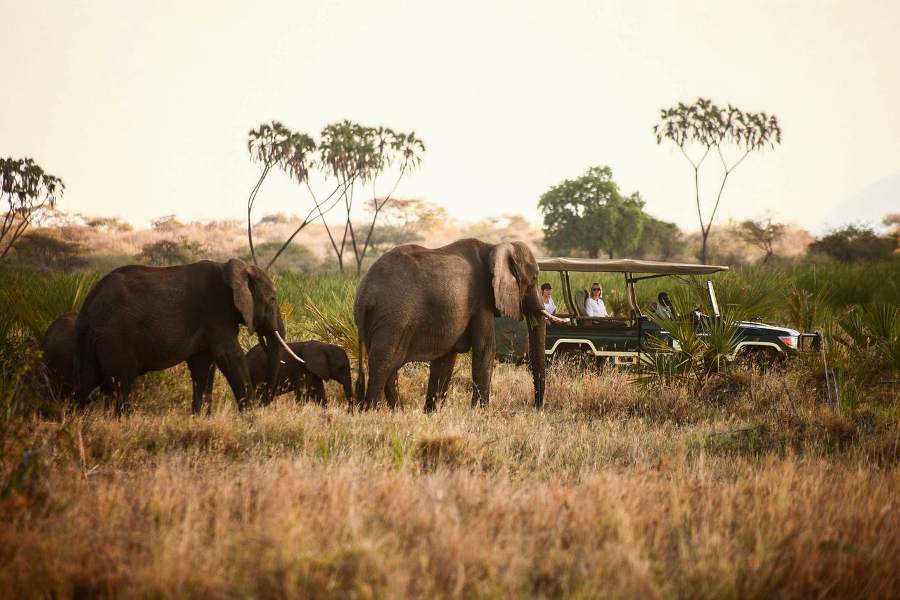
Quick answer: Before you pay a deposit to any Kenya safari company, check four things: a current Tourism Regulatory Authority (TRA) licence you can verify on TRA’s own site, a real Kenyan office and company email, an itemised written quote that names the parks and what is included, and a payment method that goes to a company account rather than a personal number. Optional extras such as KATO membership and certified guides add confidence. If two or more of the red flags below appear, do not pay. Below is everything you need to know about licensed safari operator in Kenya, based on our own trips.
Details checked in October 2026. Licensing rules, the verification portal and the bodies named below can change, so confirm on the regulator’s own site before you pay.
A Kenya safari is a large purchase made months in advance, often with a company you have never met, in a country you may never have visited. That combination is exactly what fraudsters look for. In July 2026 the Tourism Regulatory Authority issued a public notice telling local and international visitors to deal only with licensed tourism enterprises, and to contact the Authority if they are unsure.
The good news is that most of the risk can be removed in a few minutes of checking. This guide gives you the checklist we would use ourselves if we were booking a trip abroad.
The checks at a glance
| Check | Where to do it | What good looks like |
|---|---|---|
| TRA licence | TRA licence verification page at verify.tra.go.ke | The company’s file number is found and the licence is current |
| Company registration | Kenya’s eCitizen business registry | Name and registration number match the trading name and invoices |
| Association membership (optional) | Kenya Association of Tour Operators (KATO) members directory | The company is listed by name |
| Physical presence | Website, Google Business Profile, a call | A Kenyan office address, a landline or office number and a company email |
| The quote | Your inbox | Itemised, names the parks and lodges, states what is and is not included |
| Payment | Invoice and bank details | Account name matches the company, with written cancellation terms |
1. Check the TRA licence yourself
In Kenya, tour operators, travel agents and accommodation providers are licensed by the Tourism Regulatory Authority under the Tourism Act of 2011. A Tourism Enterprise Licence is issued for a calendar year and renewed annually, so an out-of-date certificate is a warning sign. Ask the company for its licence number, then check it on TRA’s verification page. Companies are looked up by file number (the format shown on the page looks like TRA/2024/00123), and individuals by ID number. Do not rely on a certificate image on a website; anyone can copy one. If you cannot verify a number, email TRA at info@tra.go.ke before you pay.
2. Confirm the company is real
A licence is only meaningful if it belongs to the business you are paying. Check that the name on the licence, the company name on your invoice and the account holder on the bank details all match. Kenya’s company registry on eCitizen lets you search a registration number. A registered limited company with a physical office, a landline and an email on its own domain is a far safer counterparty than a business that exists only as a social media page.
3. Look at KATO membership, but know what it means
The Kenya Association of Tour Operators is a voluntary trade body. Membership is a good sign because members operate under its code and bonding arrangements, but it does not replace a TRA licence, and many good operators are not members. If a company says it is a KATO member, check that its name appears in the KATO directory; KATO states that companies not listed there are not current members.
4. Ask what permits and guides sit behind the trip
Any operator running a trip into national parks must hold the relevant Kenya Wildlife Service permissions, and your quote should name the parks you will visit. Guides can also hold professional certification, for example through the Kenya Professional Safari Guides Association, which awards bronze, silver and gold levels based on examination and experience. It is a fair question to ask who your guide will be and what experience they have.
5. Get the quote in writing
A trustworthy quote is itemised. It names the parks and lodges, states the number of nights, says whether park fees, transfers, drinks and activities are included, and tells you the vehicle type and how many guests it carries. Vague bundled pricing is the easiest way to hide extras. Compare quotes line by line rather than by total. Our guide to private versus group safaris explains why the same itinerary can price very differently.
6. Pay safely
- Pay to a company account whose name matches the licence, not to a personal M-Pesa number or an individual’s bank account.
- Get the cancellation and refund terms in writing before the deposit.
- Where possible, pay by card or through a regulated payment gateway, which usually gives you a dispute route that a bank transfer does not.
- Keep every invoice, receipt and message.
- Do not wire a deposit under time pressure. A genuine operator can wait a day while you check.
Red flags
- The company refuses to share its TRA licence number or the number does not verify.
- There is no verifiable office address or phone number.
- All communication is by WhatsApp, with no company email.
- A price far below every comparable quote.
- Pressure to pay the full amount upfront through untraceable channels.
- Vague pricing that cannot be itemised.
- The company cannot say which parks need KWS permits.
If two or more of these appear, step away. Do not pay a deposit until you have a verified licence, a written quote and a written trip confirmation.
Why the licence matters even for small details
Licensing is not just paperwork. TRA checks that a licensed operator has a registered business, tax compliance, a physical office and appropriate safety and insurance arrangements before it issues a licence, and it can withdraw licences from firms that break the rules. Using a licensed company gives you someone accountable if something goes wrong, which is hard to get from an unlicensed middleman. Our guide to safety in Kenya covers the on-the-ground side of planning.
How we handle it at Cherish Africa Safaris
Cherish Africa Safaris is a registered Kenyan limited company with a current TRA licence, and we are happy to share licence details, our office address and our company emails on request. We send itemised quotes that name the parks, lodges and inclusions, and we put the cancellation terms in writing before any deposit. If a quote from anyone does not do that, ask them why.
Mistakes we see travellers make
- Trusting a certificate image instead of verifying the number.
- Booking through a social media page with no company email or office.
- Paying a large deposit to a personal account.
- Comparing only the final price and not the inclusions.
- Skipping the cancellation terms until something changes.
Sources
The licence verification page is TRA’s own site at verify.tra.go.ke. The July 2026 notice was reported by Kenyans.co.ke. Licensing, KATO and guide-certification details are summarised from a TRA-hosted guide on what makes a Kenya safari company trustworthy.
Safaris that fit this guide
Every itinerary on our site shows the route, the parks and the nights, so you can compare it with any other quote:
- 8 Days Classic Kenya Safari: Samburu, Ol Pejeta, Maasai Mara and Amboseli — a classic multi-park route
- 9 Days Luxury Flying Safari: Lewa, Samburu and the Great Maasai Mara Adventure — a flying itinerary
- 10 Days of Kenya and Tanzania Mid-Range Safari — a two-country trip
Keep reading: First-time safari mistakes to avoid, Budget safari ways to save and Private vs group safari.
Not sure which trip suits you? Browse all our safaris or message us on WhatsApp and we will match your dates and budget to a plan.
Frequently Asked Questions
How do I check if a Kenya safari company is licensed?
Ask for the company’s TRA licence number and check it on the Tourism Regulatory Authority’s verification page at verify.tra.go.ke, where companies are searched by file number. If the number does not verify, email TRA before you pay.
Is KATO membership required to run safaris in Kenya?
No. The Kenya Association of Tour Operators is a voluntary trade body. Membership is a good sign, but the legal requirement is a TRA licence. If a company claims KATO membership, check that it appears in the KATO directory.
What are the warning signs of a safari scam?
No verifiable licence or office, communication only by WhatsApp, prices far below other quotes, pressure to pay the whole amount upfront, vague pricing and requests to pay a personal account. Two or more of these together mean you should not pay a deposit.
Should I pay a deposit by bank transfer or card?
Pay a company account whose name matches the licence, and ask for written cancellation terms first. Where possible, pay by card or through a regulated payment gateway, which usually offers a dispute route that a bank transfer does not.
Is a TRA licence the same as a KWS permit?
No. The TRA licence authorises the business to operate. Kenya Wildlife Service permissions and fees cover entry to national parks and reserves, and your quote should show which parks are included.
What should an itemised safari quote include?
The parks and lodges, the number of nights, vehicle type and number of guests, whether park fees, transfers, drinks and activities are included, and the cancellation and refund terms.
Licensed safari operator in Kenya: Key Takeaways
The main points on licensed safari operator in Kenya are covered above. If you would like help applying them to your own dates and budget, our team can plan the trip with you. For more advice on licensed safari operator in Kenya, or a quote tailored to your group, contact Cherish Africa Safaris and we will reply the same day.