Choosing the best safari tour operator in Africa comes down to one question: which company will design and deliver the trip that suits you? A family visiting Kenya, a couple planning Tanzania, and travellers combining several countries need very different itineraries and support.
This guide focuses on fit. It shows what to ask about route design, guides, accommodation, vehicles, and support, and how to compare two proposals side by side.
Start with your destination and travel priorities
Write down your preferred country, travel month, approximate budget, and the experiences that matter most. Include who is travelling and any needs that affect the pace, accommodation, or transport.
Then look for operators who can explain your chosen route in detail. Ask why they recommend particular stops, how much driving is involved, and what they would change if you had one fewer day. If you are still deciding between countries, our guide to Kenya or Tanzania for a safari is a good place to start.
Confirm the basics, then move on to fit
Ask for the company’s registered name and tourism licence details, and check them with the authority in the country where it operates. In Kenya, the Tourism Regulatory Authority portal lets you look up a licence by file number. If an operator advertises membership of a trade body, verify that claim directly. Our guide on how to verify a safari operator in Kenya covers these checks step by step, so the rest of this article concentrates on choosing well among operators you have already checked.
Judge how well the operator knows your route
A good operator can explain a route as someone who has driven it. Ask which parts of the day are spent driving and which are spent watching wildlife, where the long transfers fall, and which stop they would drop first if you wanted a slower trip.
Look for answers that explain trade-offs. Adding a third park may add variety but leave less time in each. Staying longer in one place may mean fewer species but more time at each sighting. Choose the company that helps you decide, rather than the one that adds the most places to the quote.
Ask about the guide, not just the itinerary
The guide shapes the quality of every game drive. Ask about their experience on your route and with your type of traveller. Families may want someone comfortable adapting drives for children; photographers may prioritise time at sightings and a suitable vehicle layout. For language requests, confirm the arrangement and any extra charge in writing.
Also ask who will conduct the safari on the ground. The company selling the trip may use its own team, partner operators, or a combination, and itineraries crossing borders may involve a change of vehicle or guide. You should understand when that happens and how the handover works. Our note on choosing a safari driver-guide lists what to look for.
Look closely at the accommodation
Ask for named properties, room types, and the number of nights at each, not a general description such as “mid-range lodge”. Then ask why each property was chosen: its location in relation to the park, the room layout, and whether it suits your group.
Also ask what happens if a property is full for your dates. A clear substitution arrangement tells you more about an operator than a long list of lodge names.
Choose between private and shared vehicles
A private vehicle gives you more control over breaks, departure times, and how long you stay at a sighting. A shared departure follows a group schedule and is worth comparing if you are comfortable with that. Our private versus group safari guide sets out the differences.
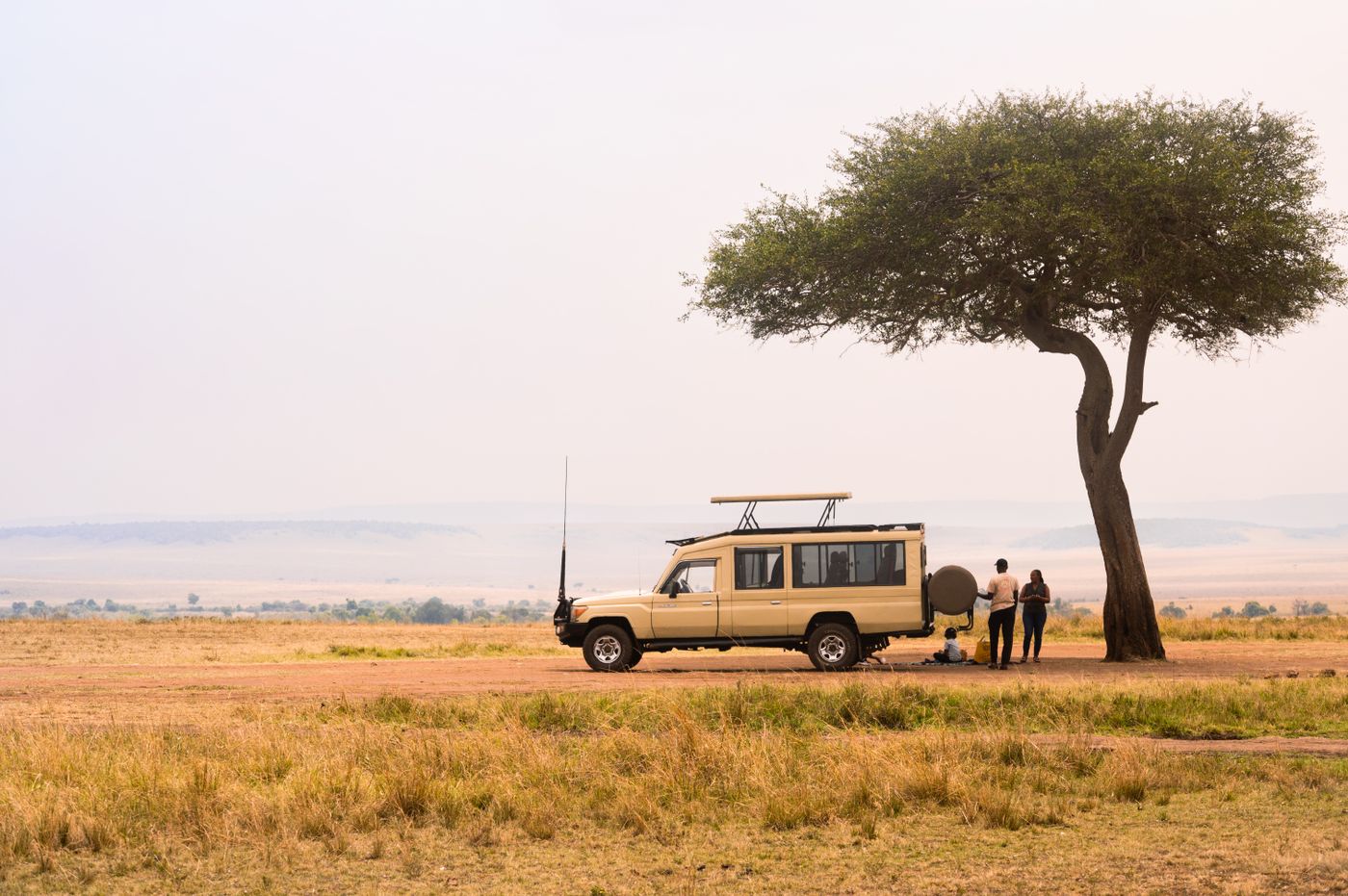
Whichever you choose, ask what vehicle you will use rather than relying on a photograph labelled “safari vehicle”. Confirm the roof design, passenger numbers, seating, and luggage space. Our guide to safari vehicles in Kenya explains the common types.
Think about family and accessibility needs
If you are travelling with children, give each child’s age at the time of travel and ask for the proposed room arrangement. Discuss child restraint requirements before booking, and ask whether drives can include breaks. Our guide to a Kenya safari with kids has more on planning by age, and you can browse our family safari packages for examples.
If anyone has mobility needs, ask about getting into the vehicle and reaching the proposed rooms. An operator that answers these questions clearly before you book is likely to handle them well during the trip.
How to compare two proposals
Ask each operator to quote against the same brief. Comparing a private vehicle with a shared departure, or different accommodation levels, can make the cheaper option look more comparable than it is.
Here is an illustrative example. Suppose you ask two operators for a seven-day trip. Proposal A visits four places and changes accommodation four times. Proposal B visits two places with fewer transfers and longer stays. Neither is better by default. Proposal A suits travellers who want variety and are comfortable with more days on the road. Proposal B suits families with young children, or anyone who wants more time at each sighting and less packing.
When the totals differ, check why. The cheaper proposal may include fewer nights in the best locations, a shared vehicle, or fewer meals. Use this checklist to line the proposals up.
| Detail | What to confirm |
|---|---|
| Route | Number of stops, daily driving time, and nights at each place |
| Accommodation | Named properties, room types, and substitution arrangements |
| Transport | Vehicle type, private or shared use, seating, and luggage allowance |
| Daily schedule | Transfers, game drives, rest time, and optional activities |
| Meals and drinks | Exact meal plan and any drinks supplied |
| Fees | Park entry, conservation charges, and other applicable fees |
| Extra costs | Flights, insurance, gratuities, personal expenses, and optional experiences |
| Total price | Currency, group size, child rates, and quote validity |
Our guide to comparing safari quotes goes through the price side in more detail.
Read reviews for evidence of the trip experience
Look at independent platforms alongside testimonials on the operator’s website, and search for trips similar to yours. A review explaining how a guide handled a delayed arrival, adjusted a family’s schedule, or resolved a room problem tells you more than a short rating alone.
Look for repeated comments about whether the trip matched the agreed itinerary, communication before departure, guide knowledge, vehicle condition, and how problems were handled. Read critical reviews and the operator’s responses too, and consider whether each response addresses the guest’s specific concern.
Find out what support you get during the trip
Ask who to contact during the trip, how the team handles a vehicle breakdown, and how it would coordinate assistance if an emergency occurred. Ask what support is included and what you need to arrange separately. Also ask how the last day works if you have a flight to catch.
Use the enquiry stage as a test
Send a few specific questions: why one lodge is recommended over another, whether a proposed transfer makes the day too long, or how the itinerary changes within a smaller budget. Speed is helpful, but the substance matters. A thoughtful explanation gives you a better basis for choosing than a quick reply that leaves the same questions unanswered.
When you are ready to book, read the itinerary, invoice, payment schedule, and cancellation terms in writing first. The same guide on choosing a licensed safari operator in Kenya explains the payment and red-flag checks in detail.
Frequently asked questions
Is booking directly with a local safari operator better
Compare the service offered. Ask who designs the trip, who delivers it, who handles changes, and what support applies during the safari. Booking directly and booking through an agent should both be judged against your needs.
Should I choose the cheapest safari company
Compare equivalent trips first. A lower price may reflect different rooms, fewer included activities, shared transport, or additional charges. Choose after you understand the full cost and arrangements.
How many safari operators should I compare
A shortlist of three is a practical starting point. Give each the same dates, traveller details, budget, and priorities so their proposals are easier to compare.
Is a private or a shared safari better
It depends on how much control you want. A private vehicle lets you set the pace, breaks, and departure times; a shared departure follows a group schedule. Ask each operator to price both so you can compare the difference.
Can a safari operator customise my itinerary
Ask which elements can change and what those changes cost. Customisation is useful when it addresses a specific need, such as a slower pace, different accommodation, or more time in one destination.
Plan your safari with Cherish Africa Safaris
Planning a trip to Kenya, Tanzania, or a gorilla trek in Uganda? Send Cherish Africa Safaris your preferred dates, number of travellers, budget, and the experiences you want to include.
If you are travelling with children, share their ages and your preferred pace. These details help us prepare a proposal you can assess against your priorities.
Explore our safari itineraries, request a tailored safari quote, or speak to our team on WhatsApp.
Licence verification portal checked on 6 November 2026. It lets the public look up Kenya tourism licences by file number.