Quick answer: Cape buffalo are one of Kenya’s easiest big animals to find. Look for them in the Maasai Mara, Amboseli’s swamps, Lake Nakuru, Ol Pejeta and Tsavo, and in the forested highlands of the Aberdares and Mount Kenya. They are heavy, bad-tempered when cornered and, from a vehicle, perfectly safe to watch. This guide covers Cape buffalo facts, how herds behave, where to see buffalo in Kenya, the best time to go and how to photograph them safely.
Buffalo in Kenya at a glance
| Fact | Detail |
|---|---|
| Weight | About 300 to 835 kg |
| Height | About 1 to 2 m at the shoulder |
| Herd size | A few hundred is common |
| Senses | Poor eyesight and hearing, good sense of smell |
| Feeding | Mostly grass, much of it at night |
| Lifespan | 11 to 22 years in the wild |
| Population | About 900,000 African buffalo, around 75% of them in protected areas |
| Big Five status | Yes, alongside lion, leopard, elephant and rhino |
What is a Cape buffalo?
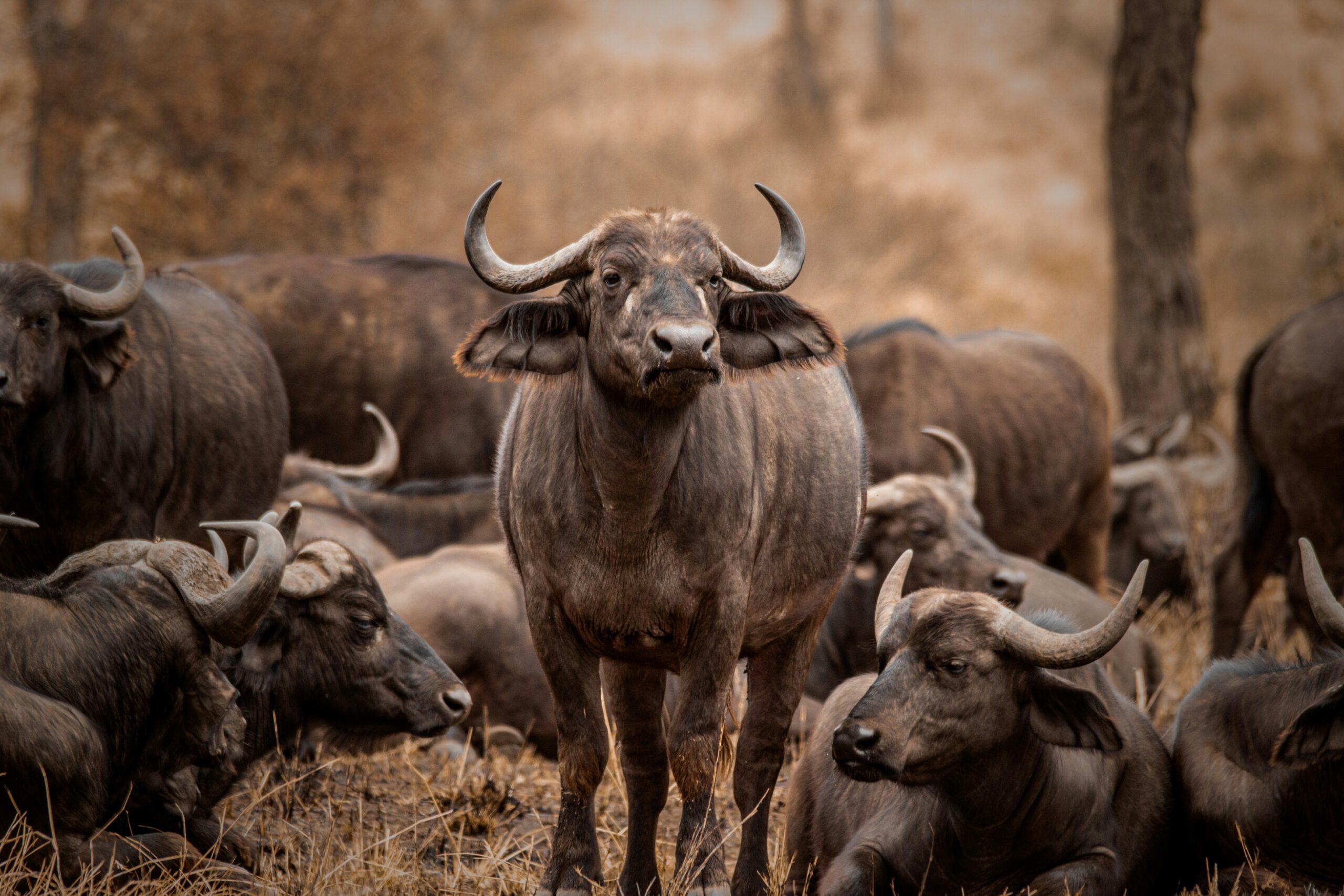
The Cape buffalo is the southern savanna form of the African buffalo, and the one you see across Kenya. Both sexes carry heavy curved horns, and in older bulls the bases join into a thick “boss” across the forehead. The animals look like oversized cattle, and they chew cud like cattle, resting in the shade through the heat of the day and feeding mostly at night, when it is cooler. Their size and temperament are why they sit on the Big Five list, a term that began with hunters and has stayed in the safari vocabulary.
How buffalo behave
Herds are made up mostly of females and their young, and they work as a team. A calf in danger draws the herd in to defend it, which is why lions often hesitate to attack a healthy group. Births cluster at the end of the rainy season, and females usually calve every two years. Males leave the herd around age four and then form bachelor groups or drift alone.
Old bulls and lone males
Older loners are the animals guides watch most closely. They are often called “dagga boys” in southern Africa, after their habit of wallowing in mud, and they have little to lose when disturbed. Buffalo have poor eyesight and hearing, but a good sense of smell, so they can react suddenly to a smell or movement they do not expect. This is the reason walking guides treat them with respect and why we never leave a vehicle where buffalo are close. If you are doing a walking safari in Kenya, your guide will plan routes around any buffalo they know about.
Predators and prey
Humans, lions, leopards, hyenas and wild dogs all take buffalo, though adults are usually only vulnerable to lions. Food availability affects their numbers more than predation does.
Where to see buffalo in Kenya
| Park | What to expect |
|---|---|
| Maasai Mara | Herds of hundreds on the plains, with bulls resting in the shade of riverine trees. See Mara weather and timing. |
| Amboseli | Buffalo wade through the swamps beneath Kilimanjaro, often beside elephants. See our Amboseli guide. |
| Lake Nakuru | Large herds around the lake and woodland, with a strong chance of seeing them close to rhinos. See Nakuru. |
| Ol Pejeta | Regular sightings in the open grassland. See Ol Pejeta. |
| Tsavo | Dust-coated herds gather at the waterholes. See Tsavo East and West. |
| Aberdares and Mount Kenya | Buffalo use forest glades and salt licks in the highlands. See the Aberdares and Mount Kenya. |
| Samburu and Meru | Smaller numbers, usually near water. See Samburu and Meru. |
Why buffalo matter on a Big Five list
The Big Five are lion, leopard, elephant, rhino and buffalo. Buffalo are the easy tick, which is why many first-time visitors overlook them. Take a second look at a big bull with a dried-mud coat, a notched ear from a fight and a stare that does not blink, and you will see why guides respect them. Our Big Five guide for Kenya shows where to find the others, and our rhino guide explains where to see black and white rhinos.
Best time to see buffalo in Kenya
Buffalo are present all year. Dry months, from June to October and January to February, make herds easier to find because they gather near water, and the short grass makes them visible from a distance. The green season brings calves and lush scenery, and fewer vehicles at sightings. Our best time to visit Kenya guide explains how each month plays out, and our rainy season guide covers the wet months.
How to photograph buffalo safely
- Photograph from your vehicle and stay seated.
- Do not ask to move closer to a bull that stares back at you. Let your guide reposition.
- Shoot head-on portraits at eye level for the best expression.
- Watch for oxpeckers on their backs. They eat ticks, and they make a nice detail shot.
- Look for mud wallows in the late afternoon, when animals cool off and light is soft.
- Use a longer lens for calves in the middle of the herd, so you do not disturb the group.
More in our safari photography tips.
Buffalo and conservation
An estimated 900,000 African buffalo exist, and about 75% of them live in protected areas. Outside parks, they can raid crops, break fences and spread cattle diseases, which makes them a source of conflict. Community conservancies that earn income from tourism give landowners a reason to leave room for wildlife, and your safari helps to pay for that.
Planning a safari to see buffalo
You will see buffalo on almost any Kenya safari, so there is no need to plan around them. If you want to see them alongside the rest of the Big Five, the Maasai Mara and Lake Nakuru give a strong combination, and a trip that adds Amboseli gives you elephants against the mountain. Tell us what you want to see and we will shape the route.
Frequently asked questions
Where is the best place to see buffalo in Kenya?
Buffalo are common in the Maasai Mara, Amboseli swamps, Lake Nakuru, Ol Pejeta, Tsavo and the forested slopes of the Aberdares and Mount Kenya.
Are Cape buffalo dangerous?
Guides treat them with great respect, especially lone old males and mothers with calves. In a vehicle you are safe if you follow your guide’s instructions.
How big is a Cape buffalo?
Roughly 300 to 835 kg and about 1 to 2 m at the shoulder.
Is the buffalo part of the Big Five?
Yes. The Big Five are lion, leopard, elephant, rhino and buffalo.
How long do buffalo live?
About 11 to 22 years in the wild.
Do lions hunt buffalo?
Yes. Large prides take buffalo, usually weaker animals, though a healthy herd defends itself well.
What do buffalo eat?
Mainly grass. Food availability affects their numbers more than predators do.
When is the best time to see buffalo in Kenya?
All year. Dry months make herds easier to find near water, and the green season brings calves.
Source: African Wildlife Foundation for size, population and behaviour figures.