The red elephants
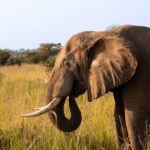
Tsavo’s elephants look rust-coloured because they dust-bathe in the red soil. They are the first thing most visitors remember, particularly in the dry season when herds gather at rivers and waterholes. The park also has lions (the males are famous for often having little or no mane), buffalo, giraffe, zebra, oryx, gerenuk and a long list of birds.
Landmarks worth the drive
- Galana River. The main water source, lined with palms and crowded with wildlife in the dry months.
- Lugard Falls. A set of rapids and polished rock on the river.
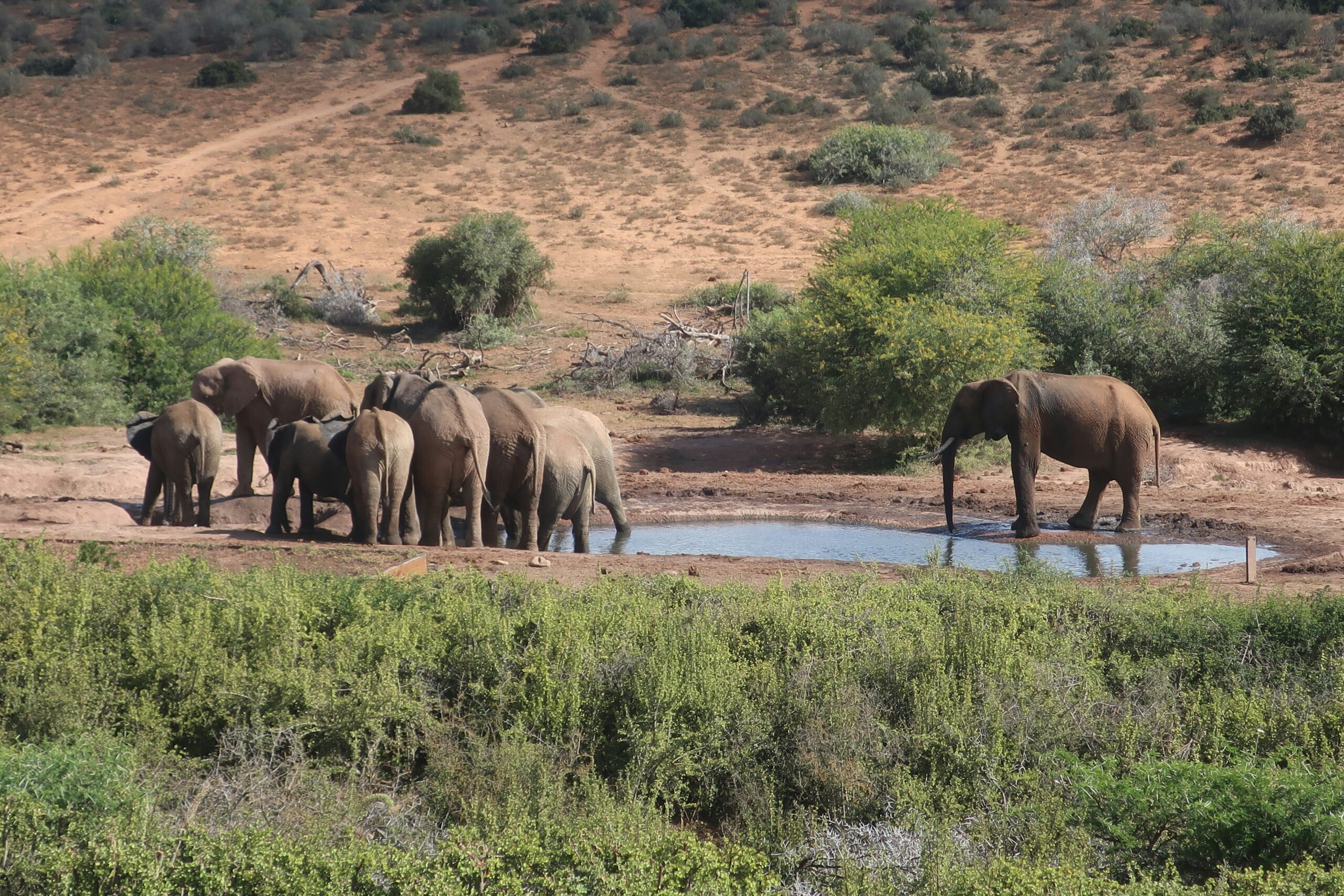
- Mudanda Rock. A long rock outcrop that catches rain and feeds a natural dam below, where elephants come to drink.
- Aruba Dam. Built across the Voi River and good for water birds and thirsty herds.
- Yatta Plateau. Along the western edge of the park is one of the longest lava flows on Earth.
A short history lesson
Tsavo is also where the “man-eaters of Tsavo” story comes from, when two lions attacked railway workers in the late 1890s. You will see the area differently when you remember the railway that opened up the country.
Best time to go
The dry months of June to October and January to February are best for game viewing, because animals concentrate near water. The green season, which brings the long rains in April and May, is quiet and photogenic, but some tracks get muddy. If you want fewer vehicles, Tsavo is quieter than the Mara all year.
How to get there
By road, Tsavo East is a long day from Nairobi, and a shorter drive from Mombasa. The Madaraka Express train stops at Voi, which is close to the park’s gates, so some travellers combine a train ride with a short safari. Light aircraft flights to airstrips inside the park are also available. For help on the route, see our train guide.
Tsavo East or Tsavo West?
East is flat, dry and open, which is ideal for spotting wildlife from far away. West is hillier, greener and has volcanic scenery and springs. Many itineraries include both. Our Tsavo East and West guide compares them in detail, and the Mara vs Amboseli vs Tsavo comparison helps you decide how it fits in your trip.
Tips for visiting
- Fill the tank and carry water, because distances are long.
- Bring binoculars. Spotting scopes are even better for the open plains.
- Dress in neutral colours and use dust protection for your camera.
- Check current park fees with the Kenya Wildlife Service before you travel.
Safaris that fit this guide
These Cherish Africa Safaris trips match what this guide covers. We can adjust any of them to your dates, group size and budget.
- 7 Days Kenya Safari Adventure – Naivasha, Amboseli, Tsavo West & Tsavo East
- 8 Days Birdwatching Expedition Through Amboseli, Tsavo & Arabuko Sokoke Forest
- 8 Days Kenya Safari: Masai Mara to Tsavo’s Red Elephants
Keep reading: Tsavo East and Tsavo West: Kenya’s Biggest Safari Parks Explained, Maasai Mara vs Amboseli vs Tsavo: Which Kenya Park to Pick.
Not sure which trip suits you? Browse all our Kenya safari tours or send us an enquiry.
Why Tsavo East National Park is worth the journey
Tsavo East National Park is one of the largest protected areas in Kenya and one of the great wilderness parks of East Africa. Together with Tsavo West, it forms a vast ecosystem that covers an area larger than many European countries. The landscape is flat, open and red, with the Galana River cutting through dry bush, and the Yatta Plateau, the longest lava flow in the world, running along its edge. Visitors come for the famous red elephants, big skies, quiet roads and the sense of space that is hard to find in busier parks. If you want a classic wild Kenya experience without crowds, Tsavo East National Park delivers.
The red elephants of Tsavo East
Tsavo’s elephants are famous for their rust-red colour. They are not a different species: they get their colour by dusting and wallowing in the red soil. After rain, the dust turns to mud, and elephants emerge coated in a deep terracotta shade. The park has a large elephant population that has recovered thanks to strong anti-poaching work. Large tuskers have historically roamed Tsavo, and with luck and patience, you may see impressive bulls. Our guide to elephants in Kenya explains more.
Other wildlife in Tsavo East National Park
- Lions: Tsavo is historically linked to the man-eating lions of the railway era, and the park still holds lions, though they are shy and often hidden in thick bush.
- Buffalo, zebra, giraffe and eland: found on open plains and near waterholes.
- Gerenuk, lesser kudu and dik-dik: dry-country antelope that thrive in thorn bush.
- Hippos and crocodiles: along the Galana River, especially at Lugard Falls.
- Birds: hundreds of species including starlings, hornbills, raptors and migrants.
Top sights in Tsavo East National Park
- Lugard Falls: rapids and rock formations on the Galana River, with crocodiles and hippos nearby.
- Mudanda Rock: a long rock outcrop overlooking a waterhole where elephants gather in the dry season.
- Yatta Plateau: a long lava ridge with dramatic views.
- Aruba Dam: a reservoir that attracts wildlife and birds.
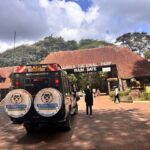
- Voi Gate area: a convenient entrance from the main road.
Tsavo East or Tsavo West?
Tsavo East is flatter and more open, making wildlife easier to see, while Tsavo West is hillier, with springs, lava flows and denser vegetation. Many safaris combine both. Read our guide to Tsavo East and Tsavo West to compare, and consider combining them with Amboseli for a southern circuit. See Mara vs Amboseli vs Tsavo for help choosing.
Park fees and practical details
Tsavo East is in the KWS tier of USD 80 for non-resident adults and USD 40 for children per day under the October 2025 schedule. A combined ticket covering Tsavo East, Tsavo West and Amboseli is listed at USD 215 for adults and USD 115 for children. Fees may change, and your operator will confirm them. See our park fees guide for more.
Getting to Tsavo East National Park
The park is about 330 kilometres from Nairobi and roughly 150 kilometres from Mombasa, which makes it an ideal stop between the capital and the coast. The drive from Nairobi takes most of a day along the main highway, while from Mombasa it is easier to reach by road or train and car. You can also fly to airstrips in the park. See our guide to the SGR train, which passes close to the park.
Best time to visit Tsavo East
The dry months, June to October and January to February, are best for wildlife viewing, since animals gather at water. The rains in March to May and November turn the park green and create photogenic skies, but dense vegetation can hide animals. Temperatures are high year-round, so plan game drives for early morning and late afternoon. Bring a hat, sunscreen and plenty of water.
Plan your Tsavo East trip
Allow at least two nights in the park, and ideally three. Combine it with Tsavo West, Amboseli or the coast. Choose a guide who knows the park’s roads and the habits of its elephants. To arrange a trip, contact our team.
History of Tsavo East National Park
Tsavo’s name is known worldwide through the story of the man-eating lions that attacked railway workers in the late nineteenth century, when the Uganda Railway was being built. The park was gazetted in the mid-twentieth century and later divided into east and west sections for management. The 1970s and 1980s were harsh years for Tsavo’s elephants and rhinos, which were hit hard by poaching and drought. Today, rangers, community scouts and conservation partners protect the park, and elephant numbers have increased. Rhinos have been reintroduced in sanctuaries. This history adds depth to a visit, and your guide will share stories as you travel.
What to pack for Tsavo East National Park
- Light, neutral clothing and a hat, because the park is hot and dusty.
- A scarf or buff to protect against dust.
- Sunscreen, sunglasses and insect repellent, with malaria precautions as advised by your doctor.
- Binoculars and a camera with a zoom lens and dust protection.
- Plenty of water, since services inside the park are limited.
- A light jacket for early mornings.
Use our Kenya safari travel checklist to prepare the rest.
Photography tips for Tsavo East
The red soil, open horizons and dusty light create striking images. Photograph elephants against the red earth in the golden hours, include the sky to show space and capture water scenes at waterholes. Keep lenses clean and avoid changing them in dusty conditions. See our safari photography tips.
Is Tsavo East right for you?
Tsavo East suits travellers who want wide-open landscapes, elephants and quiet roads, and who do not mind heat and dust. It does not offer the dense predator action of the Mara, and sightings need patience. For a complete route, pair it with Amboseli and the coast.
Final thoughts on Tsavo East National Park
Tsavo East National Park is a place where distance and silence matter. Roads run straight to the horizon, red dust hangs in the air at sunset and an elephant appears out of the bush as if the land itself had moved. It rewards patient travellers with space, light and a sense of wildness that is increasingly rare. Add it to your Kenya route if you want to see another side of the country, and let us handle the logistics.
Practical Tips for Your Tsavo East Visit
Start drives early, because the plains heat up quickly and animals rest in shade at midday. Carry plenty of water, a hat and sunscreen, and keep windows closed on dusty tracks. Binoculars help in the open country, where animals may be far from the road. Fill your fuel tank before entering the park if you are self-driving, and keep a copy of your fee receipts. If you are also visiting the western side, compare it in our Tsavo East and Tsavo West guide, and check the current fees in the Kenya national park fees guide.
Plan it with us
Want to see Tsavo on your safari? Tell us your dates, group size and what you want to see, and our team will build a tailored quote. Send us an enquiry or message us on WhatsApp.
Tsavo east national park: Key Takeaways
The main points on Tsavo east national park are covered above. If you would like help applying them to your own dates and budget, our team can plan the trip with you. For more advice on Tsavo east national park, or a quote tailored to your group, contact Cherish Africa Safaris and we will reply the same day.