
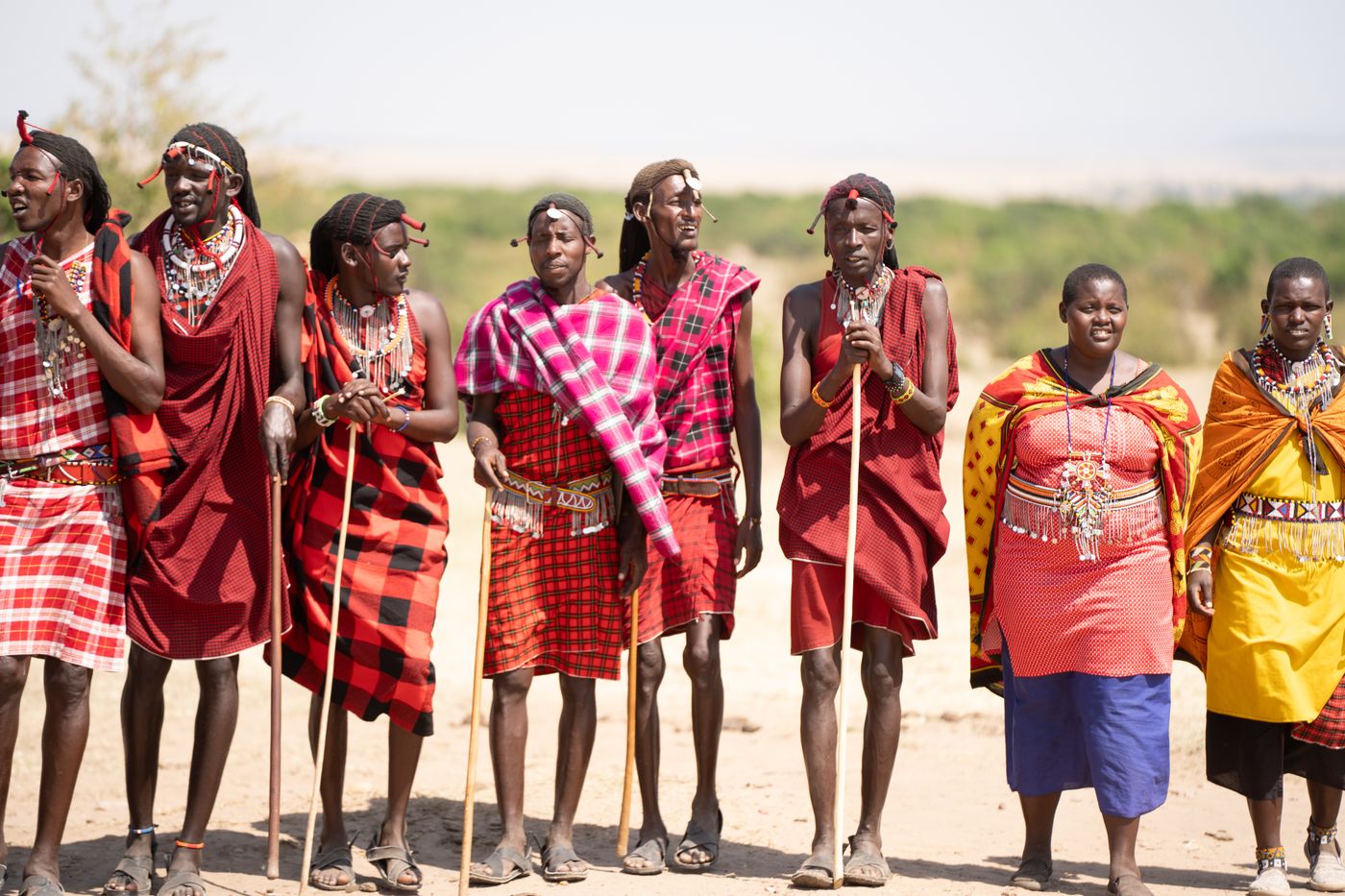
For many travellers, a Maasai village visit is the part of a Kenya safari that moves them most, or the part that raises the most questions. Done well, it is a conversation between hosts and guests. Done badly, it can feel like a staged stop. This guide explains what happens during a visit, how to behave, how to choose a good experience, and what to ask before you go.
Who Are the Maasai
The Maasai are a semi-nomadic pastoral people who live in southern Kenya and northern Tanzania, and who speak the Maa language. Their lives have long been built around cattle, which are a measure of wealth, a source of food and a central part of ceremonies. They are known for their red shuka cloths, their beadwork and their strong tradition of age-sets, in which young men pass through stages as warriors, called moran, and then as elders. Many Maasai families now combine herding with schooling, small business, conservancy work and tourism. Because the Mara landscape is their ancestral home, visiting the area without meeting the people who live in it leaves out half of the story.
What Happens During a Maasai Village Visit
The welcome
Visitors are usually greeted at the entrance by a group of men and women in traditional dress. The welcome often includes singing and the adumu, the jumping dance, in which young men leap straight upward while keeping their bodies straight. You may be invited to join in, and trying a jump is a good way to break the ice. The greeting is also a time to learn a few words and to find out who is leading your visit.
The enkang and the homes
A Maasai homestead is called an enkang. It is a circle of low houses built from a framework of sticks plastered with mud and dung, surrounded by a thorn fence that protects people and livestock at night. Inside, the cattle enclosure sits at the centre. Your host may invite you into a house, which is small, dark and smoky, because the fire is used for cooking. The visit gives you a sense of how families organise their space and share work between women, men and children.
Demonstrations
Most visits include a fire-making demonstration, usually with sticks and dried dung, and an explanation of herding, from how animals are watered to how they are protected from predators. You may also see how women make and repair houses, and how jewellery is made. If you are curious, ask direct questions. Good hosts enjoy explaining and will answer honestly about both the benefits and the challenges of modern life.
Beadwork and the craft market
Beadwork is how the Maasai tell stories about identity and status. Colours carry meaning: red is often linked to courage and cattle, blue to the sky and water, green to the land, white to peace and milk, and yellow or orange to hospitality. Women make necklaces, bracelets, belts and earrings, and the craft market at the end of the visit lets you buy directly from the maker. You can bargain politely, but remember that the price covers hours of work. Buying a few items you will treasure is better than many small souvenirs.
Etiquette for a Maasai Village Visit
- Greet first. Say hello to your host and listen to the introduction before you start taking photos.
- Ask before taking photos of people. This applies to children and elders in particular. Some communities charge a photography fee, so ask your guide in advance.
- Dress modestly. Comfortable clothes covering shoulders and knees are appropriate, and bright or military-style clothing is best avoided.
- Be respectful of customs. Do not touch objects or enter houses without an invitation, and follow your guide on how to greet people.
- Do not treat the visit like a zoo. Listen, ask questions and talk with your hosts as people.
- Avoid giving sweets or money to children. It encourages begging and can disrupt school attendance. If you want to help, support a school or project through your guide or operator.
- Bring small cash. You will need it for the entry fee, crafts and tips.
How to Choose a Good Maasai Village Experience
Not every visit is equal. Some are run by communities who take pride in sharing their culture, while others are hurried stops arranged for a high volume of tour vehicles. Ask your operator a few questions before you book. Who owns and runs the village? Is the income shared with the community? How many groups visit each day? Can the visit include time for conversation, not just a performance? Does the guide speak the local language and have a relationship with the hosts? Operators that answer clearly are usually the ones that have worked with the same community for years.
Some Mara conservancies also offer community visits as part of a wider stay, and these often provide a calmer, better organised experience. Our guide to Masai Mara conservancies explains how conservancies work, and how land lease payments benefit Maasai landowners.
Photography and Social Media
Photographs are part of most visits, but they should never come first. Spend a few minutes meeting people, then ask whether you can take pictures. Many hosts are happy to pose or to let you photograph the dance, while others prefer to be left alone. If you plan to post pictures online, mention this to the person you photograph, particularly if a child is in the frame. Our safari photography tips give guidance on respectful photography in Kenya.
Best Time and How Long to Allow
Visits are usually arranged in the morning or the late afternoon, around game drives. Allow one to two hours, including travel from your camp. Cattle are away grazing during the day, so mornings and evenings are the best times to see the herd moving. The village can be visited all year, although dry-season tracks are easier than rutted tracks after rain. If you are building an itinerary, our 2-day Masai Mara safari shows how to fit a cultural stop between drives.
Questions Worth Asking Your Hosts
Visitors often leave with a list of things they wish they had asked. A few prompts help: How do children go to school? How does the community manage water in the dry season? What changes have tourism and conservancies brought? How do you live alongside lions and elephants? What do you hope visitors will understand? Hosts appreciate sincere curiosity, and the answers are often the most memorable part of the visit.
Learning More Before You Travel
If you want a deeper understanding of the landscape, read our guides to the Masai Mara rules and etiquette and to Masai Mara park fees, so you know how the reserve works before you arrive. A short Maa greeting from you, such as “Sopa” to a man, will usually bring a warm reply. Your guide can teach you the right response.
Understanding Maasai Daily Life Before You Visit
A short visit shows only a slice of daily life, so it helps to know the rhythm behind it. Days usually begin early, when women milk the cows and goats and prepare tea, and when boys and young men take the herds out to graze. Water and firewood are collected, houses are repaired, and children walk to school if one is within reach. Livestock returns in the evening and is counted into the enclosure, because predators such as hyenas and lions are a constant concern. Seasonal pressure from drought can force families to move herds over long distances, and this is one reason many households now diversify with small businesses and conservancy income.
Food, Language and Ceremony
Traditionally the Maasai diet centred on milk, meat and, on special occasions, blood drawn carefully from cattle, though maize meal, vegetables and tea are now common in most households. Maa is the shared language, and most guides and hosts also speak Swahili and English. Ceremonies mark the stages of life, from naming and circumcision to the graduation of warriors into elderhood. Some ceremonies are private and not performed for visitors, so do not expect to see them on an ordinary stop, and do not ask to attend unless your hosts offer.
Common Misconceptions About a Maasai Village Visit
- “The performance is the whole culture.” The dance is a welcome. Real life is the herding, building, schooling and decisions that go on every day.
- “Everyone lives exactly as before.” Many Maasai families use mobile phones, solar lights and motorbikes, and children often attend school in uniform.
- “Paying more means a better visit.” What matters is how the visit is organised and where the money goes, not the headline fee.
- “It is a museum.” It is a home. Treat it as you would a private household and follow your hosts’ lead.
After the Visit
Talk through what you saw with your guide on the drive back. A good guide will give context, answer your questions and help you separate performance from daily life. If you bought crafts, keep the maker’s name if you were given it, and tell friends where the item came from. If you want to support the community further, ask your operator about school, water or health projects with transparent reporting, rather than handing out gifts on the spot.
What to Bring on the Day
Pack a small amount of cash in small notes for the entry fee, crafts and tips, a hat, sunscreen, water and a camera with a charged battery. Wear shoes you do not mind getting dusty, and bring a light layer for cool mornings. Leave valuables in the vehicle or at camp, and keep your phone handy for notes, but put it away during conversations so your hosts feel heard.
Frequently Asked Questions
How much does it cost to visit a Maasai village?
Fees are set by each community and are usually collected as a group or per-person entry. Ask your operator or guide for the current amount before you go, and ask how the money is shared with the community.
Can I take photos at a Maasai village?
Yes in most cases, but ask first. Some communities charge a small photography fee, and individuals, especially children and elders, may decline. Respect a no without argument.
How long does a visit to a Maasai village take?
Most visits last one to two hours, which covers the welcome dance, a tour of the homes, demonstrations and time at the craft market.
Is a Maasai village visit authentic?
It can be, if you choose a community-run visit led by local people and avoid hurried, high-volume stops. Ask who runs the visit, what you will see, and how income is used.
What should I wear to visit a Maasai village?
Wear modest, comfortable clothes and closed shoes. The ground is dusty and may be muddy after rain, and a hat and sunscreen help during the day.
Safaris That Fit This Guide
A Maasai village visit fits into most Mara itineraries. See our 4-day Kenya safari and 6-day Kenya safari, or ask us to add a community visit to a custom route.