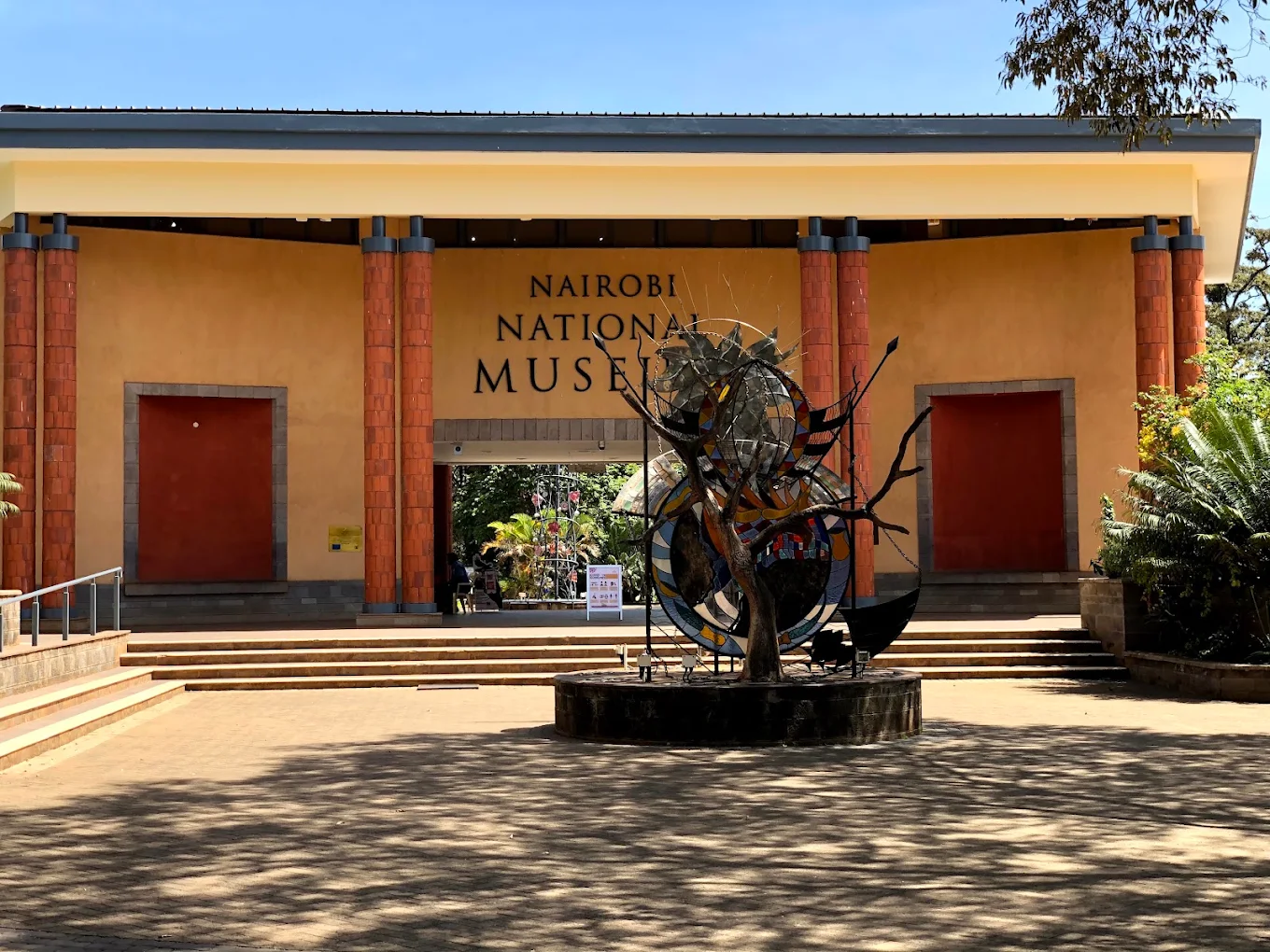
Quick answer: The Nairobi National Museum sits on Museum Hill, about 10 to 20 minutes from the city centre, and is open daily from 8:30am to 5:30pm. Non-resident adults pay about USD 18 (2026 rate), and you should allow two to three hours, plus an hour for the Snake Park and gardens. It is the best single place in Kenya to understand where humans, wildlife and the country itself came from.
Many visitors rush straight from the airport to the safari and miss the museum. That is a pity, because the Nairobi National Museum is the story behind everything you will see on the road: the fossils that put East Africa at the centre of human origins, the wildlife you are about to go and look for, and the people and cultures of Kenya. It also makes a perfect rainy-day or pre-flight half day. This guide covers the history, the galleries, the Snake Park, fees, hours, how to get there and how to plan the visit.
Nairobi National Museum at a glance
| Fact | Detail |
|---|---|
| Location | Museum Hill, off Kipande Road, Nairobi |
| Managed by | National Museums of Kenya (NMK) |
| Opened as | Coryndon Museum, 22 September 1930 |
| Renamed | National Museum, 1964 |
| Reopened | June 2008, after a rebuild that began in October 2005 |
| Open | Daily, 8:30am to 5:30pm |
| Time needed | 2 to 3 hours, plus about 1 hour for the Snake Park and gardens |
| Also on site | Snake Park and aquarium, botanic garden with nature trail, restaurants and craft shops |
A short history
The museum began as a hobby. In 1910 a group of settlers and naturalists founded the East Africa Natural History Society, and in 1911 they set up a small natural history museum and library, helped by funding from the businessman Aladina Visram. In 1914 the herpetologist Arthur Loveridge became the first paid curator.
After the death of the colonial governor Sir Robert Coryndon in 1925, a memorial fund was started and construction of a purpose-built museum began in 1928. It opened on 22 September 1930 as the Coryndon Museum, with Victor van Someren as curator.
The turning point came in 1941 when Louis Leakey became curator. He later reduced admission fees so African and Asian residents could visit, and he went on to make some of the most famous fossil discoveries in East Africa. His son, Richard Leakey, became museum director in 1968 and pushed to put Kenyans on the board. After independence the museum became the National Museum in 1964 and joined the National Museums of Kenya. The galleries closed in October 2005 for the first major rebuild since 1930 and reopened in June 2008 with new galleries, an administration block and a commercial centre.
The galleries and what to see
Exhibits change, so check the NMK website for current temporary shows before you go. These are the permanent highlights.
Cradle of Humankind (palaeontology)
This is the heart of the museum. The collections include some of the most important hominin fossils ever found, among them Turkana Boy, a remarkably complete Homo erectus skeleton, Kenyanthropus platyops, Proconsul africanus and the Black Skull (Paranthropus aethiopicus). The most delicate originals are kept in secure storage, so the displays use casts and interpretive panels. Stone tools from sites such as Olorgesailie and Lomekwi 3 show how early people made and used tools. The museum holds over 350,000 fossils in total, about 700 of them hominin specimens.
Story of mammals and Birds of East Africa
Taxidermy and models explain mammal evolution, feeding and defence, with an African rhino among the displays. The bird galleries group species by family, from raptors and waterbirds to sunbirds, and are an excellent primer before your first game drive.
Ahmed of Marsabit
The museum displays the mounted skin of Ahmed, a famous northern Kenya elephant who was placed under 24-hour guard by presidential decree in the 1970s and became a symbol of the fight against ivory poaching. The story links neatly with the ivory burning site in Nairobi National Park.
History of Kenya
Walk through the story of communities, trade, colonial rule, the struggle for independence and the years that followed. It gives useful context for anyone visiting Maasai, Kikuyu or Swahili communities on tour.
Cycles of Life and ethnography
Traditional objects show how communities mark birth, initiation, marriage and death. NMK holds ethnographic material from about 45 ethnic groups, which makes this one of the best places to see the diversity of Kenyan culture in one room.
Joy Adamson’s portraits
A gallery shows paintings by Joy Adamson, best known for Born Free. Between 1945 and 1955 she painted more than 600 portraits of people from Kenya’s communities in traditional dress, a rich visual record of a changing country.
Numismatics and Asian African Heritage
The money gallery covers trade, currency and banking, from barter to modern security features on the Kenya shilling. The Asian African Heritage displays record the contribution of communities with roots in Asia to the growth of Kenya.
Snake Park and aquarium
Within the complex, the Snake Park houses venomous and non-venomous snakes, crocodiles, tortoises, turtles and lizards. The aquarium has freshwater fish from Kenyan lakes and rivers plus marine fish and corals. It has its own ticket or can be bought as a combined ticket with the museum. Families with children usually enjoy this more than any other part of the visit.
Botanic garden, restaurants and shops
Behind the main building a small botanic garden with a nature trail offers shade and bird life. The commercial wing has restaurants and craft shops, handy for lunch and for buying carvings, beadwork and books. Facilities can change, so confirm on arrival.
Entry fees (2026)
Fees are set by NMK and paid through the official eCitizen portal or at the ticket office. Always confirm your visitor category before paying, especially for children and residents, and keep your confirmation. Rates below were last checked in 2026 and can change.
| Visitor category | Museum adult | Museum child | Snake Park adult | Snake Park child |
|---|---|---|---|---|
| Non-resident | USD 18 | USD 9 | USD 18 | USD 9 |
| Kenya resident | USD 9 | USD 6 | USD 6 | USD 3 |
| Kenya and East Africa citizen | KSh 350 | KSh 200 | KSh 350 | KSh 200 |
How to get there
- By car or taxi: about 10 to 20 minutes from the city centre in light traffic and up to an hour in rush hour. Uber and Bolt are the easiest options. There is ample parking.
- By matatu: routes heading to Westlands pass close by, then walk up Museum Hill.
- From the airport: about 30 to 60 minutes from JKIA depending on traffic. See our JKIA and Wilson Airport guide.
The museum and Nairobi National Park are different attractions in different places, so be clear which one you mean when you book a ride.
Suggested ways to plan the visit
| If you have | Do this |
|---|---|
| Half a day | Museum galleries in the morning, then lunch at the on-site restaurant and a short Snake Park visit |
| A full day in Nairobi | Morning at the museum, then the Giraffe Centre or the Karen Blixen Museum in the afternoon |
| A day with children | Snake Park and aquarium first, then the gallery of mammals and birds |
| A free day before a safari | Museum in the morning and Nairobi National Park for an evening drive or the next morning |
For more ideas see our things to do in Nairobi guide and the arriving in Nairobi checklist.
Visitor tips
- Go early on weekdays. Weekends and school holidays are busiest.
- Wear comfortable shoes and allow extra time for Nairobi traffic.
- Photography rules and filming permission vary, so ask at the ticket desk.
- Ask about wheelchair access before you arrive.
- School and large group visits should be booked in advance through the NMK education department. Night tours for groups are possible by arrangement.
Frequently asked questions
What is the Nairobi National Museum known for?
It is known for its collection of early human fossils including Turkana Boy, its natural history galleries, Joy Adamson’s portraits of Kenyan communities and its Snake Park.
How much is the Nairobi National Museum entry fee?
About USD 18 for a non-resident adult, USD 9 for a child, USD 9 for a Kenya resident adult and KSh 350 for an East African adult (2026 rates). The Snake Park is charged separately or on a combined ticket.
What are the opening hours?
Daily from 8:30am to 5:30pm, including weekends and public holidays, subject to official notices. Confirm the last entry time on arrival.
How long do you need at the Nairobi National Museum?
Two to three hours for the museum, plus about an hour for the Snake Park and gardens.
Is the Nairobi National Museum the same as Nairobi National Park?
No. The museum is on Museum Hill near the city centre. The national park is a wildlife park about 7 km south of the centre.
Can you see Turkana Boy at the museum?
The museum’s Cradle of Humankind gallery tells the Turkana Boy story. Because the original fossils are fragile, displays rely on casts and interpretive material while originals are kept in secure collections.
Is the museum good for children?
Yes. The Snake Park, aquarium, animal galleries and garden suit children well.
Fees and opening hours were checked in 2026 and can change. Confirm with the National Museums of Kenya before you visit.