Samburu County in north-central Kenya is known to many visitors for its wildlife reserve. It is also home to the Samburu people, whose way of life has shaped the land for generations.
Who they are
The Samburu live in Samburu County. Wikipedia’s entry, which cites the 2019 census, gives a population of about 333,000. They speak the Samburu dialect of Maa, a Nilotic language, and many also speak Swahili and English.
Relationship to the Maasai
The Samburu speak one dialect of the Maa language, which other Maa-speaking groups also speak. Most Samburu identify with the wider Maa community, although some scholars see them as a distinct people. For the Maasai, see Maasai culture around Amboseli.
Livelihood
The Samburu are traditionally semi-nomadic pastoralists who herd cattle, sheep, goats and camels. Milk is a staple, and maize porridge and sweet tea are common. Today many Samburu also buy agricultural products with income from livestock sales.
Social life
Samburu society is organised around age and elders, who have a strong say in important decisions such as marriage. Young men, known as moran or warriors, traditionally wore long braids, which they shaved when they became elders. Their religion centres on Nkai, a multifaceted divinity, and ritual diviners called loibonok are consulted about illness and misfortune.
Dress and beadwork
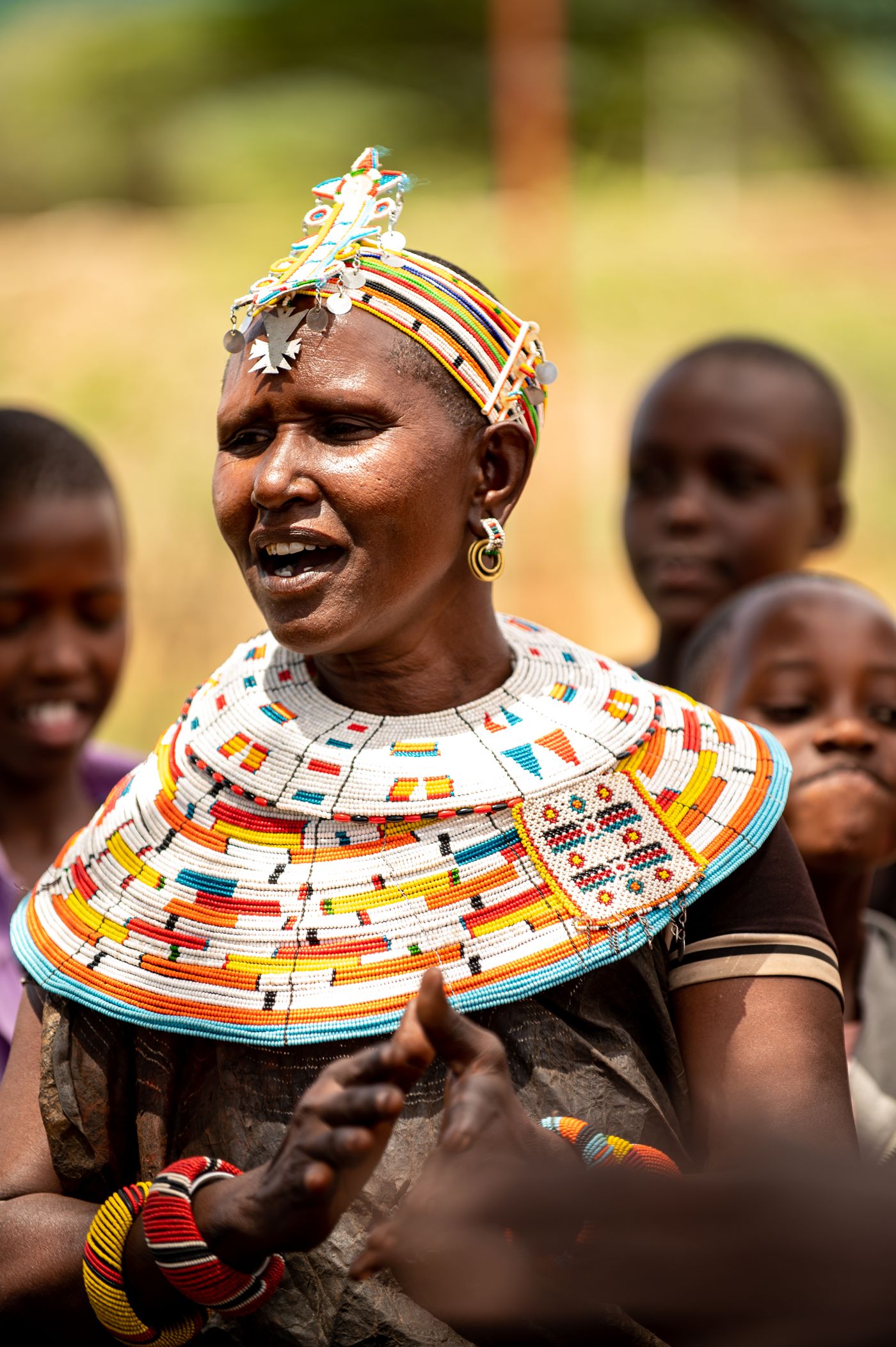
Men traditionally wore a wrapped cloth, often pink or black, while women wore two cloths, typically blue or purple. Beadwork is prominent in both men’s and women’s dress.
Visiting respectfully
- Ask before taking anyone’s photograph and accept a no.
- Greet people first, and let your guide introduce you.
- Buy crafts directly, and see our village visit etiquette and responsible safari guide.
See Samburu country
The Samburu National Reserve lies in their homeland. Read about its wildlife in the Samburu Special Five.
Homeland and numbers
The Samburu regard Woto as their ancestral homeland. Its exact location is unknown, but it is generally placed north of Lake Turkana, possibly in southern Ethiopia. Among the Maa-speaking groups of Kenya and Tanzania, the Samburu are the third-largest subgroup.
Visiting
If you spend time in Samburu County, let your guide set the pace and ask what is appropriate before you take photographs or buy crafts. Customs and practices vary between families and communities.
Frequently asked questions
Where do the Samburu people live?
In Samburu County in north-central Kenya.
What language do the Samburu speak?
The Samburu dialect of Maa, a Nilotic language. Many also speak Swahili and English.
Are the Samburu related to the Maasai?
They speak a dialect of the same Maa language and most identify with the wider Maa community, though some scholars see them as distinct.
What do the Samburu traditionally herd?
Cattle, sheep, goats and camels.
What is Woto?
The ancestral homeland of the Samburu. Its exact location is unknown, but it is generally placed north of Lake Turkana, possibly in southern Ethiopia.
Want help planning? Talk to our team and tell us your dates, who is travelling and what you would like to see.
Facts checked on 5 November 2026 from Wikipedia’s Samburu people entry (secondary source). Practices vary between families and communities and change over time.