Everyone who comes to Kenya wants the Big Five, and there is nothing wrong with that. But the guests who talk longest about their trip when they get home are often the ones who saw something odd: an aardvark shuffling across a track at night, a bat-eared fox with ears like satellite dishes, a hyrax, a distant cousin of the elephant, sunning itself on a rock. This guide is for them. It covers the nocturnal animals in Kenya, the small and strange ones worth slowing down for, and exactly where night drives are allowed, because that decides which of them you can see.
Where you can actually go on a night drive in Kenya
Most of Kenya’s national parks do not allow night drives. The Kenya Wildlife Service closes its gates at dusk and visitors have to be out of the park or inside their camp. The exception is private land. Conservancies run their own rules, and many of them offer night game drives as a standard part of your stay:
- Mara conservancies. Night drives are permitted in the conservancies around the Masai Mara, including Mara Naboisho and Mara North, but not in the national reserve itself. Camp vehicles must be back by 10pm. See our Masai Mara conservancies guide.
- Ol Pejeta Conservancy. A Laikipia sanctuary known for night sightings of aardvark and bat-eared foxes. See the Ol Pejeta guide.
- Other Laikipia conservancies such as Lewa and Loisaba also run night activities, depending on the camp. See the Laikipia guide.
How a night game drive works
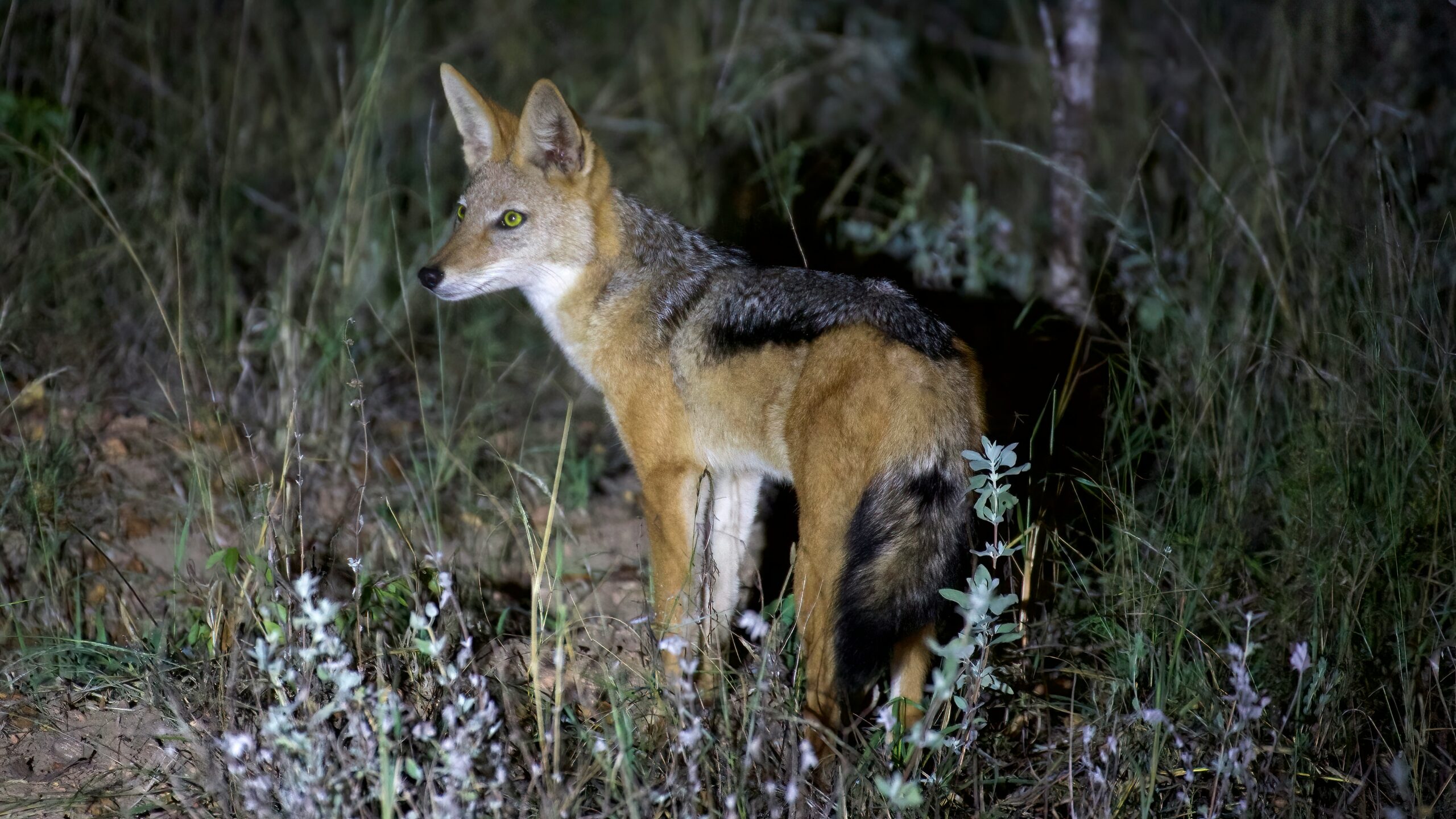
Drives start around sunset and usually last two to three hours. The vehicle has elevated seating, a powerful spotlight and radio contact. A spotter sweeps the bush and the guide looks for eyes reflecting back, which glow green, yellow or red depending on the animal. Many camps use red or orange filters, which are less disruptive to wildlife, and they are careful not to hold a light on an animal for long. Time spent near hunting leopards or lions with cubs is limited. Flash photography is not permitted. Hot drinks and blankets are usually provided, and the drive is normally included in your stay.
Dress warmly: it gets cold fast after dark. Bring a hat and closed shoes. Night photography is hard, so some guests choose to simply enjoy the drive. Families with older children and teenagers tend to love it.
The nocturnal animals in Kenya you might see
Leopards
The star of the night. Leopards hunt after dark, and the spotlight often picks them up as eyeshine moving along a branch or through grass. Read more in our leopard guide.
Lions
Lions are more active at night, when they hunt. You are likely to hear them before you see them, and a night sighting of a pride on the move is very different from a lazy midday nap.
Spotted hyenas
Hyenas live in clans and are noisy, curious and highly effective hunters. Their whooping calls carry for kilometres. At night you see them at their most active.
Aardvark
The holy grail of night drives. An aardvark weighs 60 to 80 kg, lives in burrows by day and comes out alone after dark to eat ants and termites, as many as 50,000 insects in a night. Its tongue is about 30 cm long and its burrows can reach 13 metres. It is shy and fast to bolt, so stay quiet if you see one. Look for burrows and fresh digging around termite mounds. Cooler, dry months give the best chances, and Ol Pejeta is one of the places most associated with sightings.
Bat-eared fox
A small fox with huge ears that feeds mainly on insects, especially termites. It often forages in pairs or family groups on open ground.
Bushbabies, genets, civets and porcupines
The smaller night shift. Bushbabies leap through trees; genets and civets are slender, spotted cat-like carnivores; porcupines clatter through the undergrowth; white-tailed mongooses trot along tracks. They are easy to miss by day. Read about the bushbabies in our guide to primates in Kenya.
Owls and nightjars
Spotted eagle-owls sit on tracks and posts, and nightjars show up as eyeshine on the ground. For more, see our birdwatching guide.
Honey badgers, servals and caracals are possible too, but sightings are luck. Pangolins are extremely rare. Do not set your hopes on any single species, because the point of a night drive is that you do not know what you will find.
Small and odd animals worth a daytime stop
The “Little Five”
Guides have a joke that matches the Big Five: the leopard tortoise, the buffalo weaver, the elephant shrew, the ant lion and the rhinoceros beetle. They are small, easy to overlook and fascinating once you pay attention. Ask your guide to stop for them.
Rock hyrax
About the size of a rabbit, but its closest living relatives are elephants. Groups of them sun themselves on rocky outcrops, called kopjes, across Kenya.
Dik-dik
One of the smallest antelopes, barely over a foot tall. They live in pairs and are usually seen at dawn or dusk in dry bush. See the field guide to antelopes.
Secretary bird and hamerkop
The secretary bird stalks grassland on long legs, stomping on snakes. The hamerkop builds an enormous roofed nest that other animals sometimes move into after it is built.
Tips for a good night drive
- Choose a camp that includes night drives or lets you add them.
- Go for two nights if you can, because sightings vary.
- Stay quiet and keep your phone on silent.
- Follow the guide’s instructions about standing, light and noise.
- Do not expect to see a specific animal. Enjoy the whole experience: the smells, the stars, the sounds.
For other ways to explore beyond the vehicle, read about walking safaris and our guide to the Big Five, because the best trips usually combine both.
Why animal eyes glow at night
When a spotlight hits a leopard or hyena, its eyes seem to shine back at you. That is because many nocturnal animals have a reflective layer behind the retina, called the tapetum lucidum, which bounces light back through the eye and improves vision in dim conditions. Guides use eyeshine to find animals in the dark, and learn to read its colour, height and spacing. Two close-set eyes low to the ground might be a bat-eared fox. A wide-set pair high in a tree could be a leopard.
What to wear and bring on a night drive
- A warm fleece or jacket and a hat. The open vehicle gets cold, especially in the highlands.
- Closed shoes and long trousers to protect against insects.
- Binoculars, ideally with good light-gathering power.
- A camera with a good low-light setting, but no flash.
- Your own water, even though camps usually provide hot drinks.
Booking tips
If a night drive is important to you, tell us before you book. Not every camp offers it, rules differ between conservancies, and minimum ages can apply. We can choose a camp that includes night drives and place it in your itinerary on a night when you are not exhausted from a long road transfer. Two nights give you more chances than one. For the rest of a conservancy stay, see our Masai Mara conservancies guide.
Walk, drive or sleep? Choosing your after-dark experience
Most camps offer a night drive. A few offer sleepouts, where you spend a night in a simple tent or on a platform under the stars with armed escorts. Walks after dark are not allowed in most places, for good reason. If you want a different pace in the daytime, read about walking safaris in conservancies.
Frequently asked questions
Can you do night game drives in Kenya’s national parks?
Mostly no. Night drives are generally not allowed in KWS national parks and reserves, including the Masai Mara National Reserve. They are offered in private conservancies.
Which Kenyan conservancies offer night drives?
Conservancies around the Masai Mara such as Mara Naboisho and Mara North, and Laikipia conservancies such as Ol Pejeta, offer night game drives.
What animals can you see on a night game drive in Kenya?
Leopards, lions, hyenas, bushbabies, civets, genets, porcupines, white-tailed mongooses, owls and, with luck, aardvark and bat-eared foxes.
How long is a night game drive?
Usually two to three hours starting around sunset. In the Mara conservancies vehicles return by 10pm.
Is a night game drive safe?
Yes. Drives are led by experienced guides in specially equipped vehicles, and you stay inside the vehicle.
Want a night drive on your safari? Tell us your dates and we will pick the right conservancy.