Quick answer: The Masai Mara National Reserve covers about 1,510 square kilometres in Narok County, Kenya, and is entered through gates including Sekenani (the main one), Talek, Musiara and Oloololo. The Mara River splits the reserve, and the west bank is the Mara Triangle, which is run separately. A foreign adult pays USD 200 a day in the park.
Masai Mara at a glance
| Size | 1,510 sq km reserve, plus about two dozen community conservancies on its borders |
|---|---|
| From Nairobi | About 270 km: 5 to 6 hours by road or about 1 hour by air |
| Gates | Open 6:00 am to 6:00 pm |
| Reserve fee (non-resident adult) | USD 100 per day Jan to Jun, USD 200 per day Jul to Dec |
| Best for | Big cats, river crossings (Aug to Sep), balloon safaris |
| Peak season | July to October |
Map data OpenStreetMap contributors. Fees are a planning guide and can change.
Details checked in October 2026. Entry fees shown are the published 2026 rates for the Narok County reserve and the Mara Triangle.
The Masai Mara at a glance
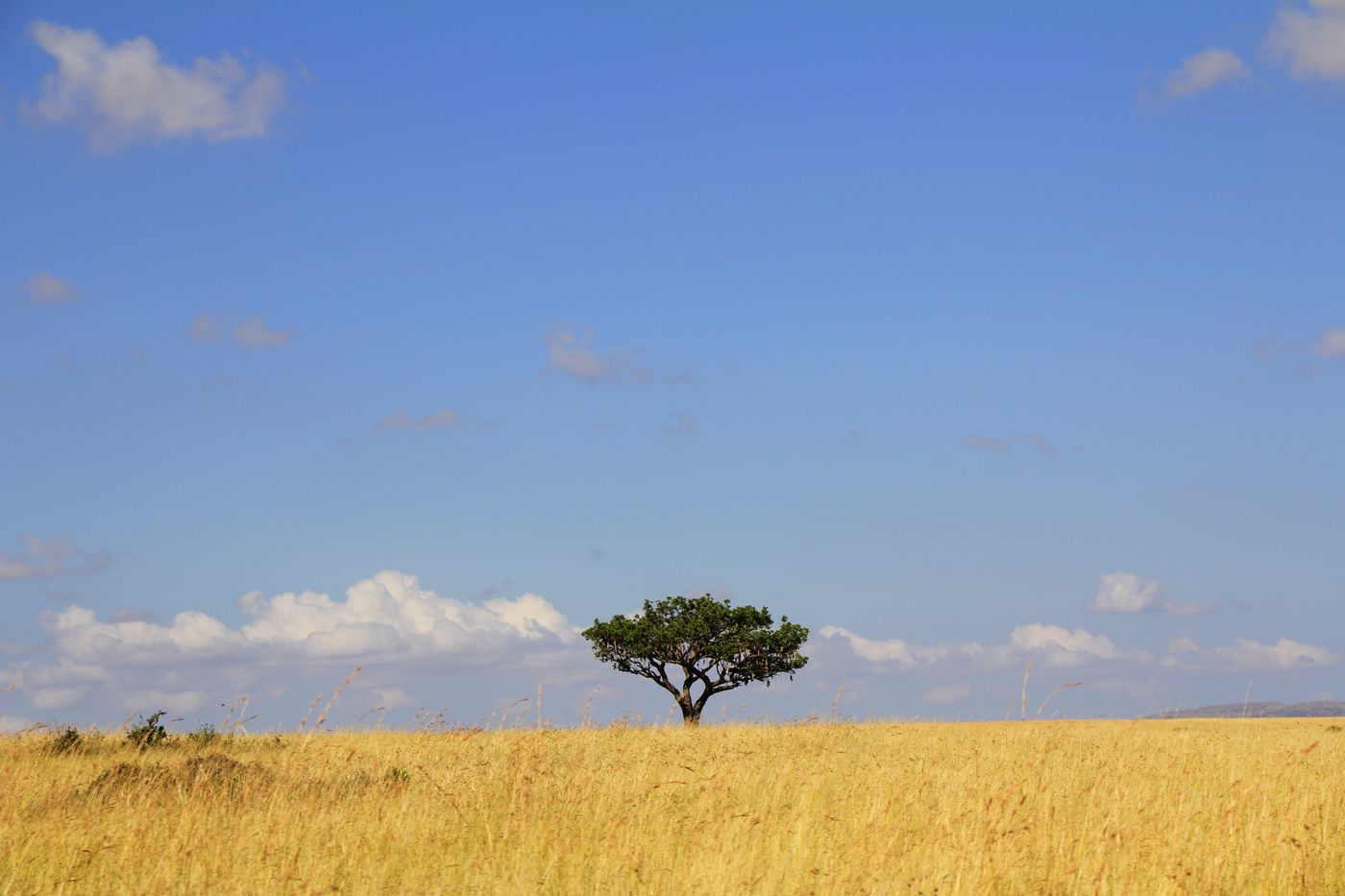
The reserve is the northern end of the same ecosystem as Tanzania’s Serengeti, and the two connect across the border. It covers roughly 1,510 square kilometres of mostly open grassland, broken by acacia clumps, riverine woodland and low hills, at about 1,500 to 2,100 metres above sea level. The Mara River is the main waterway, with the Talek and Sand rivers feeding it. All of the Big Five live here, and the herds of the Great Migration arrive from the Serengeti in the dry months.
Around the reserve sit privately leased conservancies, which are a different product from the reserve itself. Our guide to reserve vs conservancies explains the difference.
The Masai Mara gates
Gates open at 6:00 am and close at 6:00 pm, and you must be back out by closing time unless you stay inside at a camp. The six you will hear named:
| Gate | Where it is | Good to know |
|---|---|---|
| Sekenani | East, near Sekenani town | The main and most-used gate, reached by the C12 road from Narok. Closest to the eastern camps and lodges. |
| Talek | North-west of the centre, by the Talek River | One of the busiest gates, with many camps around it. The Talek River marks a natural divide between the eastern and western parts of the reserve. |
| Musiara | North-east, close to the Mara River | Serves Governors’ Camp, the Musiara marsh area and lodges on that side of the river. |
| Oloololo | North-east, west of the Mara River | The entry to the Mara Triangle, which is run separately by the Mara Conservancy. Reached by the C13 and C14 roads. |
| Ololaimutia | East, in the hills | A quieter eastern entry used by camps in that corner. |
| Sand River | South, on the Tanzanian border | Seldom used. Most visitors cross to Tanzania through other border posts, so do not plan a trip around this gate. |
Your camp usually tells your driver which gate to use, because the right gate can save hours of driving on rough roads.
The main areas inside the reserve
- Sekenani and the east: the most accessible part. Good for first visits because transfers are shortest, and it has a wide choice of camps from budget to mid-range.
- Talek and the central plains: open country with large resident lion and cheetah populations and plenty of camps. It can be busy with vehicles in peak season.
- Musiara and the north-east: marsh, riverine forest and the home of many famous big cat families. Close to the Mara River crossings on the eastern bank.
- The Mara Triangle: the west bank of the Mara River, run by the Mara Conservancy. It is known for dramatic scenery, fewer vehicles and some of the most famous crossing points. You enter through Oloololo.
- The south and Sand River: remote, towards the Tanzanian border, with a small number of camps.
Masai Mara entry fees (2026 rates)
Park fees are charged per person per day. The Narok County reserve and the Mara Triangle publish the same adult and child rates.
| Visitor type | Adult (per day) | Child 9–17 (per day) | Under 8 |
|---|---|---|---|
| Non-resident (foreign visitor) | USD 200 | USD 50 | Free |
| East African resident (Kenya, Uganda, Tanzania, Rwanda, Burundi) | KES 5,000 | KES 2,000 | Free |
| Kenyan citizen | KES 3,000 | KES 500 | Free |
Students up to 17 on an approved, sponsored school trip pay the reduced USD 50 rate, but must get permission at least two weeks ahead. Resident and citizen rates need ID or proof of residence at the gate. Driver’s licences are not accepted as identification.
Vehicle entry fees
| Vehicle | Entry fee |
|---|---|
| Under 6 seats | KES 400 |
| 6–12 seats | KES 1,000 |
| 13–24 seats | KES 3,000 |
| Over 24 and up to 44 seats | KES 4,000 |
| 45 seats and above | KES 5,000 |
Other charges you may meet
- Ranger on a game drive: KES 1,500 for under six hours and KES 3,000 for over six hours.
- Hot air balloon landing fee: USD 50 per adult and USD 20 per child, normally included in the balloon flight price. See our balloon safari guide.
- Camping: USD 30 per adult at a public campsite and USD 40 at a private one for non-residents, with a KES 10,000 private booking fee and two rangers required for night security.
- Other conservancies (Mara North, Naboisho, Olare Motorogi, Ol Kinyei, Enonkishu): about USD 80 to 120 per adult per day for non-residents.
- Some lodges inside the reserve, such as Mara Sarova and Keekorok, are reported to apply a rate of USD 70 per adult per 24 hours.
How tickets and payment work
- A daily ticket is valid for 12 hours, from 6 am to 6 pm, whatever time you enter.
- Guests staying outside the reserve pay a daily fee. If you stay inside, leave by road before 10 am or reach your airstrip by 10 am on departure day, or an extra day is charged.
- The Narok gates take cash (USD or KES), Visa, Mastercard or M-Pesa. The Mara Triangle is cashless only: M-Pesa or card.
- Most safari packages include park fees. On fly-in trips they are often charged when you land.
Rules inside the reserve
Stay in your vehicle except at designated points, drive only on tracks, keep your distance from animals and be out of the reserve when the gates close at 6 pm. Walking safaris are not allowed in the reserve itself, but are offered in some conservancies (see our walking safari guide). Our etiquette guide covers the rest. In June 2024 Narok County announced that private cars would no longer be allowed to enter the reserve for game drives, so visitors tour in hired or operator-run safari vehicles.
How to choose where to base yourself
Think about what you want most. For the shortest transfer and a first visit, choose the east near Sekenani. For big cats and wide plains, the Talek area. For the marsh and river, Musiara. For fewer vehicles and a quieter, scenic reserve, the Mara Triangle. If you want walking, night drives and strict limits on vehicle numbers, look at a conservancy as well, which many guests combine with two nights in the reserve.
Getting there is the other half of the decision. The drive from Nairobi takes about five to six hours, so many guests fly instead. See Nairobi to the Mara by road or air.
How we plan Mara trips at Cherish Africa Safaris
We choose the gate and sector first, then the camp. That avoids a common problem: a lovely lodge on the wrong side of the river for the animals you want to see. We brief your driver-guide on the gate and route in advance, and we split stays between two areas when the season warrants it.
Mistakes we see
- Booking a lodge without checking which gate and which side of the river it is on.
- Forgetting that park fees are USD 200 a day for each foreign adult, on top of the camp rate.
- Leaving on departure morning after 10 am and paying for an extra day.
- Turning up at the Mara Triangle with cash only, when it takes cards and M-Pesa.
Safaris that fit this guide
Itineraries that include the Masai Mara:
- 7-day classic Kenya safari: Maasai Mara, Nakuru, Naivasha and Hell’s Gate
- 5-day mid-range Maasai Mara migration safari
- 6-day luxury flying package
Keep reading: Masai Mara weather and the best time to visit, Hot air balloon safari in the Mara, The Ultimate 2026 Masai Mara Guide.
Wildlife you can expect in the Masai Mara National Reserve
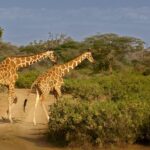
The Masai Mara National Reserve is best known for big cats, and for good reason. Lions live in prides across the plains, leopards hide in riverine woodland, and cheetahs hunt from termite mounds on open grassland. Elephants, buffalo, giraffes, zebras, topi, hartebeest, hyenas and many antelope are resident year-round. Black rhinos survive in small numbers and are rarely seen. Hippos and crocodiles fill the Mara and Talek rivers, and the bird list runs to hundreds of species, including secretary birds, ground hornbills and many raptors. From roughly July to October, the migration brings huge herds of wildebeest and zebra from the Serengeti, attracting predators and visitors alike. See our Great Migration guide for timing, and our lion, leopard and cheetah guides for each cat.
Which part of the Masai Mara National Reserve is best for you?
- Central and eastern plains (near Sekenani and Talek): accessible, with open country and predictable big-cat sightings. Busier in high season.
- Musiara and northern areas: known for riverine habitats, lions and leopards, with good access to the Mara River in migration season.
- Mara Triangle (west): quieter, managed separately by a conservation trust, with dramatic crossings on the western bank.
- Sand River area (south): close to the Tanzanian border, with a mix of habitats and fewer vehicles.
Your choice should reflect your priorities. If you want to maximise big-cat sightings, plan time in the central plains. If you want quiet, consider the Mara Triangle or a nearby conservancy. Read our comparison of reserve vs conservancies to see how they differ.
How many days to spend in the Masai Mara National Reserve
Two nights is the minimum for a meaningful visit, but three or four nights is far better. The reserve is large, and animals move, so extra days increase your chances of memorable sightings such as a kill, a river crossing or a leopard in a tree. Longer stays also reduce time lost to travel. If you can only spare a short trip, read our 2-day Masai Mara safari guide to make the most of it. Combine the Mara with Lake Nakuru or Amboseli for variety, as in our 6-day itinerary.
Best time to visit the Masai Mara National Reserve
The dry months from July to October offer the migration and generally good viewing, but they are also the busiest and most expensive. January and February are warm and quiet, with excellent predator sightings. Rains in March to May and November can make roads muddy and some camps close, though the landscape is green and rates lower. Check our Masai Mara weather and best time guide for details, and the Masai Mara park fees post for entry costs.
Getting to the Masai Mara National Reserve
You can drive from Nairobi, which takes most of a day depending on the road and traffic, or fly from Wilson Airport to an airstrip near your camp, which takes under an hour. Which you choose depends on budget, time and comfort. Read Nairobi to the Maasai Mara by road or air and the airstrips and flights guide for details. To plan your trip, contact our team.
Frequently Asked Questions
How much is the Masai Mara entrance fee?
For a foreign adult, USD 200 per day. Children aged 9 to 17 pay USD 50, and children under 8 enter free. East African residents pay KES 5,000 and Kenyan citizens KES 3,000 per adult per day.
How big is the Masai Mara National Reserve?
About 1,510 square kilometres, in Narok County, Kenya.
Which gate should I use to enter the Masai Mara?
It depends on where you stay. Sekenani is the main gate for the eastern side, Talek for the central and northern camps, Musiara for the north-east and Oloololo for the Mara Triangle.
What time do the Masai Mara gates open and close?
Gates open at 6:00 am and close at 6:00 pm. A daily ticket is valid for 12 hours between those times.
What is the Mara Triangle?
The part of the reserve west of the Mara River, run by the Mara Conservancy. It has fewer vehicles, takes cashless payments only and is known for its scenery and river crossings.
Can I do a walking safari inside the Masai Mara National Reserve?
No. Walking is not allowed inside the reserve, but some neighbouring conservancies offer guided walks.