How Masai Mara flights work
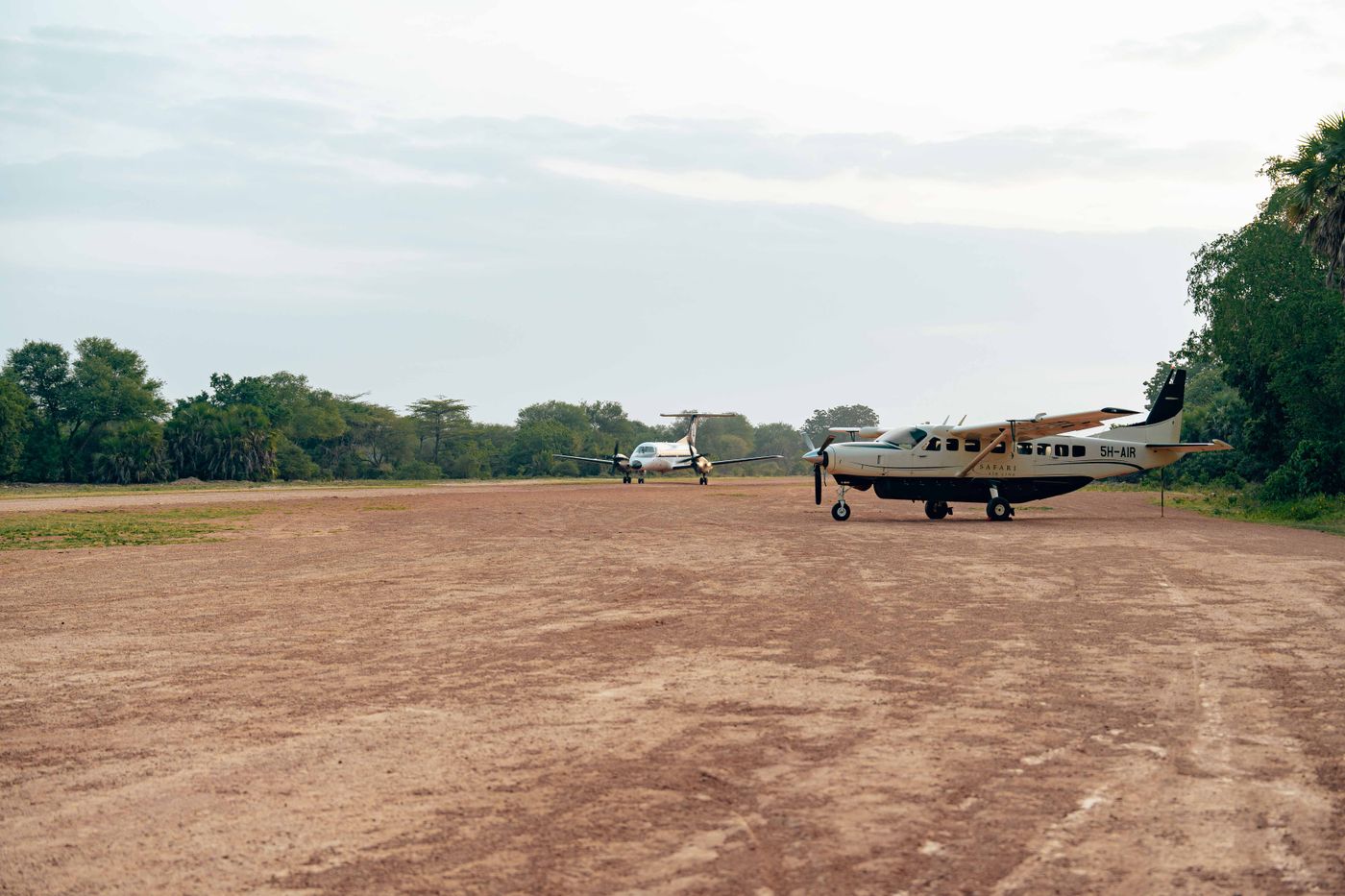
There is no airport in the Mara, only a network of gravel airstrips scattered across the reserve and the conservancies around it. Small turboprop aircraft, such as the Cessna Caravan and the de Havilland Twin Otter, fly out of Wilson Airport in Nairobi, not from the main international airport at Jomo Kenyatta. The planes stop at several strips on the way, dropping and collecting passengers in what pilots call “hops”, so the total flight time depends on how many stops are on your schedule. A direct leg takes about 45 minutes to an hour; a flight with several stops can take a little longer.
Masai Mara at a glance
| Size | 1,510 sq km reserve, plus about two dozen community conservancies on its borders |
|---|---|
| From Nairobi | About 270 km: 5 to 6 hours by road or about 1 hour by air |
| Gates | Open 6:00 am to 6:00 pm |
| Reserve fee (non-resident adult) | USD 100 per day Jan to Jun, USD 200 per day Jul to Dec |
| Best for | Big cats, river crossings (Aug to Sep), balloon safaris |
| Peak season | July to October |
Map data OpenStreetMap contributors. Fees are a planning guide and can change.
Scheduled flights run in two main waves each day:
- Morning: depart Wilson at about 10 am, arrive in the Mara at about 11 am. The return leaves the Mara at about 11 am and lands at Wilson at about 12:15 pm.
- Afternoon: depart Wilson at about 2:45 pm, arrive at about 3:45 pm. The return leaves at about 3:45 pm and lands at about 5 pm.
Times vary by airline and season, and extra midday flights are added during the busiest months, July to October. Treat the times as a guide and confirm your exact schedule when you book. If you are unsure which airport you need, our guide to JKIA and Wilson airports explains the difference.
Airlines that operate Masai Mara flights
Several small carriers fly from Wilson to the Mara:
- Air Kenya
- Safarilink
- Governors Aviation
- Mombasa Air Safari, which also serves the Angama area
- Silverstone Air, which has announced Mara flights
Schedules overlap, but each airline serves a slightly different set of airstrips, so the best option often depends on where your camp is. Your safari operator normally books the seats, since flights are usually sold as part of a package, but you can also book directly with the airline.
Masai Mara airstrips and which one to use
The single most important piece of advice for Masai Mara flights is to fly into the airstrip closest to your accommodation. A mismatch can mean a long, bumpy transfer that wastes much of the time you saved by flying. The main airstrips are:
| Airstrip | Where it is |
|---|---|
| Keekorok | South-east of the reserve |
| Serena | In the reserve, one of Kenya’s largest civilian airstrips |
| Musiara | Northern part of the reserve |
| Kichwa Tembo | North of the reserve, near the Talek area |
| Ol Kiombo | Just north of the Talek River |
| Siana Springs | On the Siana Group Ranch |
| Ngerende | Serves several camps near the reserve boundary |
| Olare Orok | Inside the Olare Motorogi Conservancy |
| Mara North | Inside the Mara North Conservancy |
| Ol Seki | Inside the Naboisho Conservancy |
| Angama | South-west of the Mara region, near the Oloololo Escarpment |
Some strips are shared by several camps, and a camp driver will meet you at the runway. Always ask your camp which airstrip it uses and which airline flies there. Our post on the gates and areas of the reserve helps you picture where each one sits.
Baggage on Masai Mara flights
This is where many first-time visitors run into trouble. Light aircraft have strict weight and space limits, and the rules are enforced. As a general rule:
- Use soft-sided bags or duffels. Hard suitcases do not fit into the small cargo hold.
- Expect a limit of around 15 kg per person including hand luggage, though the exact limit varies by airline, so confirm before you fly.
- Leave large bags in storage at your Nairobi hotel, or ask your operator to arrange it.
- Pack camera gear in hand luggage but remember that its weight counts.
If you exceed the limit, you may be charged for an extra seat or asked to leave items behind. Our guide to what to wear on safari helps you pack lightly.
Check-in at Wilson Airport for Masai Mara flights
Wilson is a small, busy airfield about 20 minutes from the city centre without traffic and closer to 45 minutes in normal traffic. Arrive at least one hour before departure, with your passport and your booking confirmation. Check-in is quick, but flights leave on schedule and may leave early if everyone is on board. Because flights depart from Wilson, not JKIA, allow extra time if you are arriving on an international flight the same day. A night in Nairobi before the flight is the safest plan, and our guide to arriving in Nairobi explains how to organise it.
Masai Mara flights versus the road
By road, the journey from Nairobi to the Mara takes roughly five to six hours, depending on the route and the state of the final stretch, which is rough in places. Flying takes about an hour and lands you in the middle of the action. The trade-off is cost and flexibility.
| Flying | Driving | |
|---|---|---|
| Travel time | About 1 hour, plus check-in | 5 to 6 hours |
| Comfort | High, with aerial views | Tiring, especially on rough roads |
| Luggage | Soft bags, strict limit | Much more flexible |
| Cost | Higher per person | Lower, especially for groups |
| Flexibility | Fixed schedule | Stop where you like |
| Game viewing on the way | Aerial views | Scenery and village life through the Rift Valley |
Many travellers combine the two: they fly in to save time and drive out through the escarpment, or the other way round. Our guide to getting from Nairobi to the Masai Mara by road or air lays out both options in more detail, and the post on flying safaris in Kenya covers multi-stop bush flights.
Park fees and airstrip timing
Flights interact with the Mara’s entry rules, and that can add to your costs if you plan badly. The day ticket is valid from 6 am to 6 pm. If you reach an airstrip after 10 am on departure day, another day’s fee can apply, so ask for a morning flight when you are leaving. Guests staying outside the reserve who only cross it to reach an airstrip can buy a two-hour transit ticket. See our Masai Mara entry fees guide for the amounts.
Tips for booking your Masai Mara flights
- Book early for July to October. Peak migration season sells out fast, and extra flights are added at midday.
- Match airstrip to camp. Always confirm the airstrip, not just “the Mara”.
- Prefer morning flights. Morning weather is calmer, and you get a full afternoon game drive.
- Keep schedules flexible. Weather and bush operations can delay flights, so do not book a tight connection on the same day.
- Carry key items in hand luggage. Medicines, camera, and valuables should not be in checked bags.
- Insure your trip. Weather delays are rare but possible. Our travel insurance guide explains what to look for.
Is it worth flying to the Masai Mara?
If you have only three or four days, yes: flying gives you a full extra day in the reserve. If you have a week or more, the drive is a worthwhile part of the experience and saves money. Either way, Masai Mara flights are one of the best parts of the safari, with views of the Rift Valley, Lake Naivasha and the open plains from the air. Our full Masai Mara guide brings all the planning together.
What a fly-in day looks like
A typical arrival goes like this. You leave your Nairobi hotel at about 8:15 am for a 10 am departure, check in at Wilson, and board a small plane with 12 or fewer seats. The pilot gives a short briefing and you take off over Nairobi National Park, then cross the Rift Valley, the Ngong Hills and the escarpment before the plains of the Mara open up below. If the schedule includes stops, the plane lands at one or two airstrips before yours, which is a good chance to watch the loading routine.
At your airstrip, a driver from your camp meets the aircraft, loads the bags and drives you straight to camp, often via a short game drive. By lunchtime you can be sitting in the dining tent, and your first afternoon game drive begins soon afterwards. Compared with a full day on the road, you have gained roughly half a day in the reserve.
Sitting in a small aircraft: what to expect
- Seats: Most seats have a window, but your seat may be assigned by weight distribution, not by preference.
- Noise and bumps: Turboprops are loud, and turbulence over the escarpment is common in the afternoon. Take motion-sickness tablets if you are prone to it.
- Weight: The pilot balances the load, which is why luggage rules are strictly applied. If you are travelling as a group, ask the airline how it handles combined weights.
- Safety: Pilots and crews are trained in short-field landings. Flights may be delayed or cancelled in poor weather, and a good operator will plan a back-up.
- Airstrip wildlife: Animals sometimes wander onto the strips, and a vehicle may drive the runway first to clear it. Do not be alarmed if the plane circles.
Combining Masai Mara flights with other parks
The same carriers link the Mara with other parts of Kenya, which allows you to build a fly-in circuit without returning to Nairobi by road each time. Popular combinations include the Mara with Amboseli, Samburu or Lake Nakuru, or the Mara followed by a beach stay on the coast. Connections often pass through Wilson, so a Mara-to-Amboseli trip may need a Nairobi change. Plan a buffer of several hours between connections, and let your operator manage the bags.
If you are thinking about Amboseli after the Mara, our guide to getting from Nairobi to Amboseli covers the options.
Seasons and Masai Mara flights
July to October is the busiest period, and seats sell out earlier than anything else on the trip. During the long rains (April and May) flights still run, but low cloud and wet airstrips can cause delays, and tracks near some strips become muddy. January to March is quieter, with more available seats. If you need a particular airstrip on a particular day in peak season, confirm the flight before you pay for non-refundable accommodation.
What to do if a flight is delayed
Delays are usually short, but they happen. Stay in touch with your camp, keep your booking reference handy and ask the airline for the revised time. Your driver will adjust the pick-up. Keep your first and last days flexible, and avoid scheduling a tight connection to an international flight on the same day you leave the Mara. A night in Nairobi before flying home is the safest way to protect your return journey.
Frequently asked questions
How long are Masai Mara flights from Nairobi?
About one hour, depending on the number of stops. Flights leave from Wilson Airport, not Jomo Kenyatta International.
Which airlines operate Masai Mara flights?
Air Kenya, Safarilink, Governors Aviation and Mombasa Air Safari, with Silverstone Air also announced. Each serves a different set of airstrips.
What is the luggage limit on Masai Mara flights?
Usually about 15 kg per person including hand luggage, in soft bags. Limits vary by airline, so confirm when you book.
Which airstrip should I fly into?
The one closest to your camp or lodge. Always ask your accommodation which airstrip it uses before you book the flight.
Is it better to fly or drive to the Masai Mara?
Flying saves four to five hours each way and suits short trips. Driving costs less and suits longer trips and groups with a lot of luggage.
Do I need to arrive early at Wilson Airport?
Yes, at least one hour before departure, with your passport and booking confirmation. Allow extra time for Nairobi traffic.
Need Mara flights arranged? Ask our team and we will book the right airstrip for your camp.