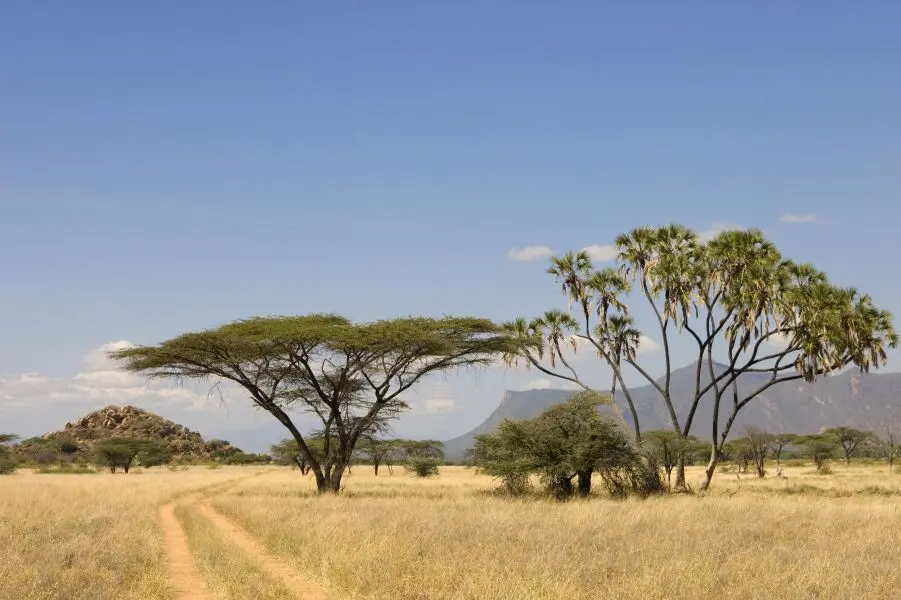
Lake Turkana is one of Kenya’s most remote and astonishing places. Stretching across the northern desert towards the Ethiopian border, it is the largest permanent desert lake in the world and the largest alkaline lake. Its shimmering blue-green water earned it the nickname the Jade Sea.
Why it matters
The lake sits in the Great Rift Valley, a region sometimes called the cradle of humankind. Fossils found around the lake include some of the most important discoveries about human origins. The Sibiloi National Park and the Koobi Fora area are rich in finds, and the famous Turkana Boy, a remarkably complete early human skeleton about 1.5 million years old, was discovered on the western side in 1984. The Lake Turkana National Parks are on UNESCO’s World Heritage list. See Kenya’s UNESCO sites for the full picture.
What there is to see
- The lake itself. Colours change from blue to green to silver across the day.
- Central Island. Volcanic craters with crater lakes and nesting birds, famous for crocodiles.
- Sibiloi National Park. Fossil sites, petrified forest and a remote desert landscape.
- Loiyangalani. A small settlement on the south-eastern shore and a base for visitors.
- Local cultures. The Turkana, El Molo, Samburu and Rendille peoples each have distinct traditions. The annual Tobong’u Lore cultural festival is usually held around May.
Wildlife
Lake Turkana is more about landscapes and culture than big game, though you will find crocodiles, hippos and thousands of birds, including flamingos in some seasons. Fishing is central to local life, with Nile perch and tilapia in the water.
Getting there
Turkana is remote. Visitors usually take one of two routes:
- Overland. Driving from Nairobi via Maralal and South Horr to Loiyangalani takes at least two long days in a robust 4×4, with rough roads and stunning scenery.
- By air. Charter flights connect Nairobi with airstrips near the lake, and scheduled flights serve Lodwar.
Security and road conditions in the north can change, so always travel with an experienced operator and check current advice.
When to go
The area is hot all year, and the wind, a signature of Loiyangalani, can be fierce. The drier months of June to September and January to February are generally more comfortable for travel, though still hot. Bring plenty of water, sun protection and light clothing.
Is it for you?
This is an expedition, not a standard safari. It suits adventurous travellers who value solitude, geology and culture. If you prefer more wildlife and comfort, consider combining a shorter northern trip with Samburu; see the Samburu guide. If Turkana is on your wish list, talk to us and we will assess the logistics honestly.
Quick answers
Why is Lake Turkana called the Jade Sea?
Algae gives the alkaline water a blue-green tint that looks like jade, especially in strong sunlight.
How do I get to Lake Turkana?
By long 4×4 drive via Maralal and South Horr, or by charter flight to airstrips near the lake.
Is Lake Turkana a UNESCO site?
Yes. The Lake Turkana National Parks were inscribed in 1997 and protect fossil sites and island ecosystems.
Safaris that fit this guide
These Cherish Africa Safaris trips match what this guide covers. We can adjust any of them to your dates, group size and budget.
- 8 Days Kenya Safari Tour – Stunning Wildlife and Scenic Lakes Experience
- 7 Days Budget Kenya Safari: Maasai Mara, Lakes & Hell’s Gate Adventure
- 3 Days Amboseli Bush Safari Adventure
Not sure which trip suits you? Browse all our Kenya safari tours or send us an enquiry.
Plan it with people who live here
We are a Nairobi-based team and every trip starts from our own doorstep. If you would like help turning these ideas into a real itinerary, message us on WhatsApp (+254 794 588 242), write to info@cherishafricasafaris.com, or use our contact form. We usually reply the same day.