Zanzibar After a Safari: Which Beach, How Many Days and When to Go
How to add Zanzibar to a safari: which beach suits you, how long to stay, when the rains fall and…


Zanzibar is a tropical archipelago off the coast of Tanzania, where white-sand beaches meet a thousand years of Swahili, Arab, Indian and European history. Stone Town, a UNESCO World Heritage site, has carved doors and narrow lanes; the east coast has wide tidal lagoons; the north has calm turquoise water; and spice farms and forest reserves fill the interior. It is the classic ending to a safari.
Here is what to see, which coast suits you, when to go and how to combine Zanzibar with a Kenya or Tanzania safari.
Zanzibar was for centuries a hub of the Indian Ocean trade in spices, ivory and, painfully, enslaved people. That history shapes Stone Town today, where Swahili houses with heavy wooden doors sit beside old Omani forts, churches and mosques. A guided walk is the best way to understand the layers.
Beyond the town, the island is surprisingly varied. Clove and nutmeg plantations are scattered through the interior, mangrove and coral rag forest fringe the coast, and the reef supports excellent snorkelling and diving. Beaches differ by coast, so choosing the right one matters.
Zanzibar is a majority-Muslim island. Dress modestly in Stone Town and villages, and keep beachwear for the beach and resorts.
See the Old Fort, House of Wonders, the old slave market site, Forodhani Gardens and the carved doors. Evening street food at Forodhani is a local favourite.
Walk through plantations of cloves, nutmeg, cinnamon, vanilla and pepper, tasting and smelling fresh spices.
Home to the Zanzibar red colobus monkey, found nowhere else on Earth. A short boardwalk loop takes you through mahogany forest and mangrove.
A short boat ride from Stone Town to see giant Aldabra tortoises and swim on a small beach.
Mnemba Atoll off the north-east coast is the best-known spot, with clear water and coral reefs. Dolphin trips run from Kizimkazi in the south.
A traditional sailing boat trip along the coast at dusk, with music and drinks on board.
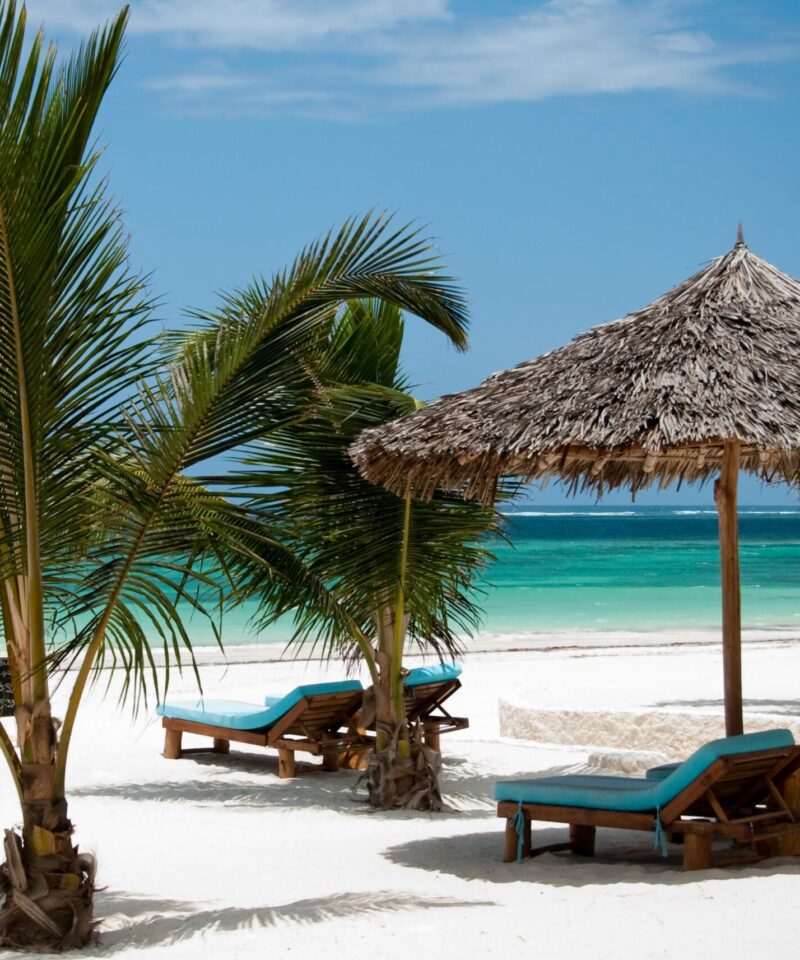
Calm water and swimmable beaches at any tide, lively evenings and good sunsets. Popular with couples and groups.
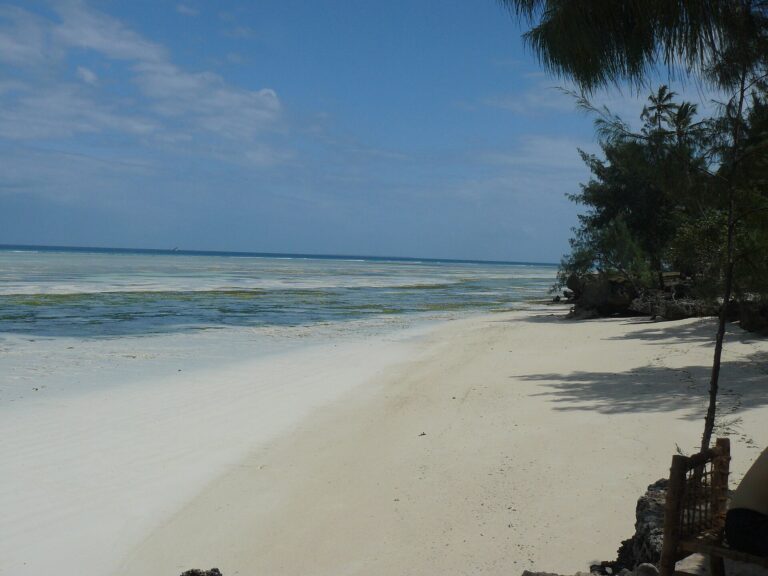
Wide lagoons with dramatic tides, kitesurfing at Paje, and quieter villages. At low tide the sea retreats far from shore.
Quieter and more remote, with dolphin tours and the famous Rock restaurant on a tidal outcrop.
Best for a night or two to see the history before heading to the beach.
Fly into Abeid Amani Karume International Airport. Direct flights from Nairobi take about 1.5 hours, and there are regular flights from Dar es Salaam, Arusha and Kilimanjaro.
High-speed ferries cross from Dar es Salaam to Stone Town in around two hours.
Most visitors need a Tanzanian visa, which covers Zanzibar. Check current requirements before travel.
Zanzibar is a semi-autonomous part of Tanzania in the Indian Ocean. It is an archipelago of small islands with two large ones: Unguja, the main island (often just called Zanzibar), and Pemba. Unguja covers about 1,464 km² and Pemba about 985 km², and both are low-lying. The capital, Zanzibar City, is on Unguja, and Stone Town, its historic centre, is a UNESCO World Heritage Site.
People have lived on Zanzibar for at least 20,000 years. Omani influence began in 1698, and the Sultanate of Zanzibar was established in 1856. The slave trade was central to the economy in the 19th century, and Britain pressed for its abolition through treaties. Zanzibar became a British protectorate in 1890, gained independence in December 1963, and merged with Tanganyika in April 1964 to form Tanzania. Visitors can learn this history in Stone Town through guided walks and museums.
Zanzibar is known as the Spice Islands. Cloves, nutmeg, cinnamon, coconut and black pepper are the main spices, and spice farm visits are a popular day out. Swahili, Arabic and English are the official languages, and the Swahili spoken here, Kiunguja, is regarded as the basis of Standard Swahili. Freddie Mercury of Queen was born in Stone Town, and the Zanzibar International Film Festival is held every July.
Unguja has no large wild animals, but it has special wildlife of its own. The endemic Zanzibar red colobus monkey, with about a third of its small population in and around Jozani Forest, is the best known. Sandy beaches are fringed by coral reefs, which support snorkelling, diving and fishing.
The climate is tropical. The main rains fall from about March to May, with April the wettest month, and a shorter rainy season comes in November and December. July is the driest month, and the northeast monsoon brings the cooler dry season. Temperatures stay warm all year.
A common pattern is a week on safari in the Maasai Mara, Serengeti or Ngorongoro, followed by four to five nights in Zanzibar. For a Kenyan beach alternative see Diani Beach.
Checked against Wikipedia: Zanzibar. Where details were unclear, such as the year Stone Town was inscribed, we left them out.
June to October and December to February offer the best weather. March to May is the rainy season.
Yes. Zanzibar is a semi-autonomous region of Tanzania, and visitors use the same visa.
Four to six nights is ideal: one or two in Stone Town and the rest on the beach.
Nungwi and Kendwa suit swimming at all tides; Paje and Jambiani suit kitesurfing and a quieter feel.
Yes. We regularly combine a Maasai Mara or Amboseli safari with a flight from Nairobi to Zanzibar.
How to add Zanzibar to a safari: which beach suits you, how long to stay, when the rains fall and…
If you spend a week on Kenya’s coast and see only the beach, you miss the story of why the…
Every year, thousands of visitors leave Kenya with a camera full of lions and a suitcase full of regret: a…