Ngorongoro Crater: What to Expect on Your Tanzania Safari
Most people add Ngorongoro Crater to their Tanzania itinerary because a photo of it looked incredible, then arrive without really…

Ngorongoro is the world's largest unbroken volcanic caldera, a natural amphitheatre whose floor holds an estimated 25,000 large animals. The walls rise about 600 m above a floor of grassland, forest, swamp and a shallow soda lake. Black rhino, lion, hippo and huge herds of zebra and wildebeest share the space, and the density of wildlife is among the highest in Africa.
Here is what to see, how the crater day works and how to fit Ngorongoro into a Tanzania itinerary.
The crater was formed when a giant volcano collapsed millions of years ago, leaving a bowl that is complete enough to function as a self-contained ecosystem. Animals can come and go, but many remain on the crater floor all year because there is permanent water and grazing.
Ngorongoro is within the Ngorongoro Conservation Area, where Maasai pastoralists live alongside wildlife. The area also includes Olduvai Gorge, a key site in the study of human origins, and Laetoli, where fossil footprints of early hominins were found.
Because the crater is compact, you can see a lot in one day. A typical visit descends at dawn, spends several hours on the floor, then climbs back up for lunch on the rim.
Ngorongoro is one of the best places in Tanzania to see this endangered species, though they are often at a distance.
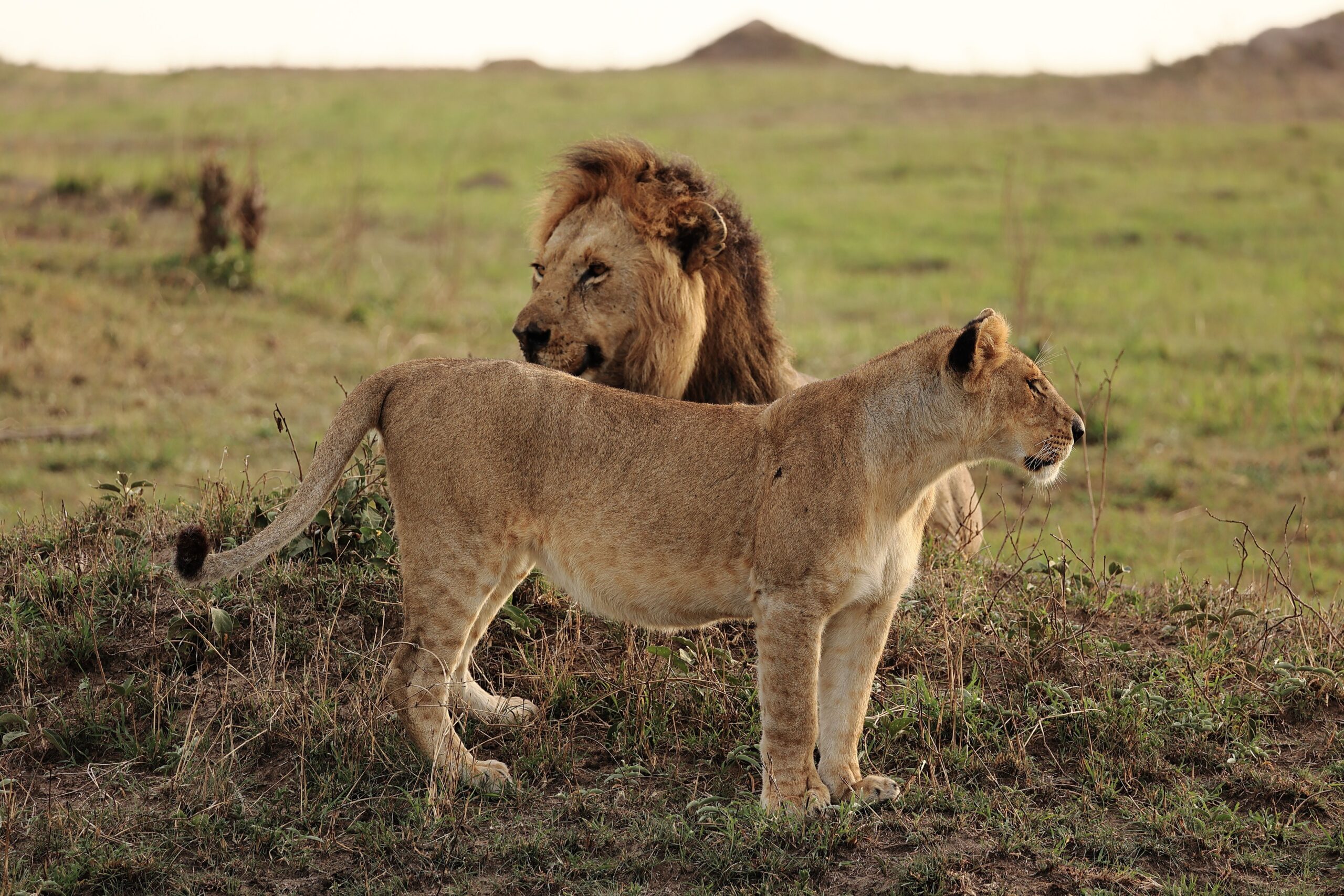
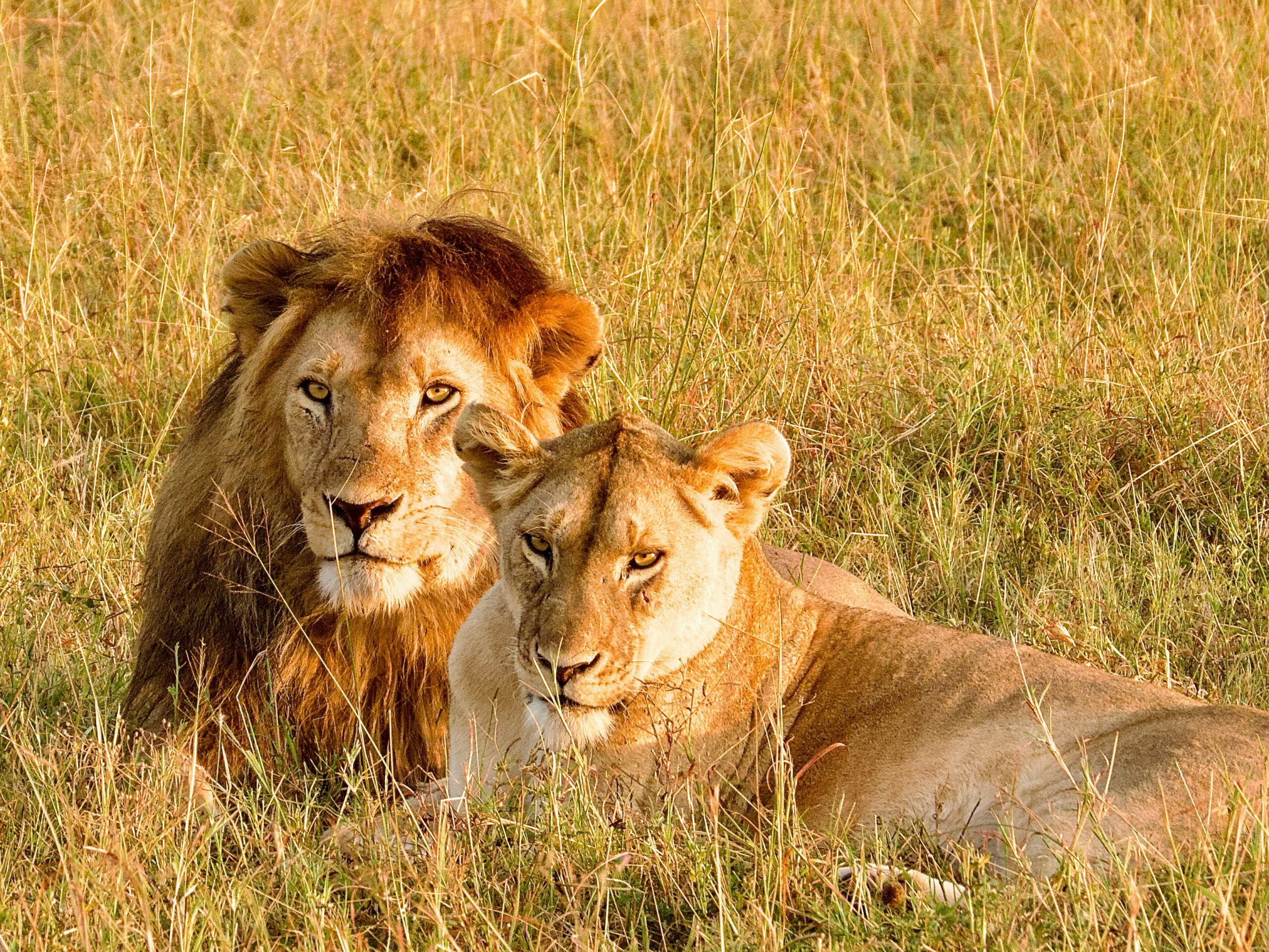
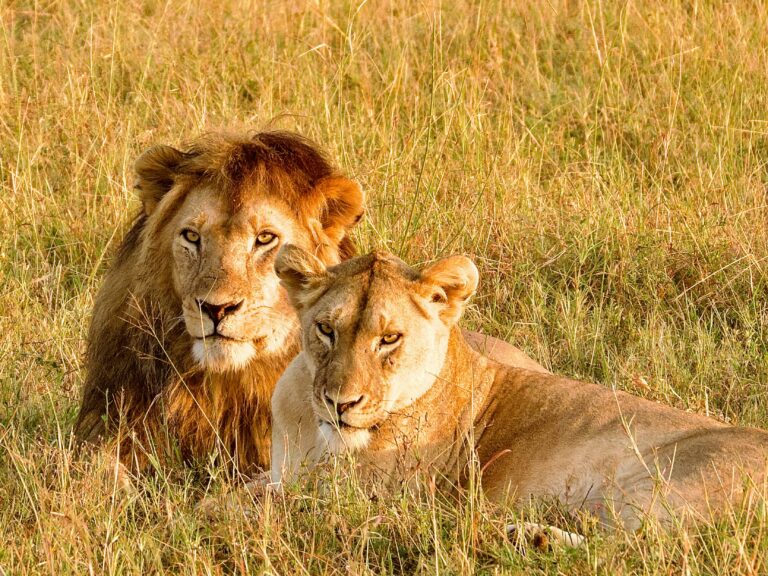
Several prides live on the crater floor and can be seen hunting or resting near the herds.
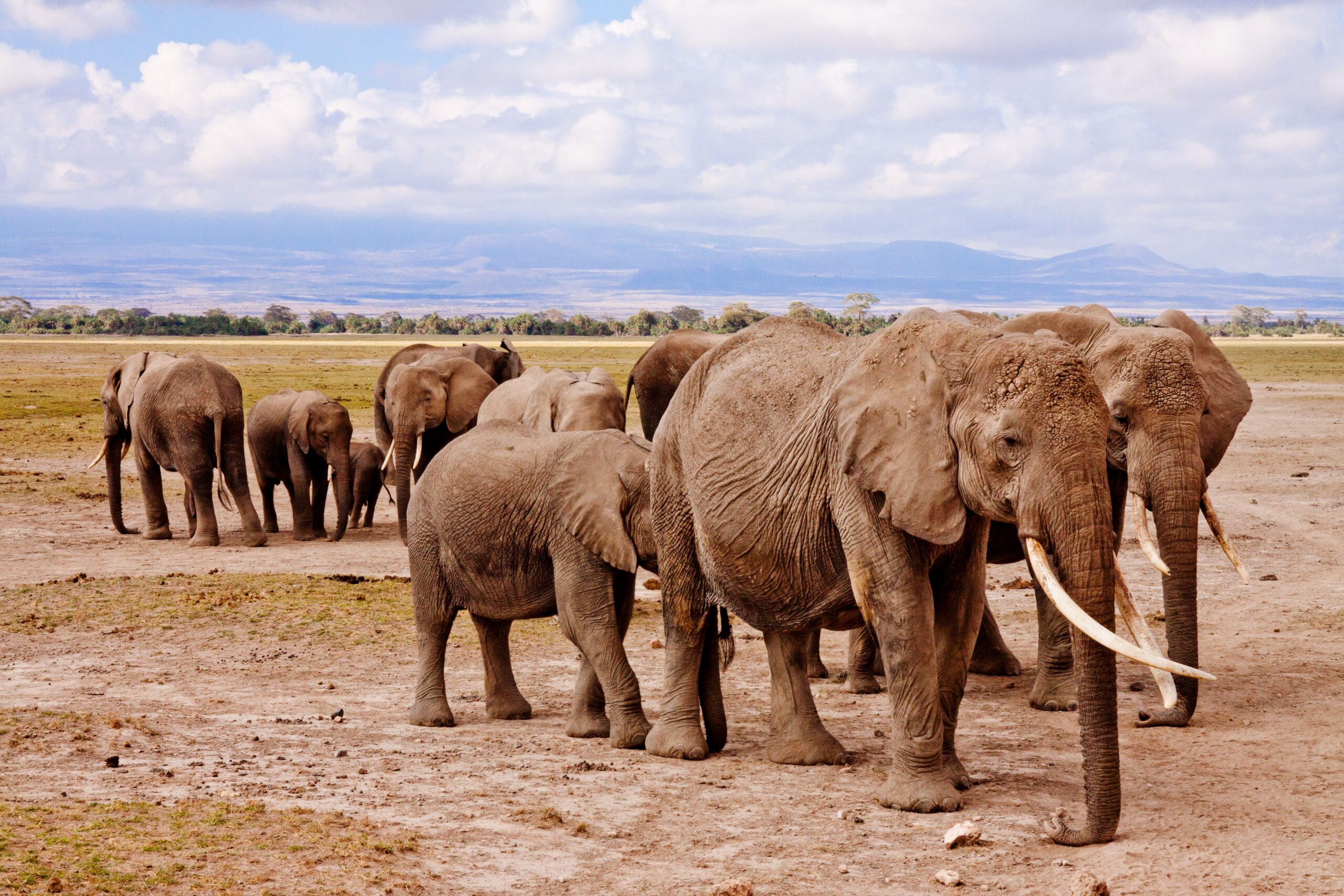
Mostly large old bulls on the floor, with herds in the forests of the rim.
Hippo pools and the shallows of Lake Magadi attract hippo and, in some seasons, flamingos.
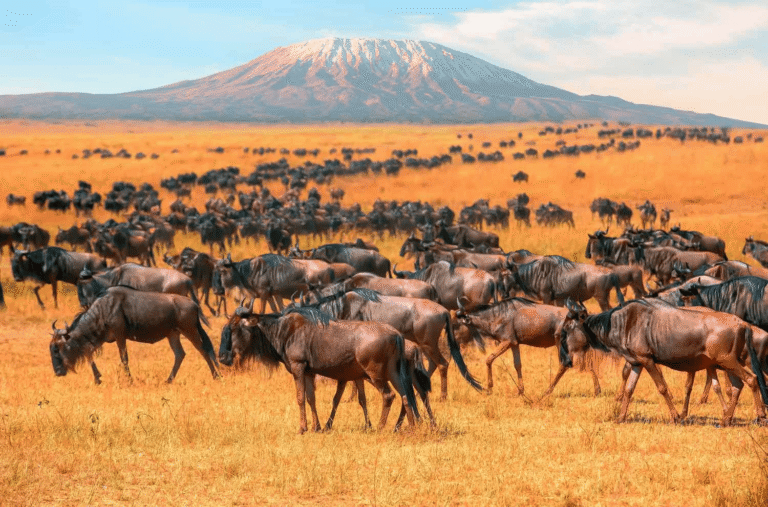
Large herds graze across the plains all year.
Over 500 species have been recorded across the conservation area, including ostrich and secretary bird.
About 3 to 4 hours by road via Lake Manyara. The rim lodges and camps are the usual base.
The descent road is steep and only 4x4 vehicles are allowed. Visits are limited to about six hours on the floor.
The rim is cool and often misty. Bring a warm layer, even in dry season.
Ngorongoro Crater is a volcanic caldera, the wide bowl left behind when a very large volcano erupted and then collapsed in on itself. Geologists place this roughly two to three million years ago, and estimates suggest the original cone was far higher than the rim you see today. It is often described as the largest unbroken caldera in the world, and it is part of the same chain of events that shaped the East African Rift.
The crater is about 18 kilometres across, with a floor of roughly 260 square kilometres. The steep walls rise around 600 metres from the floor to a rim at about 2,300 metres above sea level, while the floor itself sits at roughly 1,700 to 1,800 metres. The walls act like a natural enclosure that holds water, grass and a year-round supply of food, which is why such a large number of animals stay inside rather than migrating away.
The crater is only the best-known part of a much larger protected landscape. The Ngorongoro Conservation Area covers about 8,000 square kilometres in northern Tanzania. It was separated from the Serengeti National Park in 1959, and it is managed by the Ngorongoro Conservation Area Authority. UNESCO listed it as a World Heritage site in 1979 for its natural value and added the cultural criterion in 2010 because of the human-origins sites inside it.
Unlike a national park, the conservation area is shared between wildlife and people. It is the only protected area in Tanzania where pastoral Maasai communities are allowed to live, graze livestock and farm at a subsistence level. How that balance should be managed is a live and sometimes contested debate, including reports of relocations of families out of the area. We follow the situation, we choose our camps and lodges with care, and we are glad to talk through what you should know before you travel.
Published estimates put the crater's resident large animals at around 25,000 to 30,000, mostly grazers such as wildebeest, zebra, eland and gazelle. The grazers support one of the densest predator populations anywhere. Lions and spotted hyenas are both thought to be among the most concentrated in Africa, and golden jackals, cheetahs and the occasional leopard can also be found.
All of the Big Five can be seen, but leopards are hard to spot, so four of the five is a realistic aim for a day.
Most visitors drive down into the crater in the early morning, when the air is cool and the animals are active, and spend several hours on the crater floor. A common arrangement is to enter at around sunrise, follow a loop past the Lerai Forest, Lake Magadi and the open plains, picnic beside a pond or spring, and then climb out in the early afternoon. Vehicle access is controlled by the conservation authority, with set gate hours, designated descent and ascent roads, and a limit on the number of vehicles inside at one time. Exact times and rules are set by the authority and can change, so we confirm them for your dates.
The best advice is to start early, wear layers, and keep a pair of binoculars close, since many animals are scattered across a wide floor. A good driver-guide matters here more than anywhere, because the rules limit your time and the best sightings go to those who know where to look.
If you have a day to spare, the surrounding conservation area rewards exploration.
Most travellers sleep either on the crater rim or in the farming town of Karatu, on the road from Arusha. Rim lodges put you at the edge of the caldera, with views over the floor at dawn and a short drive to the descent road. They also tend to be cooler and cost more. Karatu has a wider range of lodges and camps, often with gardens and a gentler pace, and a slightly longer morning drive to the crater. Both work well, and the right choice depends on budget and how much you value the view.
Whichever you choose, we recommend at least one night nearby rather than a day trip from Arusha, so you are at the gate early and the day is not spent on the road. If you are travelling on to the Serengeti, the crater fits naturally on the way, and we can arrange the route and the order of parks to suit the season.
Ngorongoro is one of the most visited places in Tanzania, and the number of vehicles inside the crater at any time is limited by the authority, reportedly to around fifty. Early starts help you avoid the busiest hours, and a driver who knows the quieter loops makes a real difference.
Please follow the usual safari manners. Stay in the vehicle, keep your voice low, never feed or approach animals, and take all your litter with you. Respect the rules on the rim and in the surrounding villages, and ask before photographing local people. These small habits protect a place that is both a wildlife refuge and a home.
The crater pairs naturally with Lake Manyara National Park, which lies on the road from Arusha and is known for its birdlife and tree-climbing lions, and with the Serengeti, which lies on the far side of the conservation area. Many northern Tanzania itineraries run in a loop: Arusha, Tarangire or Manyara, Ngorongoro, Serengeti and back again, or a flight out of the Serengeti. Travellers who want to experience the wider region can also combine Tanzania with Kenya, starting in Nairobi and the Maasai Mara before crossing to the Serengeti and the crater.
As a rule of thumb, allow one full day for the crater itself and two to four nights in the Serengeti if you want to see the plains properly. We tailor every route, so tell us how long you have and what you most want to see.
Ngorongoro is high and can be cold, particularly at night and in the early morning on the rim, where temperatures can fall close to freezing in the coolest months. The crater floor is warmer during the day, but it can be windy and dusty. Bring layers: a fleece, a warm jacket, a hat and gloves for the first drive, with lighter clothing underneath.
The drier months, roughly June to October, bring the clearest weather and good wildlife viewing. The greener months from around November to March are quieter, and birdlife is at its best. The long rains, usually around April and May, can make roads muddy and bring more cloud. Pack sunscreen, sunglasses, binoculars and a camera with a zoom lens, and keep a rain jacket handy in any season.
Ngorongoro slots between Lake Manyara and the Serengeti on the classic northern circuit. Tarangire adds elephants and baobabs. One night on the rim is enough for the crater; two lets you add a cultural visit.
Figures were checked against more than one source. Where they disagree, such as lion numbers, fees and exact gate times, we leave out a precise figure. Please confirm current rules and prices with us before you travel.
One full day for the crater floor, ideally with a night on the rim. Add a second night for Olduvai Gorge or a Maasai village visit.
Lion, elephant, buffalo and rhino are all present, but leopard is rare and mostly seen in the forests.
The rim can be quite cool and misty at night and in the morning. The crater floor is warmer.
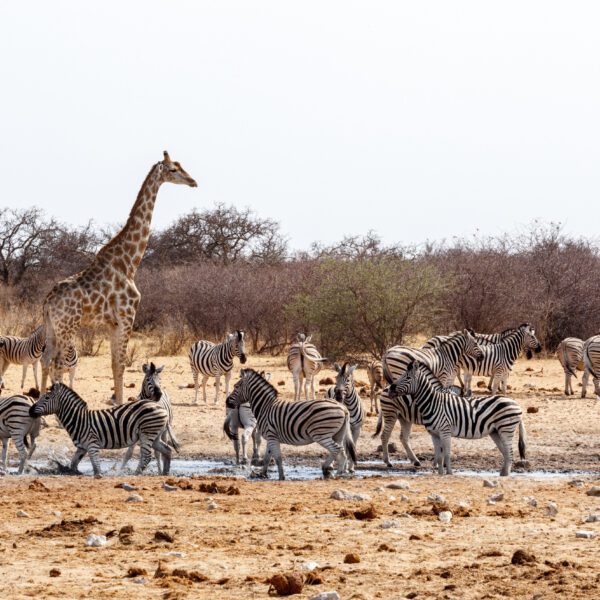
No. Giraffe are not found on the crater floor because of the steep walls and lack of acacia browse.
Most people add Ngorongoro Crater to their Tanzania itinerary because a photo of it looked incredible, then arrive without really…
A practical guide to the Serengeti: which region to choose, when the herds are where, what the park fee is,…
An honest guide to LGBTQ safari travel in Kenya, Tanzania and Uganda: the law, the real risks and practical steps…