The Mara River crossing is the scene most people picture when they think of the Great Migration. It is also one of the least predictable events in the wildlife calendar. This guide explains what happens, when crossings typically occur and how to plan realistically. For the wider picture, read our Great Migration guide.
What is a crossing?
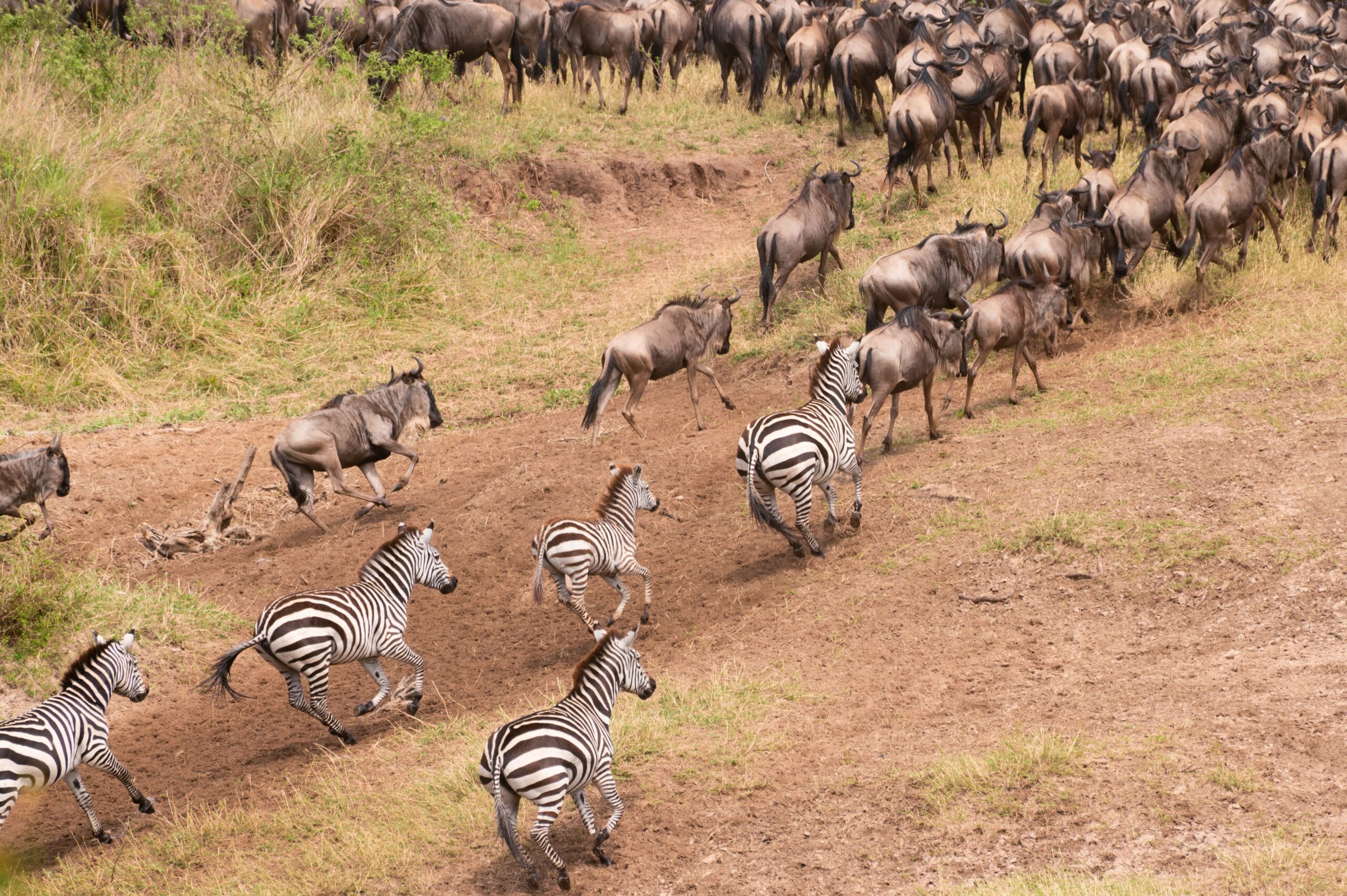
The Mara River separates the Maasai Mara from Tanzania’s Serengeti, and its tributaries include the Sand and Talek rivers. As the herds follow the grass, they must cross it. Estimates for the whole migration run from more than 1.3 million wildebeest, with zebras and gazelles, up to about 1.5 million wildebeest and zebra, depending on the source and the year.
When do crossings happen?
Herds generally reach the Mara between July and October, and the most dramatic crossings are usually seen from late July to early October. The timing depends on rain and grazing, so it shifts from year to year. Our Kenya in August guide covers a month when many travellers visit.
Why a crossing is never guaranteed
The herds decide when to cross, and they often gather at the bank, hesitate and turn back. Even the best guides cannot promise a crossing on a given day. Plan for several days in the area rather than one, and treat a crossing as a bonus on top of everything else the Mara offers.
The risks the herds face
The river is home to crocodiles, and the banks are steep. Animals can be injured in the crush, and predators watch the banks. It can be hard to watch, and it is nature at work.
How to improve your chances
- Travel in the peak window and stay long enough in the Mara.
- Choose a camp location and a guide who know the crossing points.
- Be ready to wait. A crossing can start suddenly after hours of waiting.
- Follow the park rules: no off-road driving, keep your distance and do not crowd the banks. See Mara rules and etiquette.
Photography and logistics
Bring a long lens and a steady rest, and read our photography tips. Check Mara park fees and consider an early start if you fly in; see airstrips and flights.
Frequently asked questions
When are the Mara River crossings?
Herds generally reach the Mara between July and October, and the most dramatic crossings are usually from late July to early October.
Is a river crossing guaranteed?
No. Herds may gather at the bank and turn back, so crossings are never guaranteed on a given day.
How many animals take part in the migration?
Sources give figures from more than 1.3 million wildebeest to around 1.5 million wildebeest and zebra, depending on the year.
Which river do the herds cross?
The Mara River, which separates the Maasai Mara from the Serengeti. The Sand and Talek rivers are tributaries.
Want help planning? Talk to our team and tell us your dates, who is travelling and what you would like to see.
Facts checked on 5 November 2026 from Angama (timing, numbers and unpredictability) and Wikipedia (rivers and herd size), plus the Mara rules page. Timing varies from year to year.