Maasai Mara With Samburu or Amboseli: Which Combination Suits You?
Pair the Maasai Mara with Samburu or Amboseli? Compare what each second stop adds, real Cherish itineraries, night allocations and…
The Maasai Mara is Kenya's most celebrated wildlife reserve, a sweep of open savanna in Narok County that joins Tanzania's Serengeti along its southern edge. It is the northern arm of the great wildebeest migration, and one of the few places where lion, leopard, cheetah, elephant and buffalo can all be found on a single game drive.
This guide covers what the Mara is, what you can expect to see, the best time to go, how to get there and how our consultants usually plan it, so you can decide how many nights you really want.
The Maasai Mara sits on the Kenyan side of one of the largest and most intact savanna ecosystems on Earth. Along its southern boundary it meets Tanzania's Serengeti National Park, and the two form a single living landscape that wildlife crosses freely through the year. The reserve is named after the Maasai people who live around it, and after the Mara River that winds through it.
It lies between 1,500 and 2,180 metres above sea level and covers roughly 1,510 square kilometres. The Oloololo (Siria) Escarpment, part of the Great Rift Valley, marks the western edge. The rest is rolling grassland dotted with acacia, croton thickets and strips of riverine forest.
What makes the Mara such a good first safari is openness. The plains are wide, the animals are used to vehicles, and big cats are easy to watch at a respectful distance. Lion prides are common, cheetah hunt in the open grassland, and leopards live along the river forests and rocky outcrops.
The Mara began in 1961 as a small wildlife sanctuary, was enlarged the same year and given game reserve status, and had its boundaries adjusted in the following decades, leaving the reserve at about 1,510 square kilometres today. The Maasai, pastoralists who moved into this region from the Nile Basin, still graze their cattle on the community land beside it.
Today the reserve is managed in two parts. The Narok County Government looks after the Narok sector, which is the larger, more visited eastern side. The Mara Conservancy manages the Mara Triangle in the west, along the Mara River and below the Oloololo Escarpment.
Around the reserve, Maasai landowners lease their land to private conservancies such as Mara North, Olare Motorogi and Naboisho. The lease payments give families a steady income from wildlife, and the conservancies limit the number of vehicles and beds, which keeps sightings quiet and uncrowded. Land subdivision, fencing and growing human settlement remain the biggest long-term threats to the ecosystem.
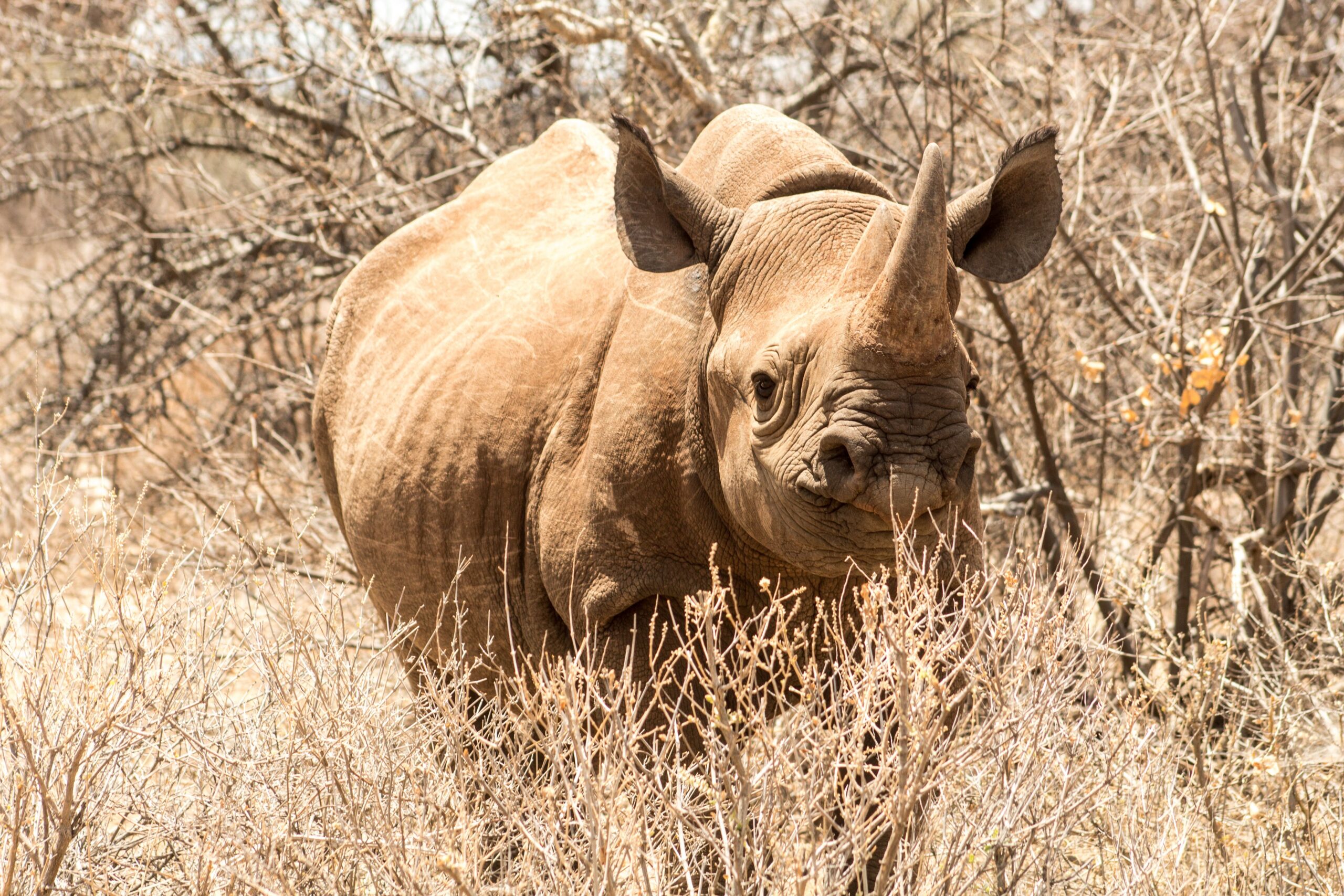
All of the Big Five (lion, leopard, elephant, buffalo and black rhino) live in the Mara, although the rhino is rare and never guaranteed. These are the animals our guides most often track.
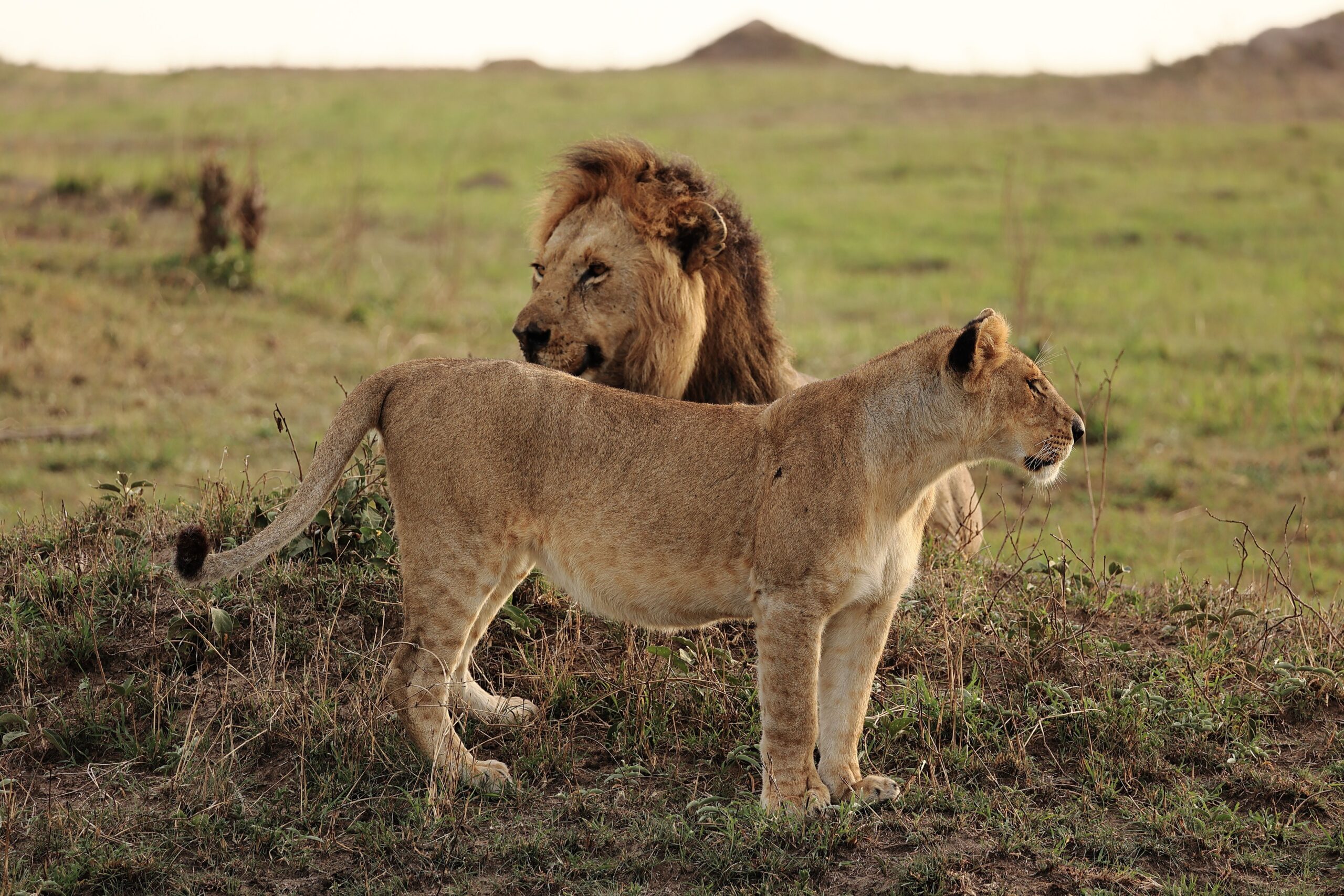
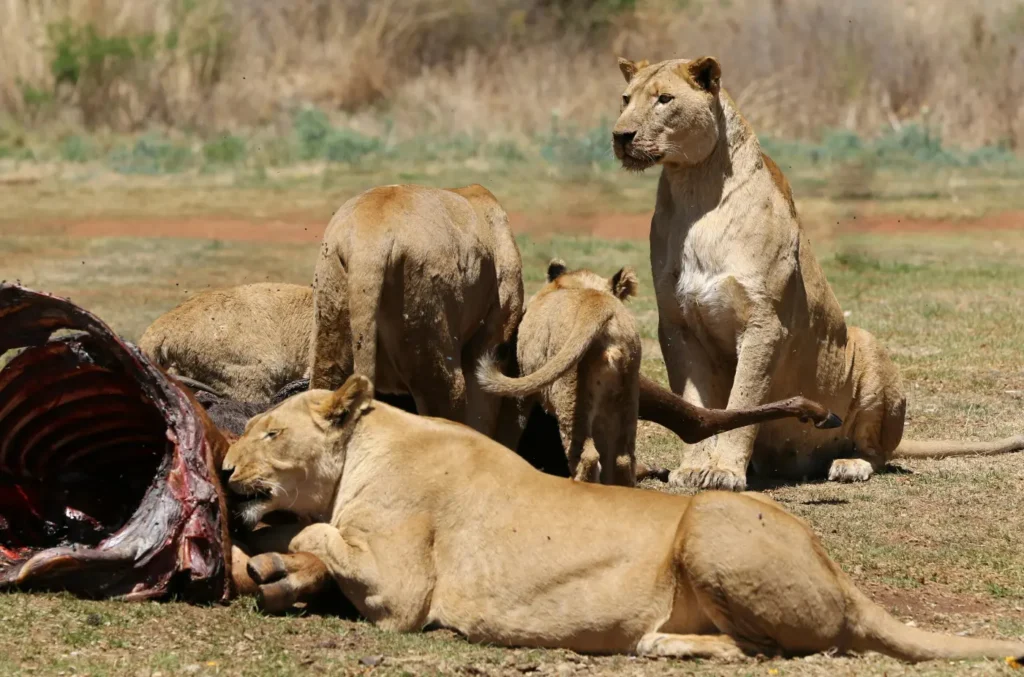
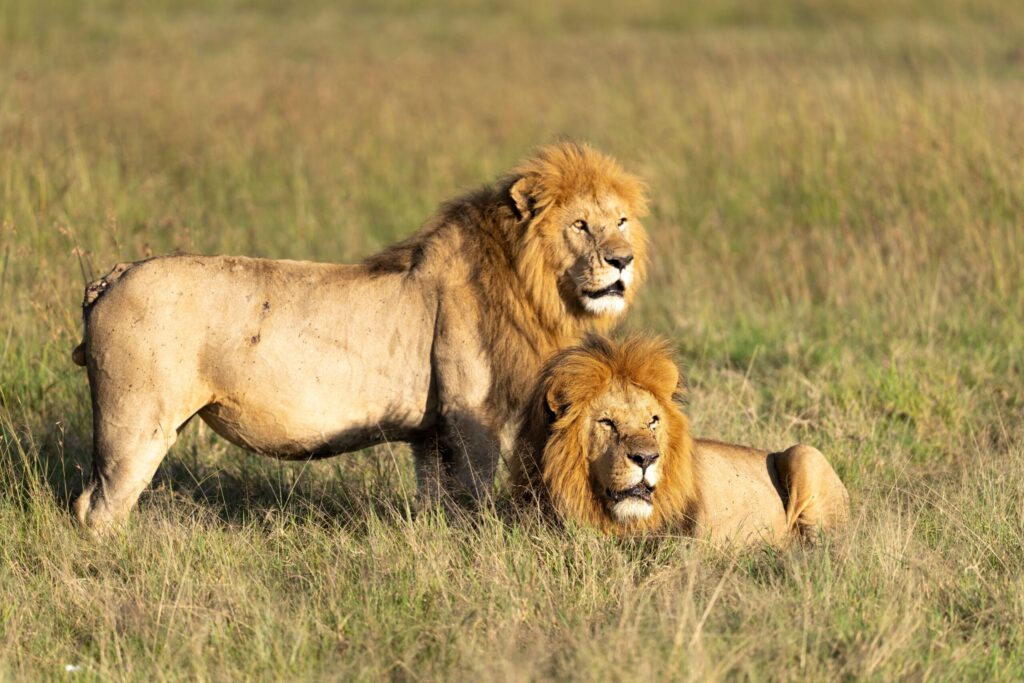
The Mara's signature predator and one of its most reliable sightings. Look for prides resting in the shade of croton thickets and on termite mounds in the morning, and moving out to hunt at dusk.
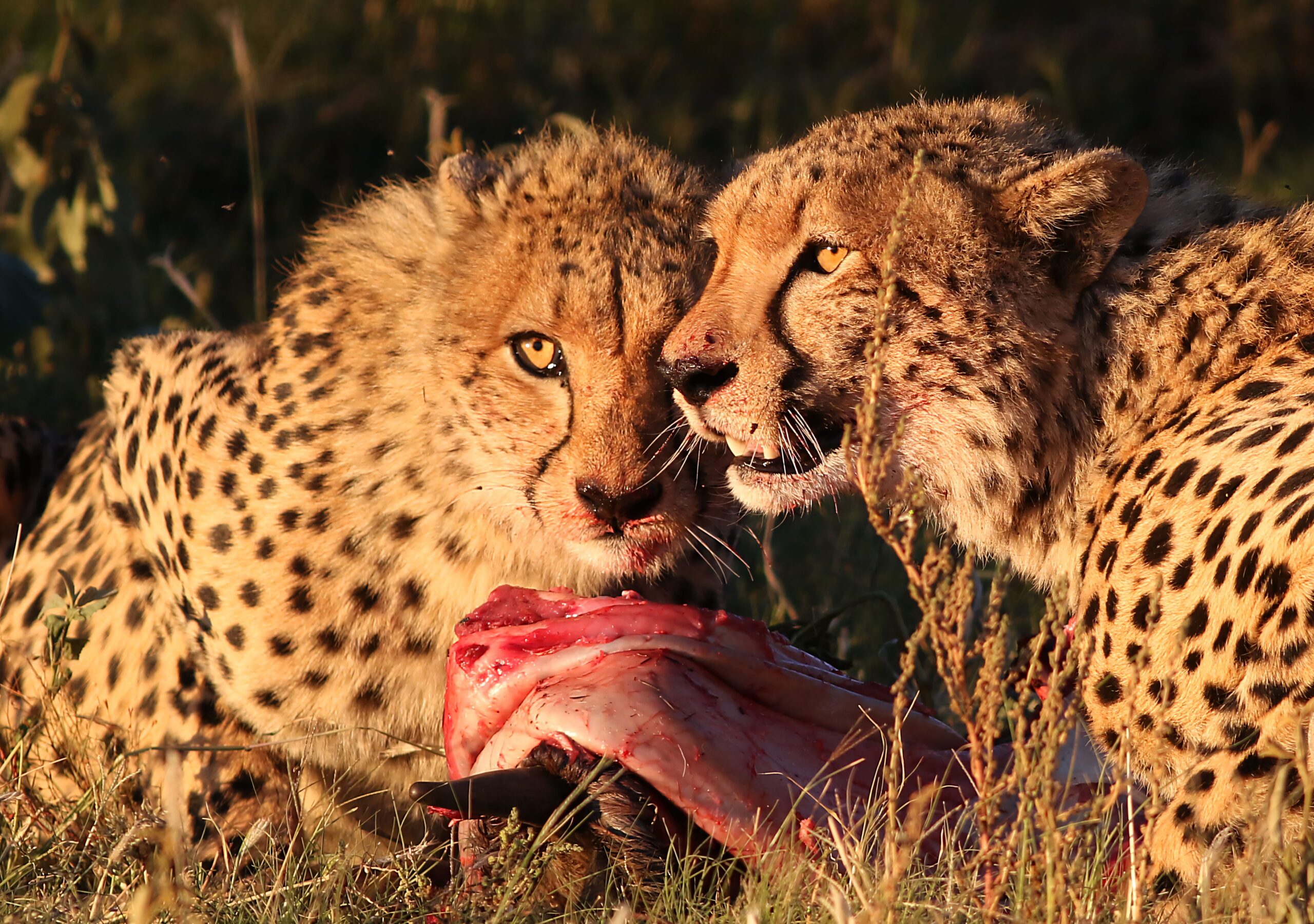
The open grassland suits East African cheetah well, and they hunt in daylight, so mid-morning is a good time to look. They often climb termite mounds, or even safari vehicles, to scan for prey.
Secretive and mostly nocturnal. Your best chance is the riverine forest along the Mara and Talek rivers and rocky outcrops, in the early morning or late afternoon, with a patient guide.
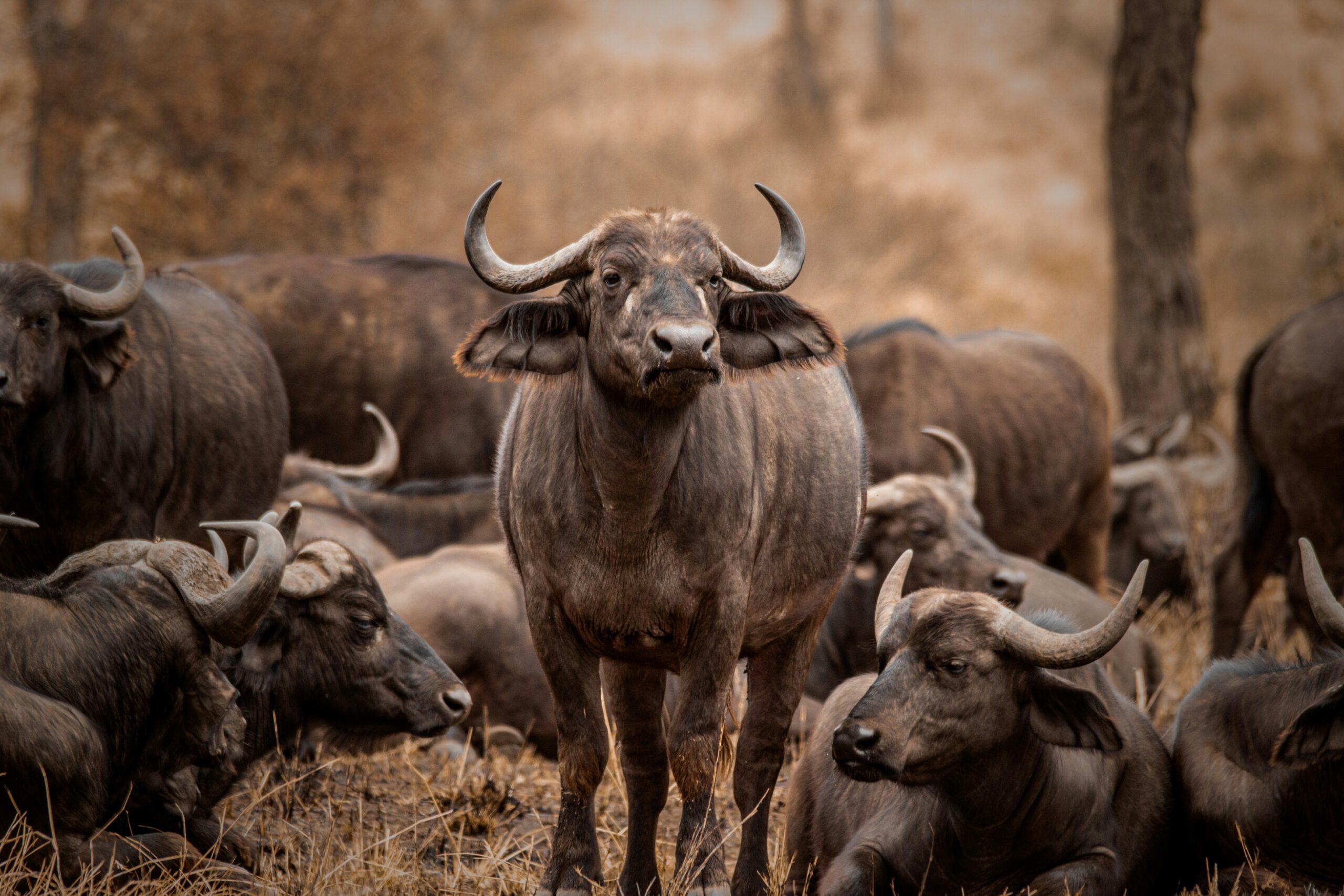
Elephant herds roam the whole reserve, often near rivers and forest edges, and large buffalo herds graze the open plains.
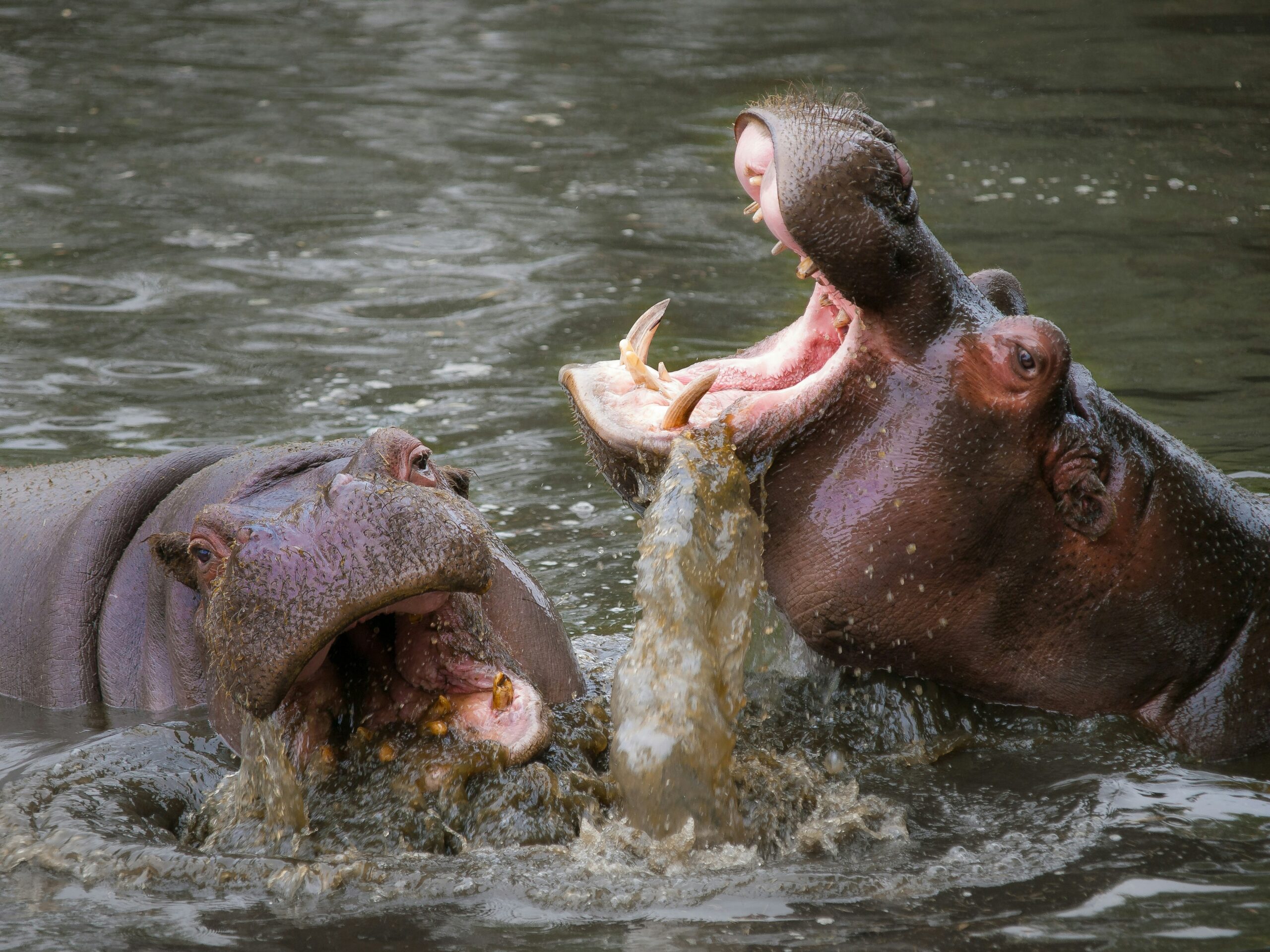
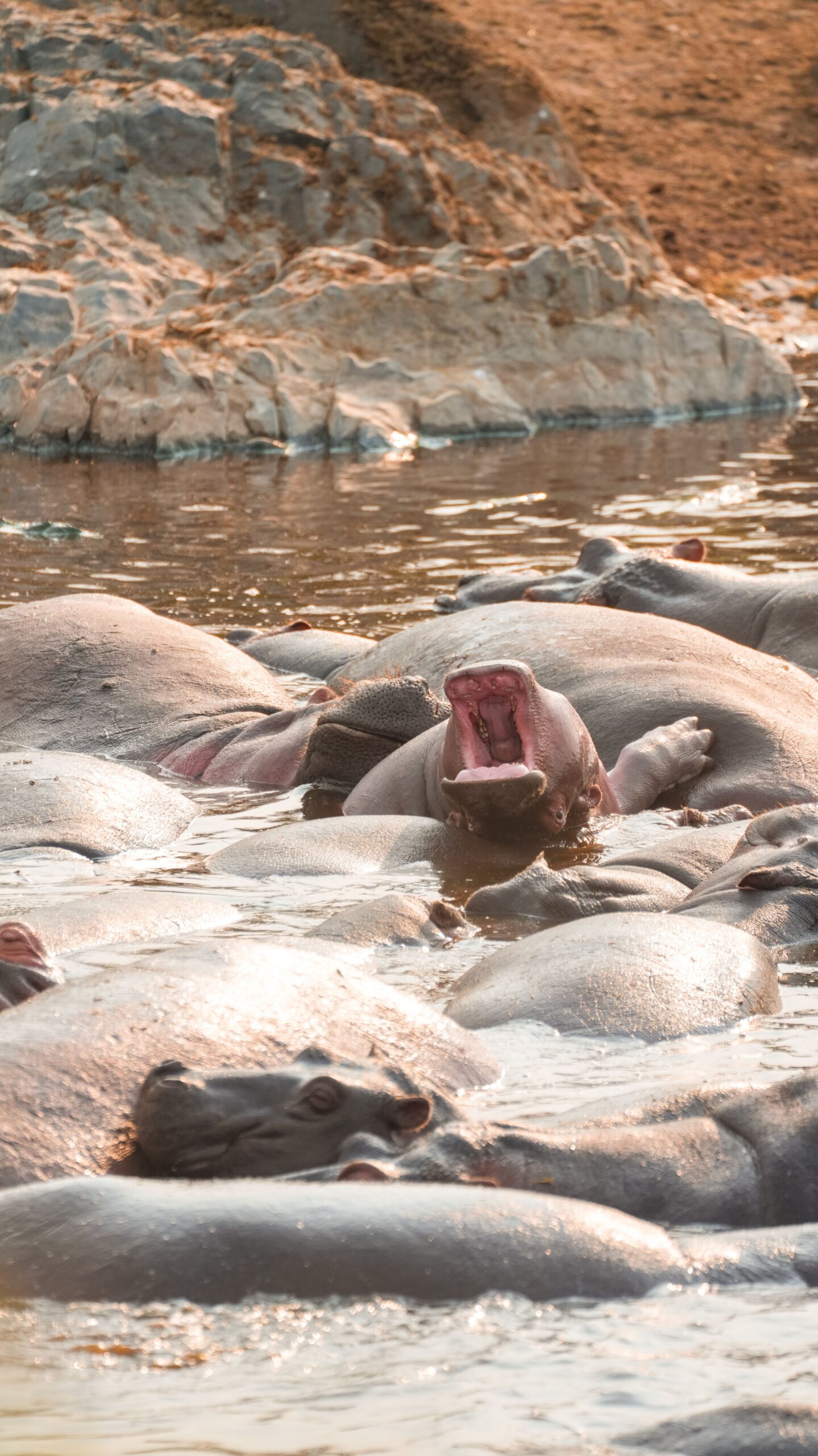
Hippo pools and big Nile crocodiles line the Mara River, and the crocodiles gather at the migration crossing points.
Topi, zebra, Thomson's and Grant's gazelle, eland, impala, giraffe and warthog fill the plains. Hundreds of bird species include secretary bird, ground hornbill, ostrich, lilac-breasted roller and several vultures.
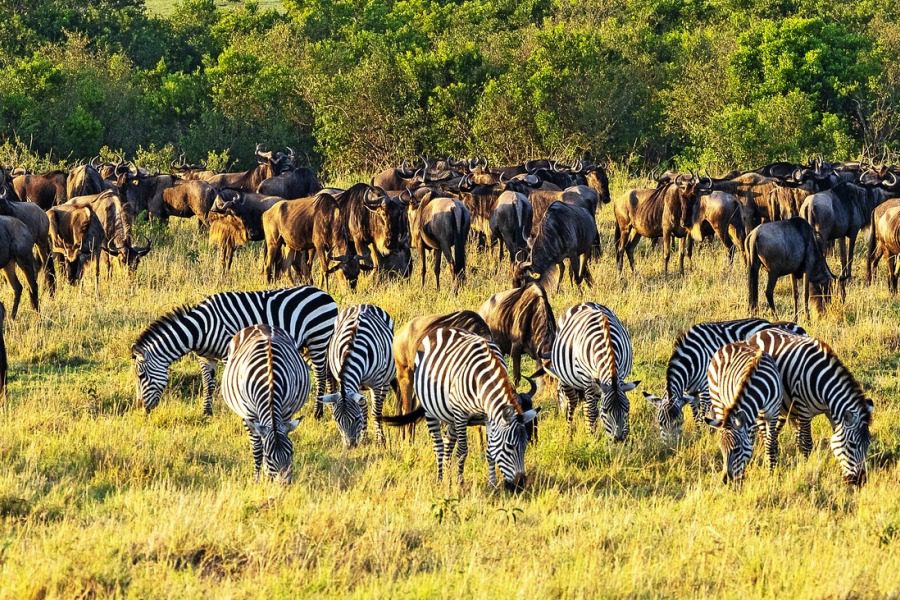
The migration is a circular, year-round journey of around 1.3 million wildebeest, accompanied by roughly 200,000 zebra and several hundred thousand gazelles, between the southern Serengeti and the Maasai Mara. The herds follow the rains and the fresh grass rather than the calendar.
About half a million calves are born between January and March on the southern plains. As the dry season arrives, the herds move north through the Serengeti and usually reach the Mara from about July, then head back south around October. The Mara River and its tributaries must be crossed on the way, and the crossings are the most dramatic part of the whole spectacle. Crocodiles take some animals, but far more are lost to drowning and exhaustion.
Timing can shift by weeks from year to year. We time itineraries for the July to October window and stay flexible about where the herds are, but nobody can honestly promise a crossing on a particular day. Even outside the migration months, the Mara's resident wildlife is excellent.
Rain falls in two seasons: the long rains in April and May, and the short rains in November and December. Annual rainfall rises from about 800 mm in the drier east to 1,200 mm in the west. Temperatures are pleasant all year, usually between about 12 and 30 degrees Celsius.
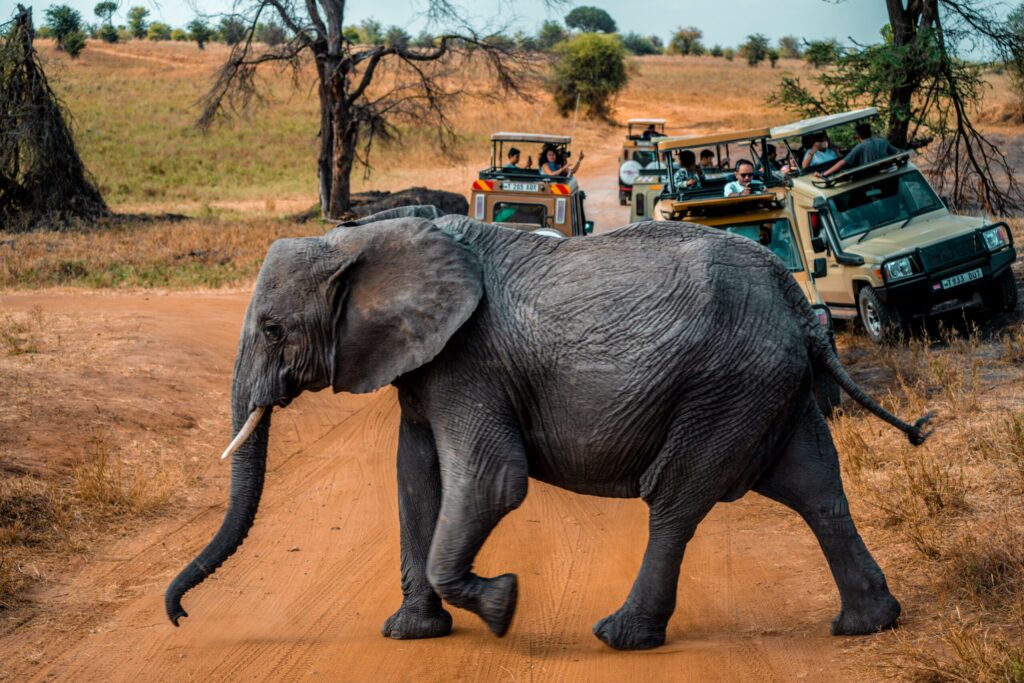
Dawn and late-afternoon drives in a 4x4 with a pop-up roof are the core of a Mara safari. Many camps also offer full-day drives with a picnic lunch.
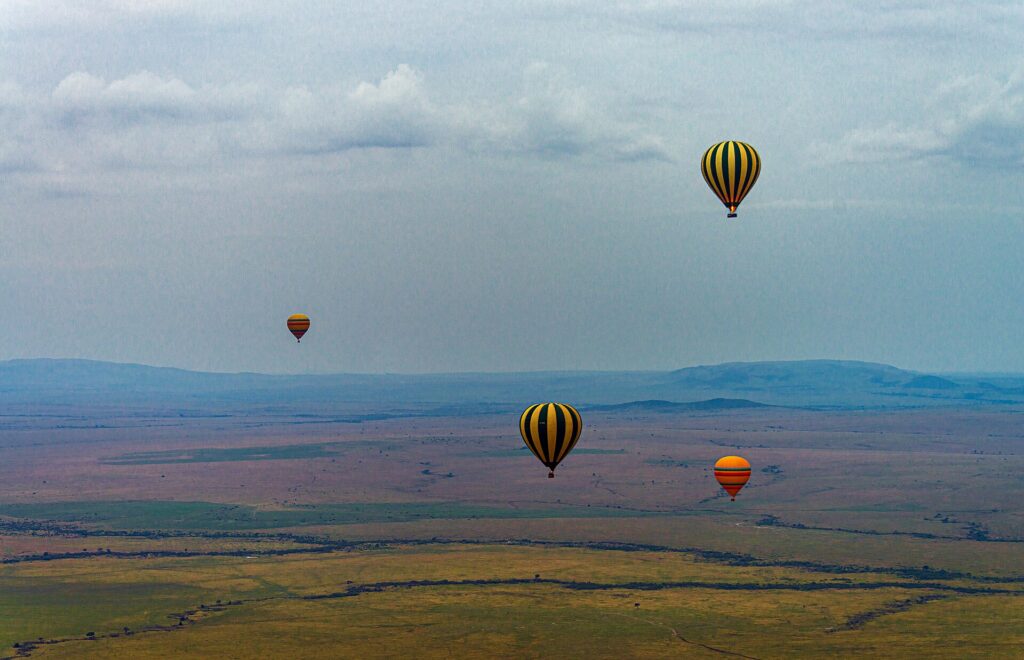
Float over the plains at sunrise and land for a bush breakfast. It is an optional extra that we can add, subject to availability.
The private conservancies are allowed to offer guided bush walks and night game drives, which are not permitted in the main reserve.
Meet a Maasai family, hear about their traditions and see how they live alongside wildlife, with a guide who can translate.
Open plains, soft morning light and cooperative subjects make the Mara excellent for photographers. Ask us about vehicles and seating planned around photography.
Breakfast beside the Mara River, a sundowner on the plains or dinner under the stars, arranged by your camp.
The nearest boundary is about 224 km from Nairobi. Which option suits you depends on time and budget.
Roughly 5 to 6 hours from Nairobi, usually via Narok. The road is good for much of the way and rougher near the gates. A road safari lets you see the Rift Valley escarpment on the way.
Scheduled and charter flights from Nairobi's Wilson Airport reach airstrips in and near the reserve in under an hour. This saves a day of travelling on a short trip.
A popular compromise: fly one way and drive the other, or combine the Mara with Lake Nakuru or Lake Naivasha on the road.
Entry fees are set by the managing authorities, change from time to time, and vary between the national reserve and the conservancies. We include them in your quote.
The Mara has close to 200 lodges and camps, so choosing by area matters more than choosing by name.
Tell us your budget and what matters most, and our consultants will recommend the right area and a few properties that suit you.
The Mara is not one block of land under one set of rules. At its heart is the national reserve, which is managed by Narok County, with the western Mara Triangle run on the county's behalf by the non-profit Mara Conservancy. Around the reserve sit a group of private community conservancies, where Maasai landowners lease their land to safari camps and in return receive regular payments. Both are part of the same wildlife landscape, and animals move between them.
The differences matter when you choose a camp:
There is no single right answer. A first-time visitor on a shorter budget is well served by a camp near the reserve gate. Someone who wants quiet sightings, a night drive or a walk will probably prefer a conservancy. Many of our guests combine the two: a night or two in a conservancy, then a day inside the reserve for the river.
The Mara River is the most dramatic stage in the migration. When the herds arrive, usually from July onwards, they gather on the riverbank and cross towards the plains on the other side, where Nile crocodiles wait in the water. Crossings are real wildlife events, not scheduled shows, and no guide can promise one.
Herds may stand at the bank for hours, turn back, or cross suddenly at a point nobody expected. Patience is the whole skill. Our drivers stay in contact with other guides, choose a viewing spot with a safe exit, and keep the engine off while the herd decides.
A few practical points for guests:
The Mara is the home of the Maasai, pastoral people who have lived alongside wildlife here for generations. The reserve takes its name from them, and the land beyond its boundary is still largely Maasai land. Many of the people you meet on safari, from camp staff and drivers to guides and rangers, come from the surrounding communities.
The conservancy system exists because of this link. Landowners agree to set aside areas for wildlife and for controlled grazing, and camps pay them for the use of that land. For many families that income is the reason wildlife space is worth keeping.
If you would like to meet a Maasai family, we arrange visits through hosts we know and with a guide who translates. Please treat it as a visit to someone's home. Ask before taking photographs, buy crafts directly from the people who make them, and ask us anything about how a visit works before you arrive. A cultural visit is entirely optional, and we are happy to leave it out.
The Mara is a famous place, which does not make it a safe one for wildlife. Researchers and conservation groups list several pressures: fencing and the subdivision of former community ranches, which cut migration and grazing routes; conflict between people and wildlife as the human population grows; and fast, sometimes unplanned building. Studies of the ecosystem have recorded steep falls in some grazing animals over the years, including giraffe, warthog and impala.
Tourism has grown too. According to published figures, the Mara had fewer than ten lodges in the late 1970s and close to 200 by 2016. That growth brings jobs and income, and it also puts pressure on the land.
There is good news. Black rhino, which were reduced to a very small number in the 1980s, have recovered slowly and are reported to be stable at roughly 25 to 30 animals in recent years. The Mara Conservancy reports large anti-poaching efforts in the Mara Triangle, and the conservancy model keeps large areas open for wildlife. Choosing a camp that pays its landowners fairly, limits its vehicles and employs local people is one of the most useful things a visitor can do.
The Mara is high ground. The reserve sits between roughly 1,500 and 2,180 metres, so mornings and evenings can be cool even in the dry season, with temperatures typically between about 12 and 30 degrees Celsius over the year. Annual rainfall is roughly 800 mm in the east and up to 1,200 mm in the west. The long rains fall around April and May and the short rains around November and December, though dates shift from year to year.
Soft bags are easier to load than hard suitcases, and light-aircraft flights in particular have strict baggage limits. We give each guest a packing list before departure.
Most days follow the rhythm of the animals. You wake before sunrise, with tea or coffee and a light snack, and leave camp as the light comes up, when cats are still active and the air is cool. The morning drive usually lasts until around mid-morning, followed by a full breakfast back at camp or a bush breakfast on the plains.
The middle of the day is quiet. Animals rest in the shade, and so do guests, with lunch, a swim if your camp has a pool, or time to read and write up notes. Some travellers prefer a full-day drive with a picnic lunch so they can follow a sighting for longer, particularly in migration season. The afternoon drive starts around mid to late afternoon and runs until sunset, followed by dinner and, in some camps, a campfire. Exact times change with the season and with each camp's rules, and your driver-guide will adjust them to what the animals are doing.
Good behaviour makes for better sightings, for you and for the animals.
For photographers, the best light is at dawn and in the last hour before sunset, when the plains turn gold and animals are most active. A window bean bag steadies a long lens. Shoot a few frames wide as well as close, because the landscape and the sky are part of why people come to the Mara.
Guests often ask how the Mara differs from the other East African parks we offer.
If you have only a few days, the Mara gives the broadest variety of wildlife in a single stop. If you have a week or more, combining it with a second park gives a fuller picture of Kenya.
Still deciding where to go? Read our side-by-side guide: Maasai Mara vs Serengeti. You can also see how Kenya vs Tanzania safari compare, and whether a private vs shared safari suits your group better.
Most of our guests spend two to three nights in the Mara, which gives three to five game drives. Add a night if the migration is your priority. The Mara combines well with other parks:
Stay in the vehicle at sightings, keep voices low, never ask a driver to leave the track, and choose camps that employ and buy from local communities. The conservancy model works only when visitors respect the limits on vehicle numbers.
More detail: Nairobi to the Maasai Mara by road or air, the Mara hot-air balloon safari and Masai Mara vs Serengeti.
Figures in this guide were checked against more than one source. Where sources disagree on a number, such as park fees or the number of vehicles allowed at a sighting, we leave it out and advise you to confirm it with us before travel.
Most travellers spend two to three nights, which gives three to five game drives. Add a night if you want a better chance of seeing the migration herds or a river crossing.
The herds usually reach the Mara from about July and head back south around October. Exact timing depends on the rains and can shift by weeks, so no operator can honestly guarantee a river crossing on a given day.
Yes. Lion, leopard, elephant and buffalo are seen regularly. Black rhino also live in the reserve but in very small numbers, so a sighting is a bonus rather than something to count on.
The nearest boundary is about 224 km from Nairobi. The drive usually takes 5 to 6 hours, or you can fly from Wilson Airport in under an hour.
They are one ecosystem divided by the Kenya-Tanzania border. The Mara is Kenyan and much smaller, at about 1,510 km² against roughly 14,763 km² for the Serengeti. The migration herds are in the Mara from about July to October and in the Serengeti for the rest of the year.
Many guests rank it among the highlights of their trip. It is an optional extra, flies at sunrise and depends on availability and weather, so tell us early if you want it included.
Yes. Camps outside the reserve gates, shared departures and travel outside the July to October peak all lower the cost. Send us your budget and we will show you what is possible.
Pair the Maasai Mara with Samburu or Amboseli? Compare what each second stop adds, real Cherish itineraries, night allocations and…
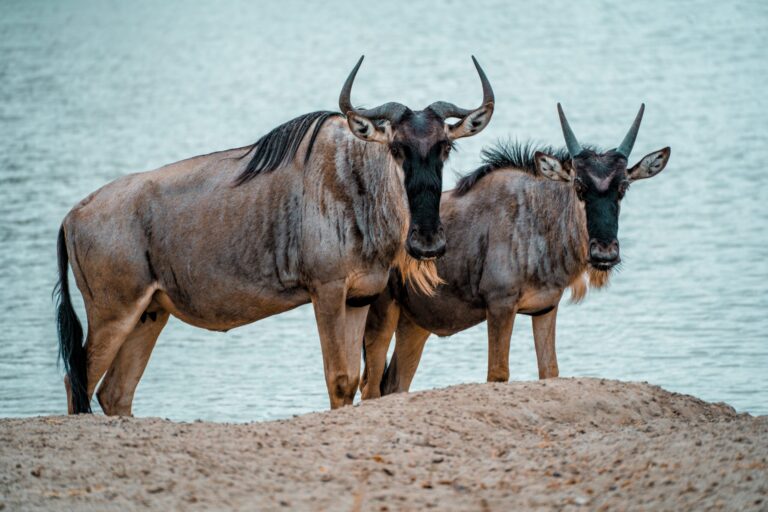
How the Maasai Mara reserve, the Mara Triangle, conservancies and the Serengeti fit together into one connected ecosystem.
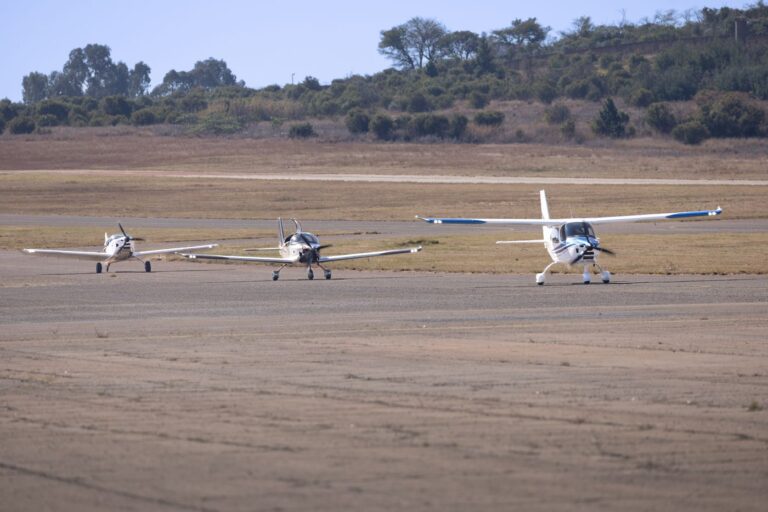
Nairobi to Maasai Mara by road takes about 5 to 6 hours, or under an hour by air. Compare routes,…