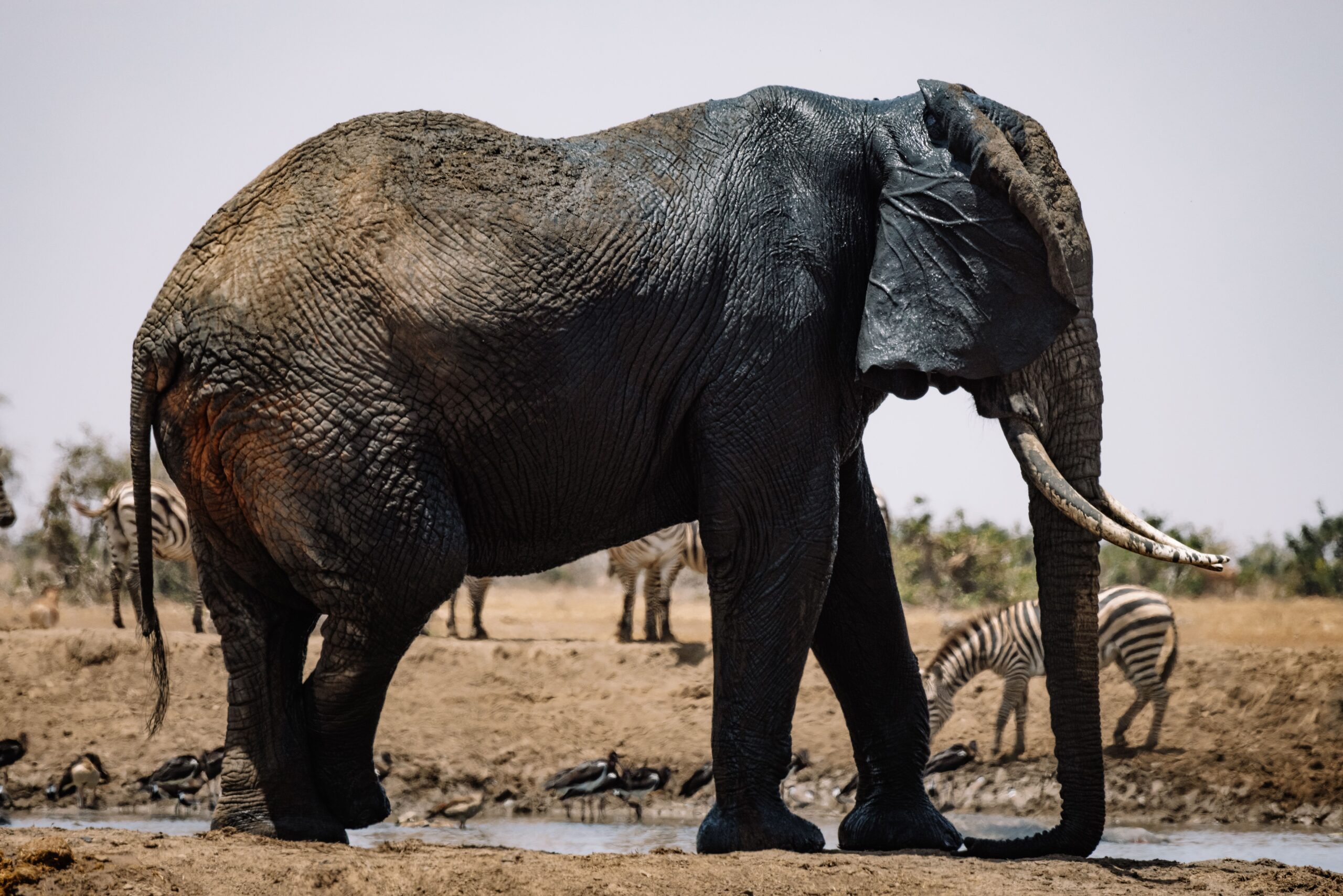
Elephants are among the most rewarding animals to watch because their lives are so visible. Families move together, calves stay close and the older animals set the pace. Knowing a little about how they live makes every sighting richer.
Matriarch-led herds
Elephant society is built around females. The matriarch, usually the largest and oldest, leads a multi-generational herd of related females and their young. Cows stay with their offspring in the herd.
Bulls
Adult males generally roam on their own, though sometimes they join small, loosely connected all-male groups. If you see a lone big bull, he is probably just a bull being a bull.
Calves
Pregnancy lasts almost 22 months, longer than any other mammal. A cow typically has one calf every two to four years. A newborn weighs around 90 kilograms and stands roughly 90 centimetres tall. Calves are looked after by the whole family, which is a joy to watch.
How to behave around elephants
- Keep quiet and still. Do not stand up suddenly.
- Give them space. The Maasai Mara rules require a wide clearance around elephants and buffalo.
- Never get between a mother and her calf.
- Follow your guide’s lead. If they say it is time to go, it is time to go.
Read Maasai Mara rules and etiquette and safari etiquette.
Where to see them
Elephants are widespread in Kenya’s parks, so you have a good chance of seeing a family group on most itineraries. For photography, read our photography tips, and see a typical day on safari for how drives are paced.
Kinship groups
The core family unit is several adult females, their daughters and young sons, led by a matriarch. Two or more related family units form a kinship group.
How long a pregnancy lasts
Gestation is about 22 months, the longest of any mammal. Captive-born calves weigh 100 to 120 kilograms at birth.
Young bulls and musth
Young bulls gradually separate from their family unit between the ages of 10 and 19. Males also go through musth, a period of high testosterone and heightened aggression. It begins around age 24, and older bulls are in musth for two to five months a year, so give any bull plenty of space.
Talking across distance
Much of elephants’ communication is infrasonic, below the range of human hearing. These rumbles can travel vast distances and help attract mates and deter rivals.
Appetite, size and lifespan
An adult can eat up to 150 kilograms of vegetation and drink 180 to 230 litres of water a day. Adult bulls average about 3.2 metres at the shoulder and 6 tonnes, and cows about 2.6 metres and 3 tonnes. Elephants can live to 70 or 75 years.
Conservation status
The African bush elephant has been classed as Endangered by the IUCN since 2021.
Additional detail added 5 November 2026 from Wikipedia’s African bush elephant entry (secondary source).
Frequently asked questions
Who leads an elephant herd?
The matriarch, usually the largest and oldest female, leads a multi-generational herd of related females and their young.
How long is an elephant pregnancy?
Almost 22 months, longer than any other mammal.
Do males live in herds?
Adult males generally roam alone or join small, loose all-male groups.
How close can we get?
The Mara rules require wide clearance around elephants. Your guide will manage the distance.
How long are elephants pregnant?
About 22 months, the longest of any mammal.
What is musth?
A period of high testosterone and heightened aggression in bull elephants, so give bulls extra space.
How much does an elephant eat?
An adult can eat up to 150 kilograms of vegetation and drink 180 to 230 litres of water a day.
Want help planning? Talk to our team and tell us your dates, who is travelling and what you would like to see.
Facts checked on 5 November 2026 from National Geographic; Mara clearance rule from the reserve’s rules page.