Wondering where to find hippos and crocodiles in Kenya, and how to watch them safely? This guide covers the best places and the rules to follow.
Hippos and crocodiles are two of the animals visitors most want to see in Kenya, and two of the ones your guide will keep you furthest from. They live in the same rivers and lakes, they are easiest to spot in the heat of the day, and both deserve respect. This guide explains what to expect, where to see them, and how to watch them safely.
Hippos: the basics
- Size: adult bulls average about 1.5 tonnes and cows about 1.3 tonnes. They stand around 1.4 m at the shoulder.
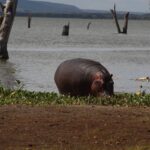
- Day and night: they spend the day in water or mud to stay cool. At dusk they leave to graze, travelling roughly 3 to 5 km and eating around 40 kg of grass before returning to the water by dawn.
- The “red sweat”: the reddish-orange fluid on a hippo’s skin is neither blood nor sweat. It contains pigments that act as a natural sunscreen and slow bacterial growth.
- Groups: a territorial bull usually presides over a group of cows and calves, and larger gatherings can form in good pools.
- Status: hippos are listed as Vulnerable, with an estimated 115,000 to 130,000 left in the wild.
Crocodiles: the basics
- Species: the Nile crocodile is the one you will meet in Kenya. Adult males are generally around 3.5 to 5 m long, and females are noticeably smaller.
- How they hunt: they are ambush predators that hunt mostly in water, often submerged, and can wait a long time for prey. They also scavenge.
- Nesting: females bury their eggs and guard the nest for about 90 days.
- Status: listed as Least Concern, with hundreds of thousands in the wild. Lake Turkana in northern Kenya has one of the largest undisturbed populations.
Where to see them in Kenya
- Maasai Mara: both live in the Mara River, and hippo pools are found in the reserve. See our Maasai Mara guide.
- Mzima Springs, Tsavo West: a spring oasis where visitors walk a prepared track with an armed ranger, and a glass viewing chamber lets you watch underwater life. Hippos and crocodiles can be seen, but sightings are not guaranteed.
- Nairobi National Park: the Hippo Pool, about 7 km from the city centre, is a main spot for hippo sightings.
- Lake Nakuru: hippos can be seen around the lake. See our Lake Nakuru guide.
- Amboseli: hippos are present, with Kilimanjaro often in the background. See our Amboseli guide.
- Lake Turkana: known for its large crocodile population, in a remote part of the north.
Why hippos are dangerous
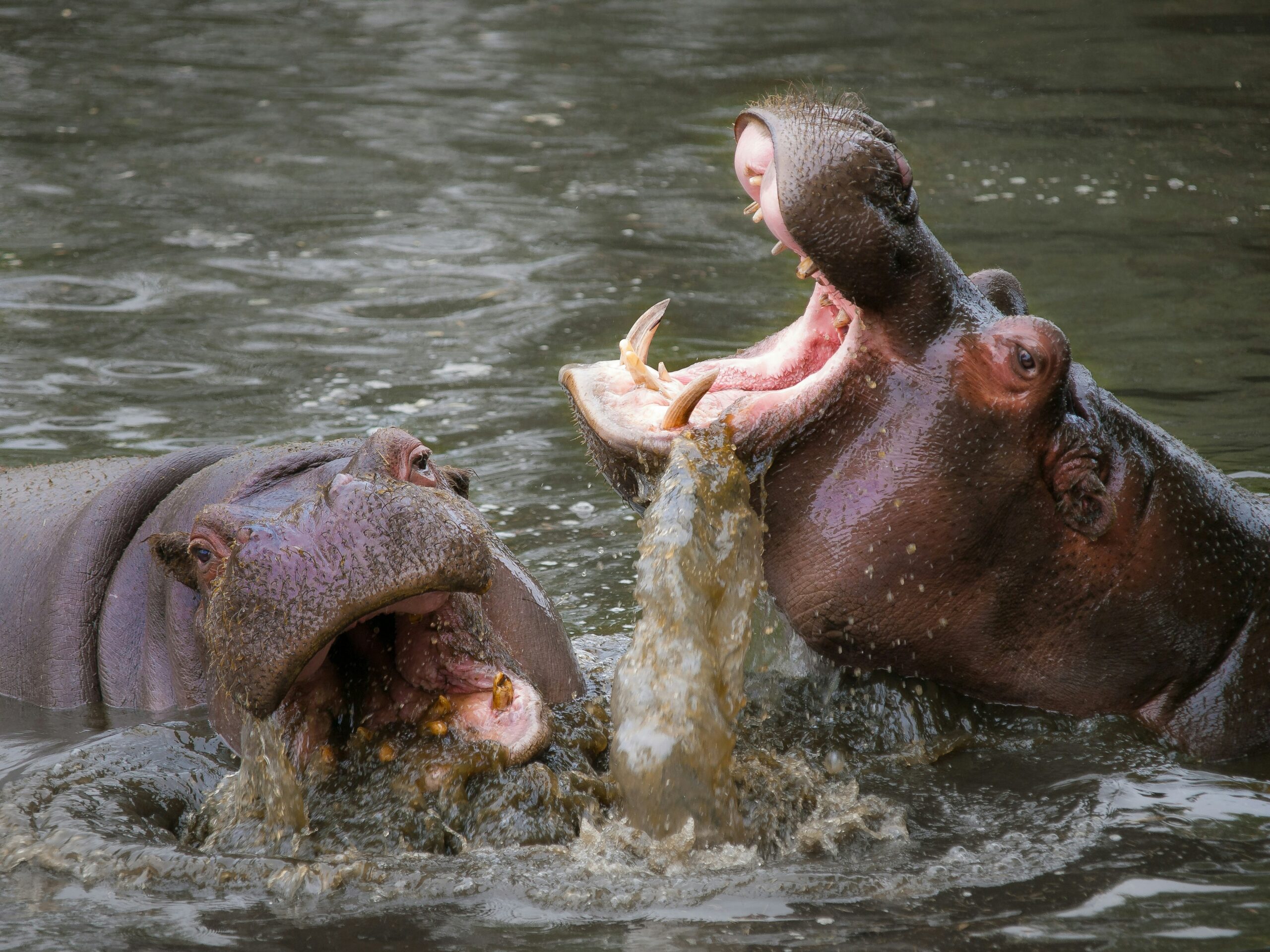
Hippos are widely described as among the most dangerous animals in Africa. They are territorial, unpredictable and can charge, and they can capsize boats. A hippo out of the water at night is also on its way to graze, which is why you should never walk in the dark near water.
How to watch them safely
- Stay in the vehicle or with your ranger and guide, and follow their instructions.
- Never get between a hippo and the water, especially at dawn and dusk.
- Do not swim, paddle or wade in rivers and lakes where crocodiles live, however calm the water looks.
- On boat rides, keep to the route your operator chooses and keep hands and cameras inside the boat.
- Keep a long lens on you instead of getting closer.
Plan your trip
Hippos and crocodiles are easy to add to a Kenya safari. Our guides can build them into a trip with the Mara, Nakuru or Tsavo. See Kenya vs Tanzania safari to compare where to go, or message us on WhatsApp at +254 794 588 242 or +254 725 824 854.
Sources
Animal facts from Wikipedia’s articles on the hippopotamus and the Nile crocodile; Mzima Springs details from Discover Kenya’s listing; Mara River details from Yale News (2014); other viewing places from Trek Africa Tours. Sightings vary with season and luck, so please treat locations as likely, not guaranteed.
Hippos and crocodiles in Kenya: Key Takeaways
The main points on hippos and crocodiles in Kenya are covered above. If you would like help applying them to your own dates and budget, our team can plan the trip with you. For more advice on hippos and crocodiles in Kenya, or a quote tailored to your group, contact Cherish Africa Safaris and we will reply the same day.